Solar Generates 51% of California's Electricity in May; Storage Reaches 16 GW
California became the first major economy to surpass 50% monthly solar generation, driven by 16 GW of battery storage that is displacing natural gas.
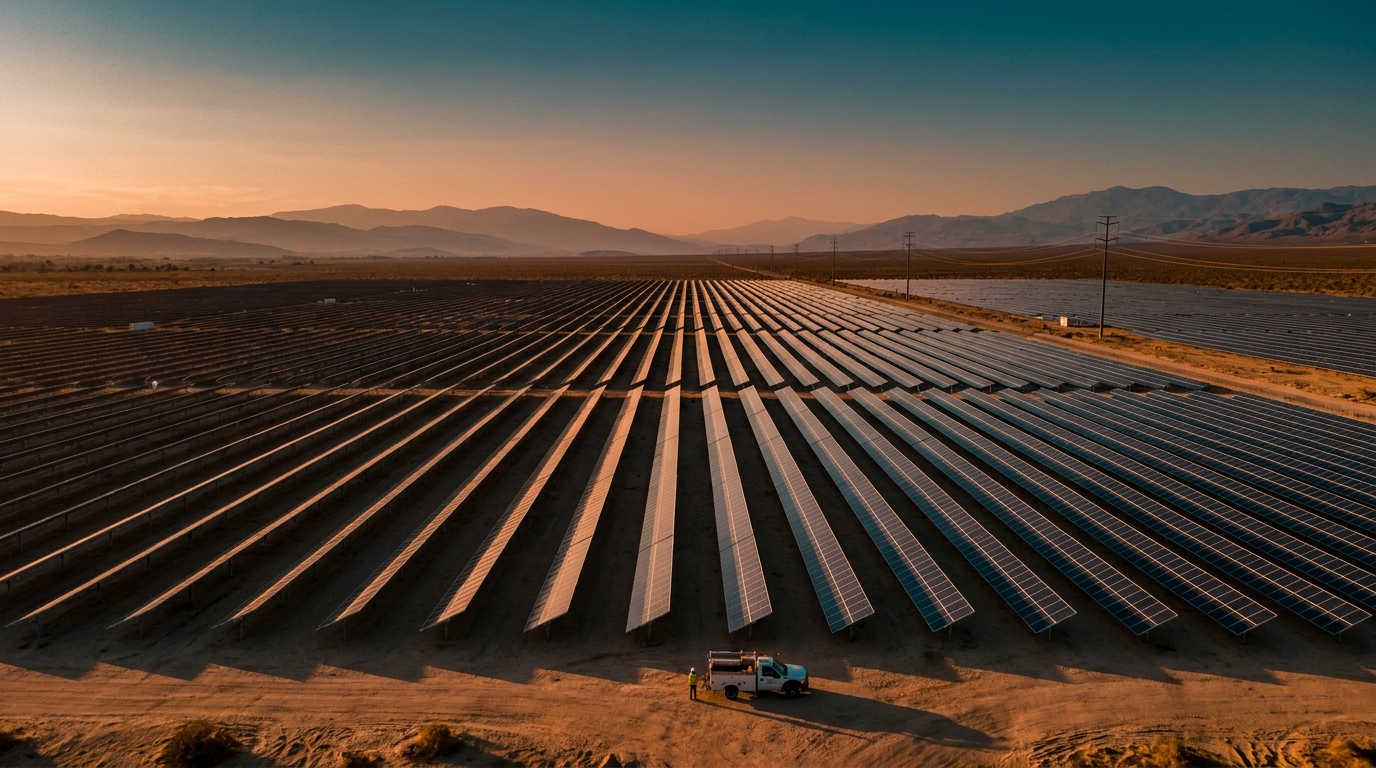
California generated 51% of its electricity from solar energy in May 2026, the first time a major economy has surpassed the 50% threshold in a complete calendar month, according to an analysis by the think tank Ember reported by Canary Media on July 31.
The milestone was made possible by the rapid expansion of battery storage. The California grid operator (CAISO) scaled from 61 megawatts (MW) a decade ago to 16 gigawatts (GW) in April 2026, a 79% increase in just two years, according to the U.S. Energy Information Administration (EIA). That capacity allows midday solar generation to be shifted to the evening peak: batteries covered more than a quarter of nighttime electricity demand in May, Canary Media reported. Hungary, the closest economy to that benchmark, reached 47% solar generation in June 2025, though with a gross domestic product far smaller than California's.
Utility-scale solar generation in California grew 21% in the first five months of 2026 compared to the same period in 2024, while installed capacity rose 19% to 25 GW, per the EIA. Battery discharges tripled over that period, displacing natural gas generation, which fell 60%. Solar outpaced natural gas on 82% of days between January and May 2026, compared to 21% recorded in 2024 and 2025. Natural gas capacity remained unchanged at around 29 GW. Electricity imports from other states doubled, driven by Pacific Northwest hydropower and the SunZia wind project in New Mexico, which began delivering electricity to California in April 2026.
California's case redefines the renewable integration benchmark for large-scale grids: the determining variable is not how much solar capacity is installed, but how much storage backs it up. The EIA's monthly electricity generation report for June, expected in mid-August, will indicate whether the trend holds through the high-demand summer months.
This article was written with artificial intelligence assistance based on verified sources and reviewed by a human editor before publication.
Sources
Related stories
This article was drafted with AI assistance from verified sources and reviewed by a human editor before publication.