Brent Rises 5% After Hormuz Attacks; IEEFA Draws Five Energy Market Lessons
Brent rises 5.2% after Hormuz attacks; IEEFA draws five structural lessons on energy security and supply diversification for Latin America.
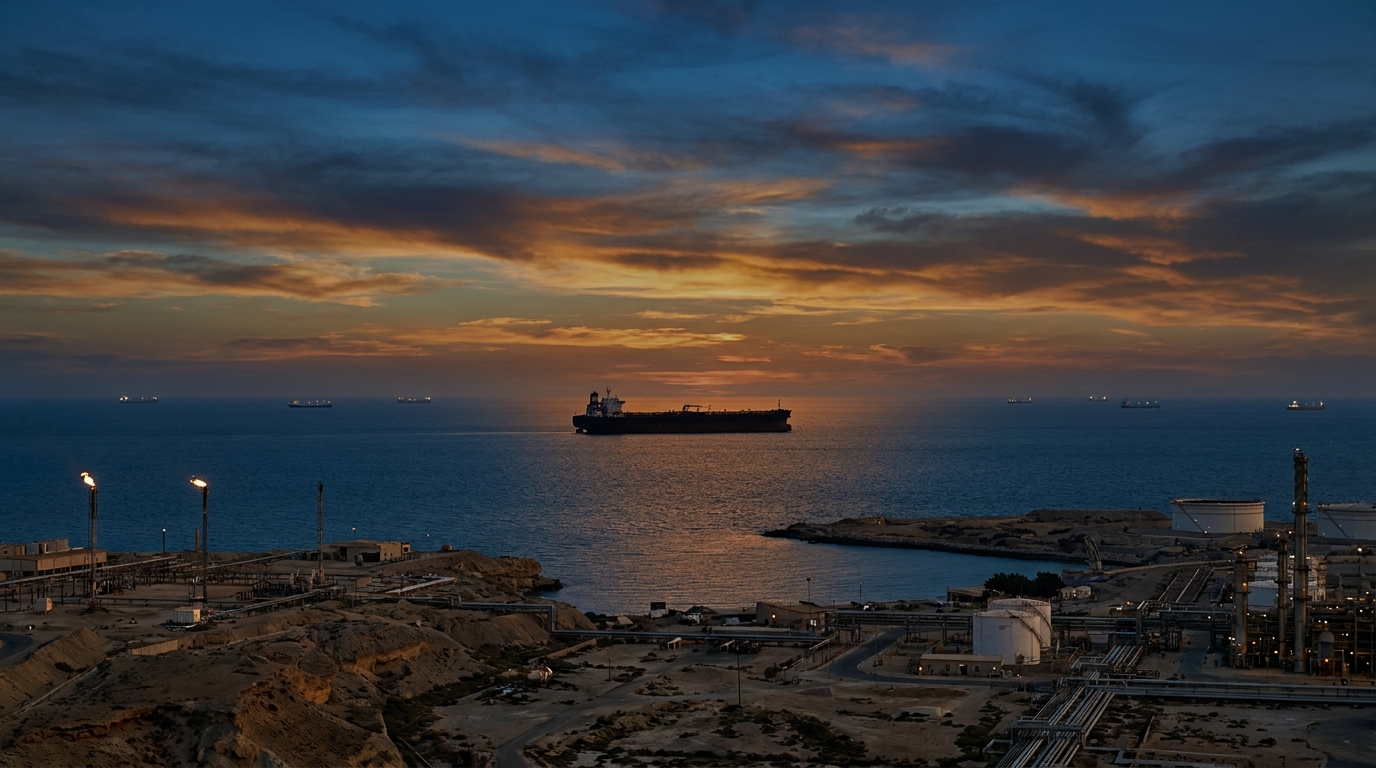
Brent crude rose 5.2% on July 8, to $78.02 per barrel, following U.S. strikes on more than 80 targets in Iran, according to CNBC. That same day, the Institute for Energy Economics and Financial Analysis (IEEFA) published an analysis with five structural lessons from the crisis for energy markets.
The escalation, confirmed by U.S. Central Command, which reported strikes against air defense systems, command networks, and anti-ship missiles, and the U.S. Treasury's cancellation of authorization for Iran to sell oil, reignited the debate over the fragility of energy supply routes, as Tehran warned it would close the strait. The IEEFA report, titled Deal or No Deal: Five Energy Market Lessons from the Middle East Crisis, warns that imported fossil fuels have become an economic security liability hitting governments, industries, and households alike. For Latin America, whose economies depend on imports of natural gas, diesel, and gasoline (Mexico imports most of the natural gas it consumes, predominantly from the Permian Basin in Texas), the lessons carry direct implications for supply diversification and the pace of electrification.
IEEFA structures five findings. First: imported fossil fuels are a systemic risk; Japan spent more than $77 billion in fuel subsidies between 2022 and 2024, and countries like Pakistan, Japan, and the Philippines depend on the Persian Gulf for more than 90% of their crude. Second: liquefied natural gas (LNG) has not passed the test as a safe transition fuel; new capacity projects have already been cancelled in China and Vietnam, while global gas prices punish consumers even in exporting countries like Australia. Third: the shock extends beyond oil; the Strait of Hormuz channels one-third of global maritime fertilizer trade and between 7 and 8% of world supply. The central conclusion: the structural response lies not in changing suppliers, but in reducing fossil fuel demand, electrifying, and accelerating clean energy.
South Korea is already framing the crisis as an opportunity to accelerate renewables, while India calculates that electric cooking is up to 37% cheaper than liquefied gas. IEEFA underscores that long-term energy security is not bought with new import contracts; it is built through reduced dependence.
This article was drafted with artificial intelligence assistance from verified sources and reviewed by a human editor before publication.
Sources
Related stories
This article was drafted with AI assistance from verified sources and reviewed by a human editor before publication.
← All news