Brent Falls to $86 for Third Consecutive Day; Oman Proposes Voluntary Quotas at Hormuz
The Omani proposal, backed by Gulf states, seeks to replace Iran's mandatory tolls with voluntary contributions modeled on the Strait of Malacca framework.
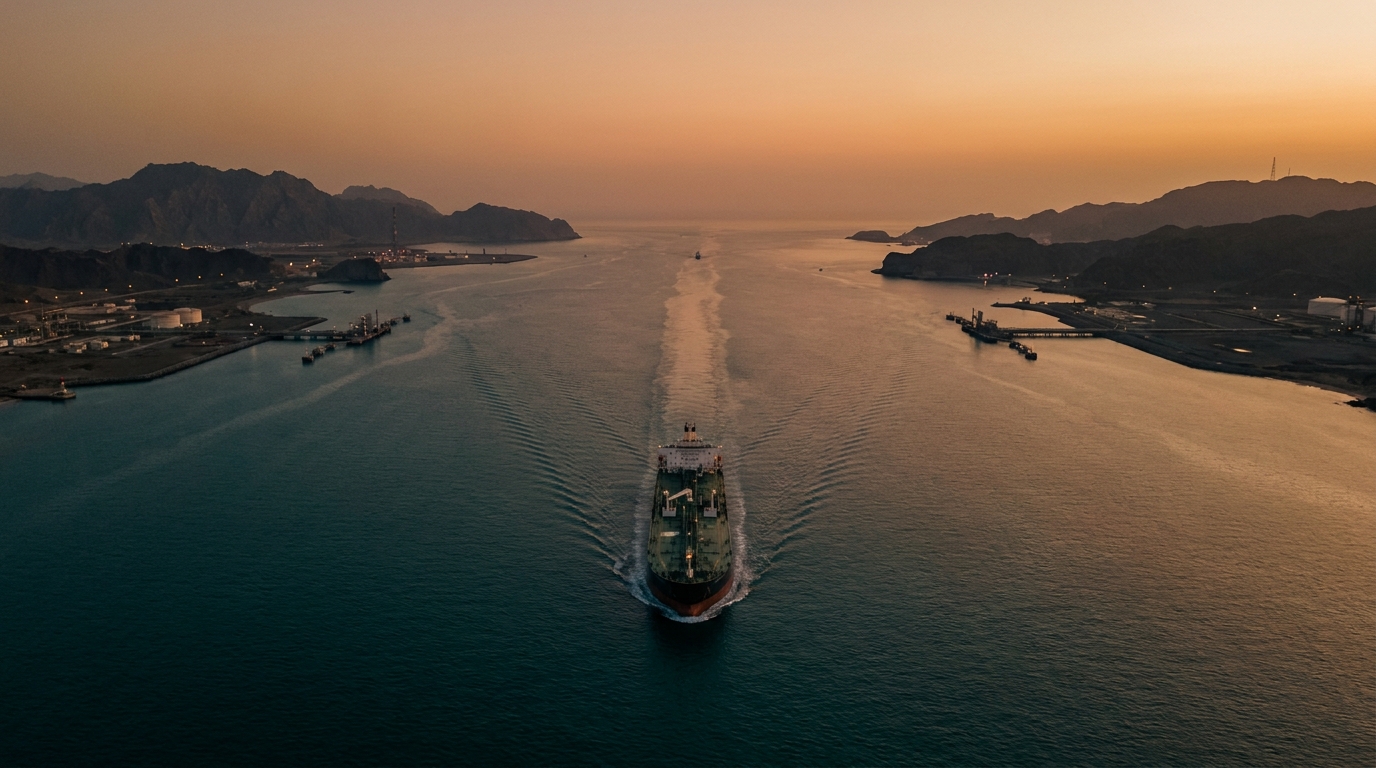
Brent crude fell for the third consecutive day on Monday, July 27, to $86 per barrel, a drop of 2.5 percent, after Oman presented Iran with a Gulf-state-backed proposal to establish voluntary transit quotas in the Strait of Hormuz.
The Omani initiative, reported by Bloomberg and CNBC on July 27 and 28, follows the pause in hostilities between the United States and Iran that took effect on Friday, July 25. Iranian Foreign Minister Abbas Araqchi held separate phone calls with Saudi Foreign Minister Faisal bin Farhan and his Omani counterpart, Badr Al-Busaidi, to discuss the future of the maritime corridor. According to Bloomberg, approximately one-fifth of the world's oil and liquefied natural gas (LNG) transits through the strait, traffic that has remained severely reduced since the conflict began in February 2026.
The mechanism proposed by Oman, backed by the Gulf Cooperation Council (GCC) countries including Saudi Arabia, draws on the Strait of Malacca model, where Indonesia, Malaysia, and Singapore invite vessels to make voluntary contributions for navigation services, environmental protection, and search-and-rescue operations. Unlike the mandatory tolls Iran had sought to impose unilaterally, the voluntary quota scheme reconciles Iran's demand for transit revenues with Washington's insistence on free passage without forced payments. The proposal envisages a three-lane maritime system: one through Iranian waters, an international corridor, and one through Omani territorial waters, along with the removal of naval mines on the international route. At the time of publication, Iran had not issued a formal response.
The ceasefire between Washington and Tehran held on Tuesday, July 28, though U.S. President Donald Trump warned that bombing would resume if negotiations fail to progress. Global oil markets will closely watch Iran's response to the Omani proposal and any eventual resumption of tanker traffic through the strait.
This article was written with the assistance of artificial intelligence from verified sources and reviewed by a human editor before publication.
Sources
Related stories
This article was drafted with AI assistance from verified sources and reviewed by a human editor before publication.
← All news