Brent tops $109 and strains fuel prices in LatAm
Brent rose 4.83% to $109.44 per barrel on September 14 and opens a double effect in LatAm: more Vaca Muerta foreign exchange and pressure on fuels.
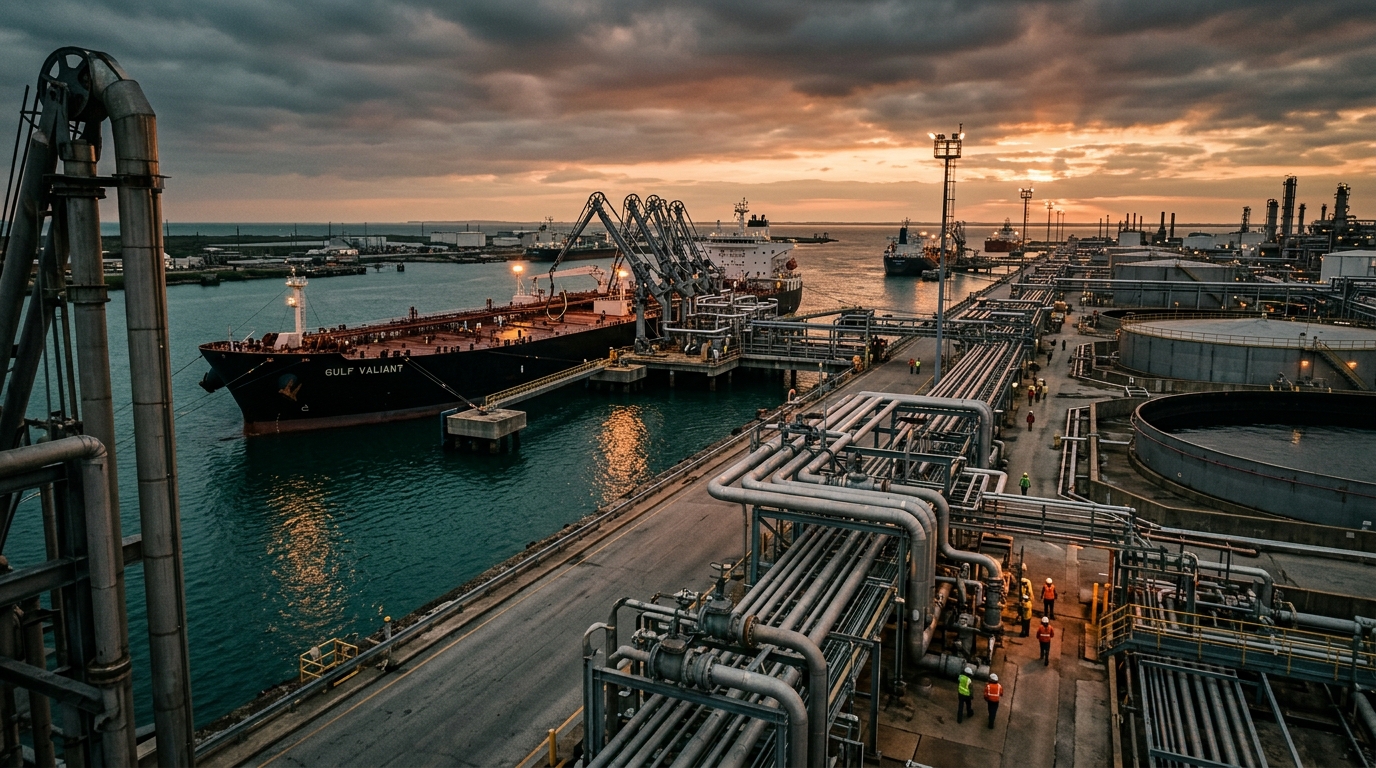
Brent rose 4.83% to $109.44 per barrel on Monday, September 14, its highest level since May, after Saudi Arabia suspended operations on its East-West pipeline, according to The National. WTI gained 4.74% to $104.79.
The pipeline, with capacity of about seven million barrels per day, carries crude from the Eastern Province to the port of Yanbu on the Red Sea and allows shippers to avoid the Strait of Hormuz, where traffic is already operating with interruptions. The suspension put at risk up to 4% of global supply, according to operators cited by The National. For Latin America, the effect is twofold. The Mexican Export Blend traded at $105 per barrel on September 11, its second session above $100, compared with the $78 average that Mexico's Finance Ministry (Hacienda) projects for the end of 2026 and the $62 for 2027. Each $1 change in the average price moves oil revenue by 9.6 billion pesos, according to Bloomberg Línea.
Argentina shows the other side. National production reached a record 916,200 barrels per day in July, 17.2% more than a year earlier, with 643,100 barrels per day from Vaca Muerta, 26.4% more, according to the Energy Secretariat cited by Bloomberg Línea. Every additional $10 per barrel equals about $1.3 billion a year in improvement in the energy trade balance, according to Aleph Energy, and close to $1.7 billion according to the IIF. At the pump, the pass-through has already been felt: since the start of the crisis, gasoline accumulated a 27% increase and diesel 23%, according to Economía & Energía. Pemex, for its part, cut its oil exports by 50% since 2024, in line with its policy of fuel self-sufficiency.
The Energy Information Administration (EIA) projects an average of $91.01 per barrel for 2026, $21.97 above the 2025 average, and a decline to $73.74 in 2027. The variable to watch is the restart of the Saudi pipeline: inventories in Yanbu cover between five and seven days of exports, according to operators cited by The National.
This note was written with assistance from artificial intelligence based on verified sources and reviewed by a human editor before publication.
Sources
- Oil nears $108 after Saudi Arabia shuts pipeline amid attacks
- Petróleo de México rebasa los US$100 por la guerra mientras el Gobierno espera un precio más bajo
- El petróleo sube y abre una paradoja para Argentina: más dólares de Vaca Muerta pero presión sobre la nafta
- EIA sees 2026 oil price coming in 22% higher than last year
Related stories
This article was drafted with AI assistance from verified sources and reviewed by a human editor before publication.