LNG Volatility in Asia Hits 300% in March, Highest Level Since 2022
The JKM LNG price index volatility in Asia approached 300% in March 2026, its highest since 2022. IEEFA warns that price instability is a double-edged sword for the regional energy sector.
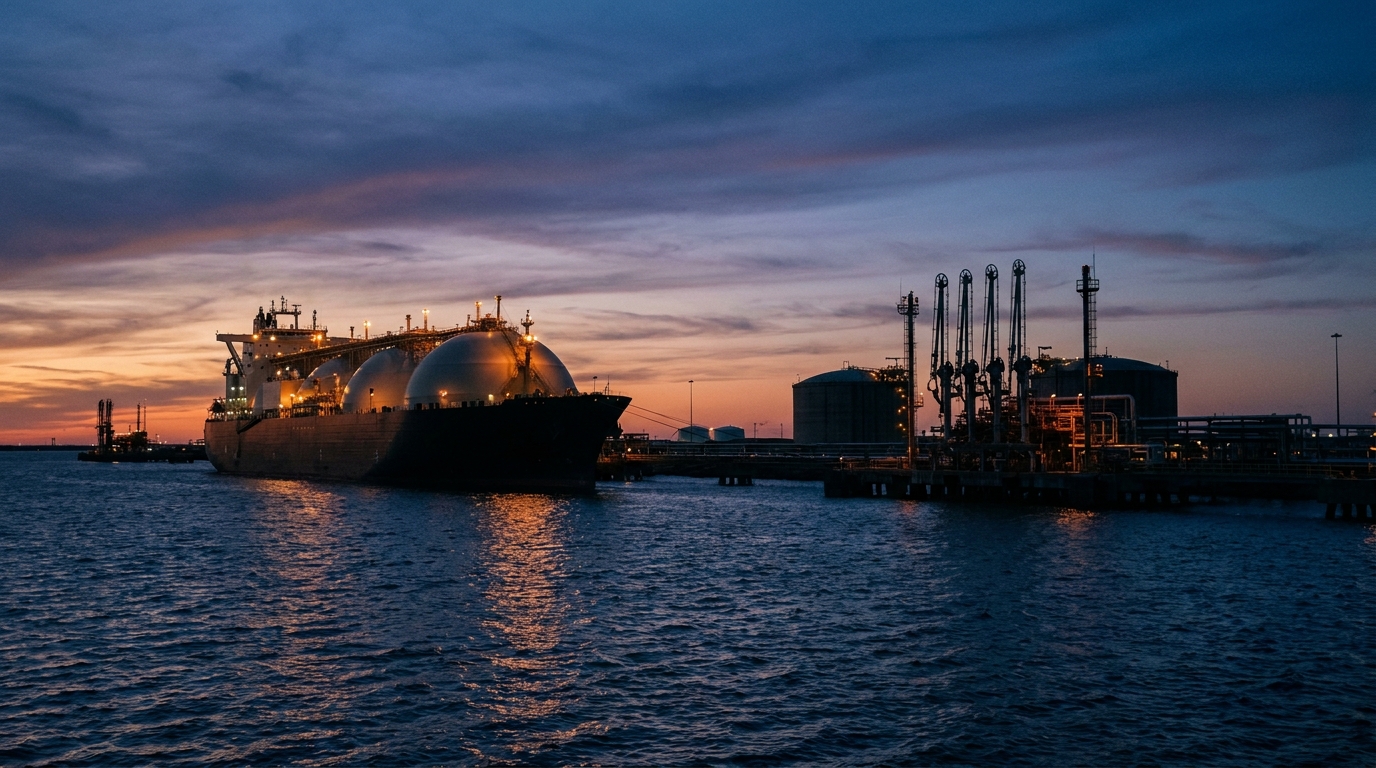
The volatility of the JKM index, the benchmark for liquefied natural gas (LNG) prices in Asia, approached 300% in March 2026, its highest level since March 2022, when Russia's invasion of Ukraine rattled global energy markets, according to the International Energy Agency's (IEA) quarterly gas report.
The trigger was the effective closure of the Strait of Hormuz in early March, following an Iranian drone attack that knocked the Ras Laffan export facility in Qatar offline. The disruption cut nearly 20% of global LNG supply, according to the IEA. The impact was most severe in Asia: roughly 90% of LNG transiting through Hormuz is destined for that region, representing more than 25% of the region's total imports. For Mexico and Central America, the consequences are real: the natural gas they import by pipeline from the Permian Basin in Texas is exposed to fluctuations in international LNG prices, which compete for the same export volumes from the U.S. Gulf.
The Institute for Energy Economics and Financial Analysis (IEEFA) described the situation as a double-edged sword for the industry. In the short term, volatility generates windfall gains for traders: the JKM spot price averaged around $21 per million BTU (MMBtu) in March, and the September 2026 contract exceeded $19, more than double what markets had expected at the start of the year, according to IEEFA. The long-term cost falls on importers. China cut its LNG imports to their lowest level since 2019, according to IEEFA citing Kpler data. Pakistan, Vietnam, and the Philippines scaled back LNG infrastructure projects, and Asian demand forecasts fell for the second consecutive year. Meanwhile, a wave of new export capacity from the United States, Mexico, Australia, and Nigeria points to a market showing signs of structural saturation.
Every month without transit through Hormuz removes roughly 10 billion cubic meters (bcm) of LNG from the global market, according to the IEA. The agency projects a cumulative loss of 120 bcm between 2026 and 2030, equivalent to roughly 15% of the global supply expected for that period. The price trajectory over the coming months depends as much on how the Middle East conflict evolves as on the pace at which new liquefaction capacity in the U.S. Gulf comes online.
This article was produced with artificial intelligence assistance from verified sources and reviewed by a human editor before publication.
Related stories
This article was drafted with AI assistance from verified sources and reviewed by a human editor before publication.