Arizona Ranks Second Only to Texas in Grid Battery Additions in 2026
Arizona installed more grid battery capacity than any U.S. state except Texas in 2026; 8.3 GW were added nationally, and the 550 MW Maricopa Energy Center is sustaining the pace.
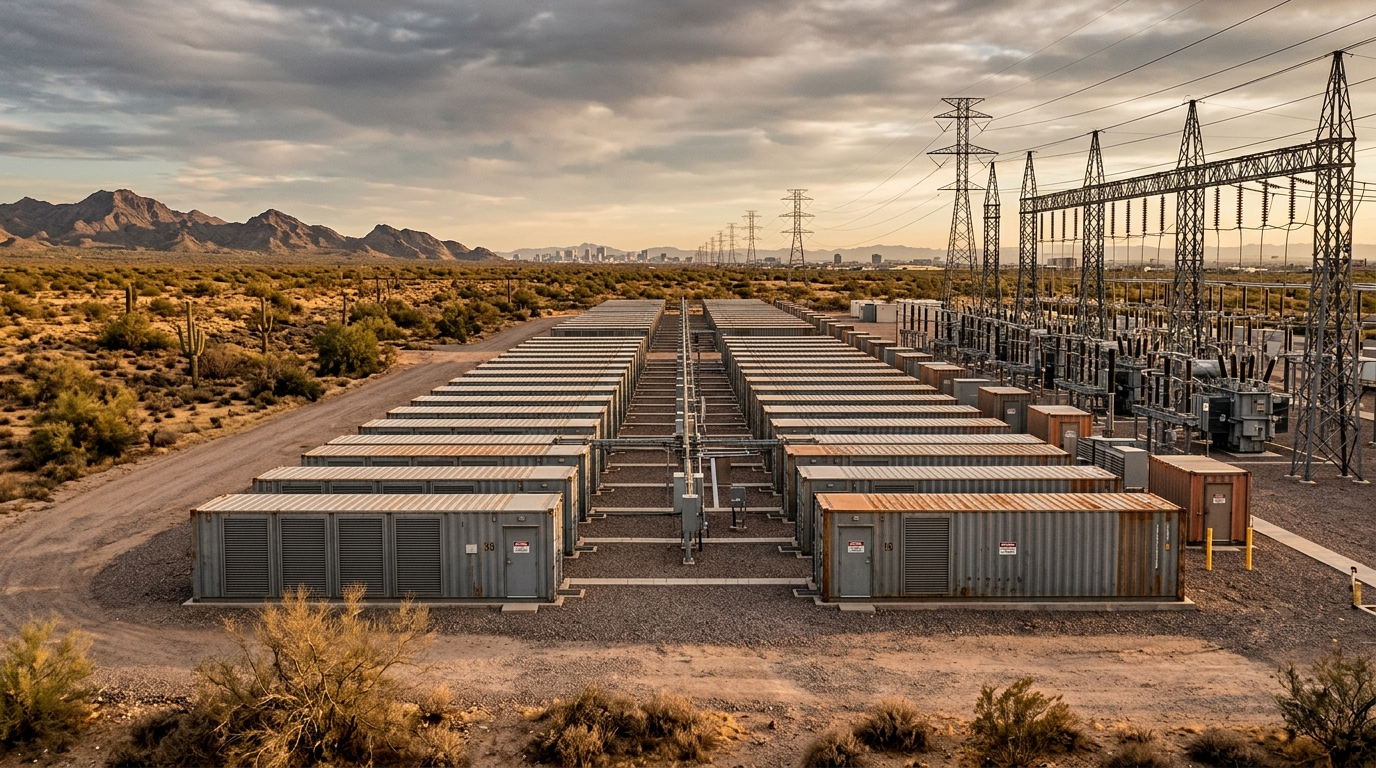
Arizona installed more grid-scale battery capacity than any U.S. state except Texas during the first half of 2026, according to a Canary Media analysis of data from the Energy Information Administration (EIA). In 2025, the state had already surpassed California in both storage and large-scale solar.
The U.S. grid-scale battery fleet reached approximately 52 GW at the close of the first half, with 8.3 GW added between January and June, and operators plan an additional 54 GW over the next two and a half years, according to the EIA. Arizona's trajectory follows neither of the two dominant models: it has no deregulated energy market like Texas, nor storage mandates like California. Its customers depend on three vertically integrated utilities (Arizona Public Service, Tucson Electric Power, and Salt River Project), and the state still managed to build batteries at gigawatt scale. The underlying driver, according to the analysis, is economic: abundant sun and a dry climate make solar the cheapest option, and batteries capture the surplus from peak sunlight hours.
Construction is concentrated at the Maricopa Energy Center, a 550 MW / 2.2 GWh project nearing completion, and three projects of 250 MW and 1 GWh each (Beehive, Catclaw, and Pediment). Seven additional projects are under construction targeting 2027, ranging from 100 to 300 MW. The state also completed 300 MW of gas and 500 MW of wind. Autumn Johnson, director of the Arizona branch of the Solar Energy Industries Association, said the current lead depends on utilities signing new contracts: the state regulator eliminated the renewable energy target that had been in place for two decades, and Arizona Public Service dropped four-hour-duration batteries from its long-term planning in July.
The figure to watch is whether utilities sign new storage agreements in the coming months, since already-contracted projects sustain construction through 2027. For the region, the case sets a clear precedent: grid-scale batteries can scale under a vertically integrated utility model, without an open market or a storage mandate.
This article was drafted with the assistance of artificial intelligence from verified sources and reviewed by a human editor before publication.
Related stories
This article was drafted with AI assistance from verified sources and reviewed by a human editor before publication.
← All news