Capital Is Available for Argentina's Copper and Lithium, but the Deals Aren't Closing
Mining capital in Argentina is available, but financing for copper and lithium projects has yet to fully come together. What do banks require before they will lend?
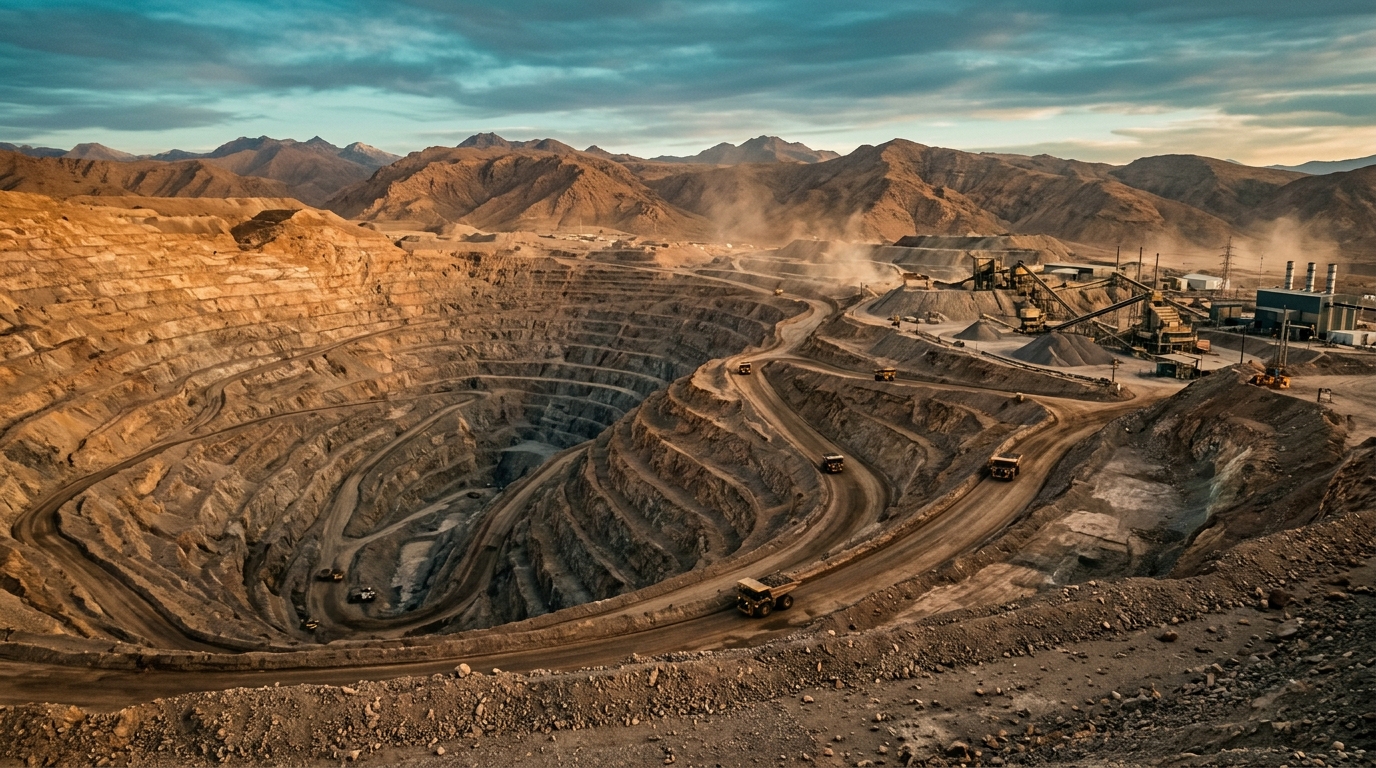
Copper and lithium projects worth billions of dollars remain stranded in Argentina, unable to secure the financing needed to break ground. Available capital is not translating into closed deals, bankers and multilateral development institutions warned at a bilateral forum held in Buenos Aires during the first week of September 2026, according to Bloomberg Línea.
At the event, lenders and institutions agreed that capital interested in Argentine mining exists, but that the availability of funds does not automatically mean access. Viviana Alva-Hart, a representative of the IDB Group, argued that "capital exists" but that "on its own it is not enough": financial closes depend on infrastructure, institutional predictability, and environmental and social sustainability. The framework financiers cite is the RIGI, the large-investment incentive regime, which in their reading provides stability and reduces regulatory and country risk, without replacing project-by-project due diligence. For the region, the gap between available capital and deployed capital determines how quickly the critical-minerals supply pipeline matures toward the U.S. market.
The factor that carries the most weight is who stands behind the project, said Federico Elewaut, executive director of Citi Argentina: the sponsor must have experience and a parent company capable of absorbing cost overruns and guaranteeing project completion. William Husband, global head of metals and mining at Citi, described project finance (credit repaid from the project's own cash flows) as the standard structure, and summed it up: "you only need one precedent and all the rest of Wall Street will follow." The cost of capital also matters: a competitive project can access global credit in the 5% to 7% annual range, and above 8% the cost weighs on future cash flows. Progress is being made nonetheless: BID Invest, the IDB Group's private-sector arm, announced in late August up to $700 million for the expansion of Sal de Oro, POSCO's lithium project in Salta and Catamarca.
The figure to watch is Los Azules, the project where the International Finance Corporation (IFC) is working to improve its bankability; that development will show whether Argentina can achieve the first large-scale close that banks are waiting for. Husband placed that milestone on a near-term horizon, citing Argentina's evolving trajectory and global demand for copper and lithium.
This article was written with artificial intelligence assistance based on verified sources and reviewed by a human editor before publication.
Sources
Related stories
This article was drafted with AI assistance from verified sources and reviewed by a human editor before publication.