Antora Closes $550M Round for Solid-Carbon Thermal Batteries
The Series C, one of the year's largest climatetech raises, will fund a second U.S. manufacturing plant and projects for data centers and heavy industry.
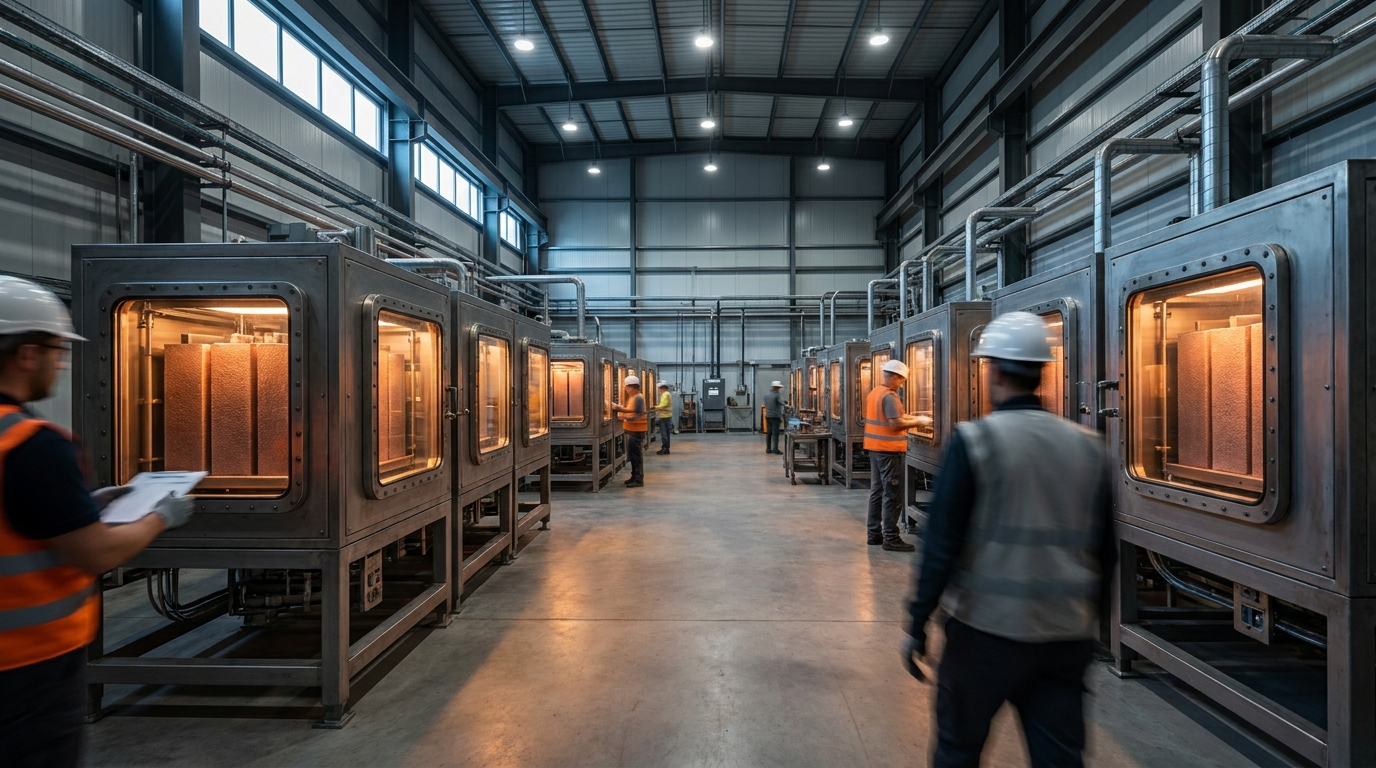
Antora Energy closed a $550 million Series C round on July 30, one of the largest venture capital transactions in climatetech in 2026, to scale its thermal storage technology based on solid-carbon blocks. The capital injection brings the company's total financing to approximately $1 billion, combining corporate and project resources.
The round was co-led by G2 Venture Partners and Eclipse, with participation from Ribbit Capital, Salesforce Ventures, and Breakthrough Energy Ventures, among others. Antora's technology consists of modular batteries that heat solid-carbon blocks to 2,400°C using electric resistance elements, delivering high-temperature heat or electricity for industrial processes and data centers, without relying on lithium or critical minerals. The company operates a three-building manufacturing plant in San Jose, California, and recently commissioned a 5 GWh (gigawatt-hour) system at a Poet biorefinery in South Dakota, one of the largest battery storage projects in the world.
Proceeds will be used to build a second manufacturing facility in the United States and to develop large-scale projects for data center operators and heavy industry. Justin Briggs, Antora's chief operating officer, placed the scale of the data center projects at five to ten times that of the South Dakota system. The company has signed agreements with hyperscale operators and works with utilities such as Otter Tail Power on electricity tariffs that incentivize charging during periods of renewable generation surplus. Antora's thermal storage offers multi-day capacity using abundant, low-cost materials, a supply-chain advantage over lithium-ion batteries in industrial applications.
Antora's round confirms that non-lithium storage is now competing for institutional capital at the scale of mature technologies. The same data center demand pressure driving this investment in the United States is beginning to appear in Latin America, with large-scale storage projects under development in Chile and Brazil.
This article was written with artificial intelligence assistance from verified sources and reviewed by a human editor before publication.
Sources
Related stories
This article was drafted with AI assistance from verified sources and reviewed by a human editor before publication.