With 40 GW across 700 Projects, Amazon Leads Corporate Clean Energy Procurement
Brandon Oyer, AWS energy director, details in an interview with Latitude Media how the company finances its carbon-free energy portfolio, the world's largest according to BloombergNEF.
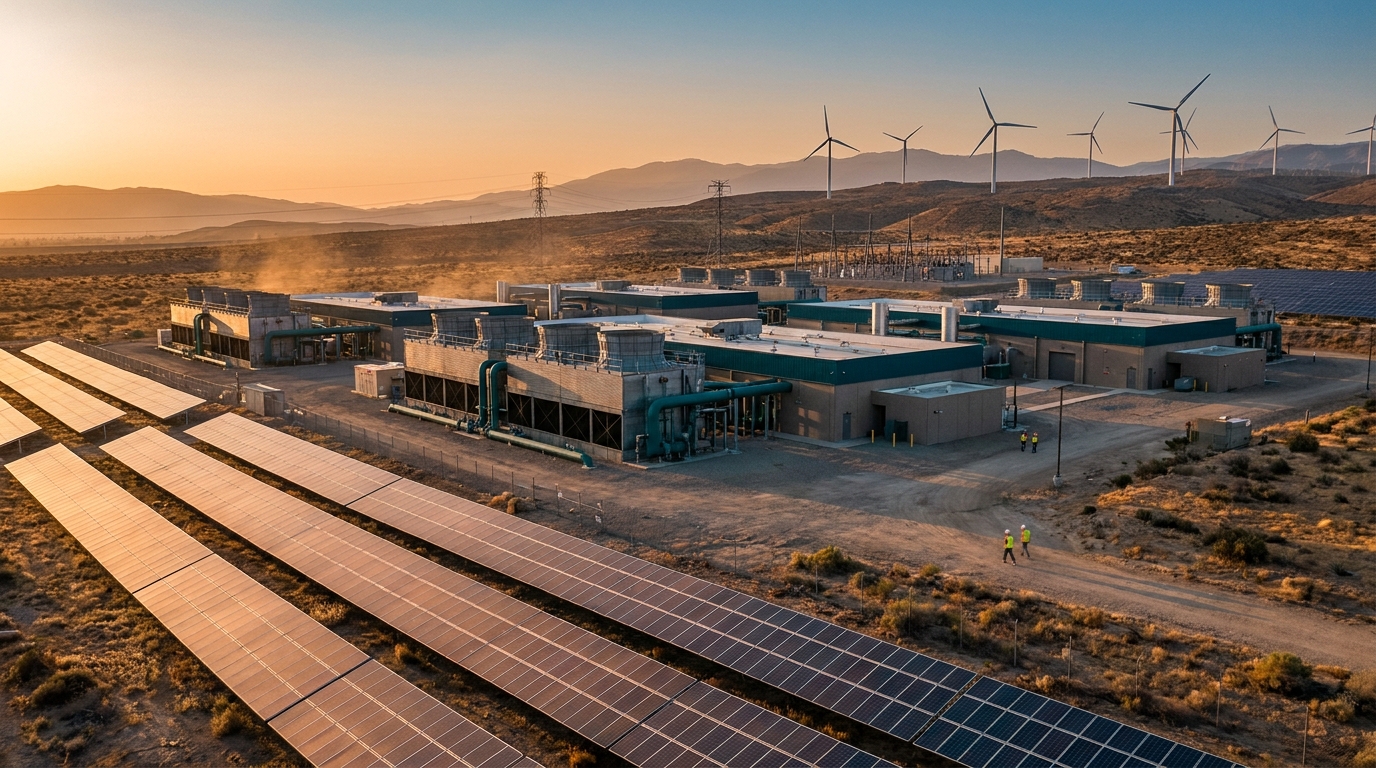
Amazon operates more than 700 carbon-free energy projects with 40 gigawatts (GW) of capacity across 28 countries, the world's largest corporate portfolio, as detailed by Brandon Oyer, Amazon Web Services (AWS) energy director, in an interview with Latitude Media published on July 17, 2026.
BloombergNEF (BNEF) ranked the company as the largest clean energy holder among global corporations for the fifth consecutive year in 2025. The portfolio includes more than 300 utility-scale solar and wind projects, 300 on-site solar installations, 11 battery storage systems, six offshore wind farms in Europe, and four nuclear agreements, according to the company itself. The interview with Oyer, part of a series of sponsored content by Amazon on Latitude Media, describes how the company is responding to the growing electricity demand from its data centers, driven by the expansion of artificial intelligence and cloud services.
Oyer explained that the company finances the full cost of the electricity it consumes and the additional infrastructure (transmission lines, substations, and grid upgrades), without passing those costs on to other users. Amazon signed the White House-backed ratepayer protection pledge in March 2026. As a result, Indiana Michigan Power reduced base rates and Entergy Mississippi announced $300 million in grid improvements at no cost to its customers. On the nuclear front, the company invested $500 million in X-energy to develop small modular reactors (SMRs), which start in 80 MW modules, a fraction of the 1,000 MW of a conventional reactor. Amazon also improved water use efficiency by 52% between 2021 and 2025 and is advancing toward its goal of being water-positive by 2030.
The investment pattern of hyperscalers is redrawing the energy infrastructure map. The four largest cloud operators accounted for 49% of global clean energy contracts in 2025, according to BNEF. For markets seeking to attract data centers, including Latin America, the grid co-investment model Oyer describes sets the standard.
This article was written with artificial intelligence assistance based on verified sources and reviewed by a human editor before publication.
Sources
Related stories
This article was drafted with AI assistance from verified sources and reviewed by a human editor before publication.