USMCA Review Begins July 1 with Energy as Core Bilateral Flashpoint
CFE's priority dispatch, the 54% minimum state ownership requirement, and Pemex's $2.5 billion in overdue receivables anchor the treaty review.
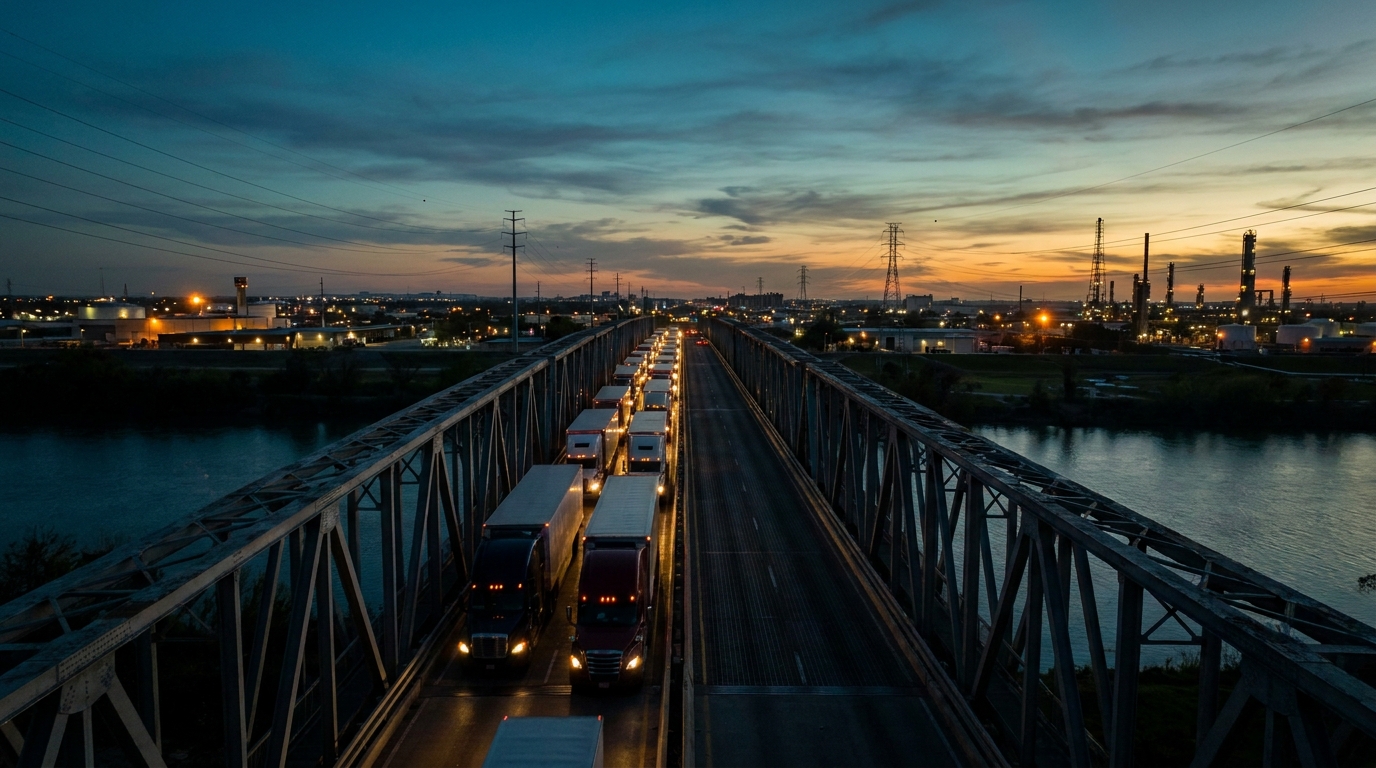
The formal USMCA review begins July 1, 2026, with the energy sector as the primary bilateral flashpoint. U.S. oil and gas suppliers have accumulated $2.5 billion in overdue receivables from Pemex as of end-2025, per the USTR report published in March 2026 and reported by OPIS.
The review is mandated by Article 34.7 of the treaty, which requires Mexico, the United States, and Canada to decide whether to extend the agreement for another 16 years or enter annual renegotiation cycles. The process launched in earnest in late June: per El Financiero, formal negotiations began the last week of June and are expected to extend at least through 2028. Economy Secretary Marcelo Ebrard leads the Mexican delegation, facing USTR Jamieson Greer for the United States and Minister Dominic LeBlanc for Canada.
Tensions center on two measures from the October 2024 constitutional reform and its secondary legislation from March 2025: priority dispatch for the Comisión Federal de Electricidad (CFE) on the national grid, which displaces private generators, and the minimum 54% state ownership requirement for any mixed-investment generation project. The USTR argues that both provisions violate Chapters 2, 14, and 22 of the USMCA on national treatment, investment protection, and competitive neutrality for state enterprises. Mexico defends the reforms as a constitutional mandate for energy sovereignty, though it faces a fundamental vulnerability: more than 80% of the natural gas the country consumes (a key input for electricity generation) arrives via Texan pipelines.
The Baker Institute at Rice University recommends negotiating a phased market-opening calendar for Mexico's electricity sector as a compromise path. Without a substantive agreement by end-2026, entry into annual review cycles would sustain regulatory uncertainty for private generators on both sides of the border.
This article was drafted with artificial intelligence assistance from verified sources and reviewed by a human editor before publication.
Sources
Related stories
This article was drafted with AI assistance from verified sources and reviewed by a human editor before publication.
← All news