Trump Order on Imported Equipment: BloombergNEF Expects Battery Storage Delays and Cancellations
The August 26 executive order restricts foreign electrical equipment on the U.S. grid; BloombergNEF anticipates delays and cancellations in battery storage.
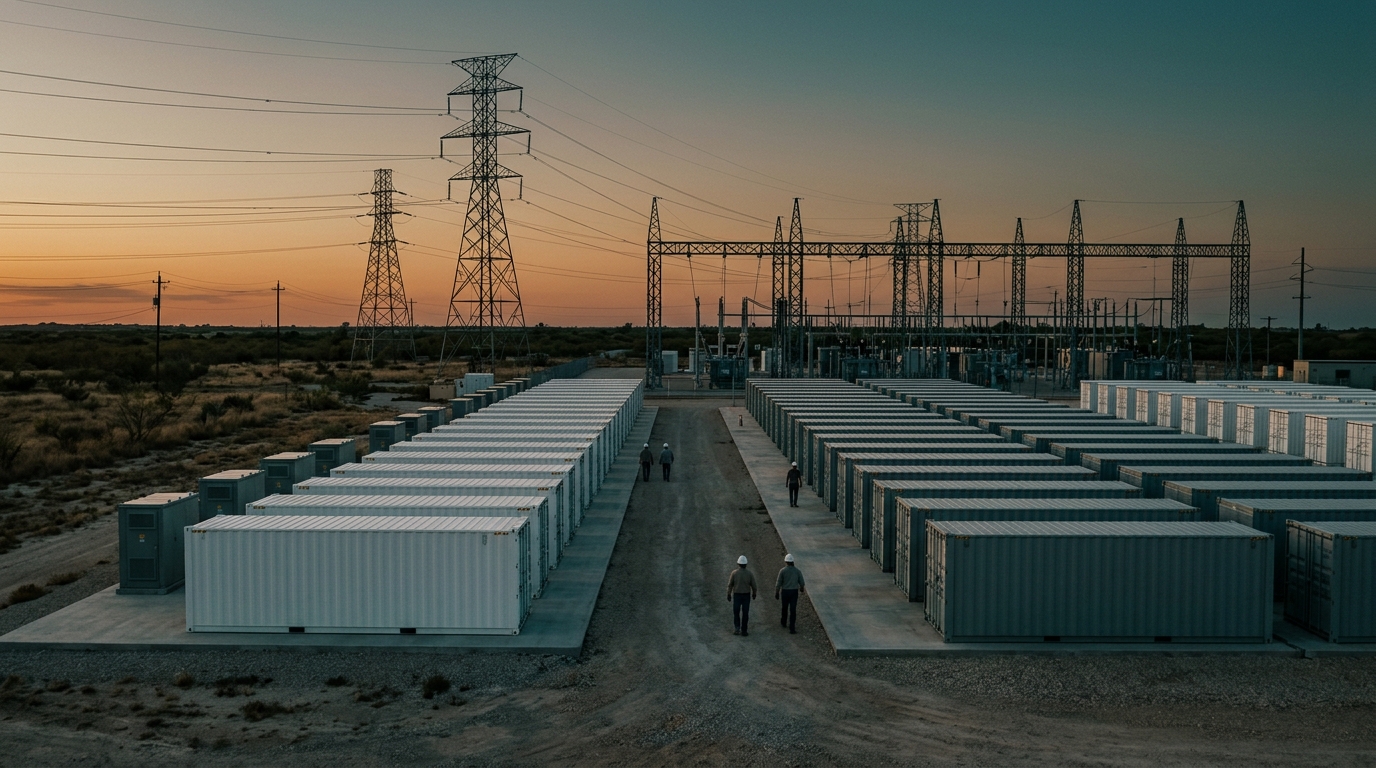
President Donald Trump signed an executive order on August 26 restricting foreign-manufactured electrical equipment connected to the country's transmission grid. BloombergNEF expects battery storage to be the most exposed segment, with deployment delays and project cancellations, according to Utility Dive.
The order covers transformers, inverters, energy storage systems, and control electronics for large-scale power infrastructure, and blocks new transactions involving equipment from suppliers linked to 24 countries subject to U.S. arms embargoes, according to analysis by pv magazine USA. China accounts for 80% of global lithium-ion battery production capacity, and its manufacturers supplied roughly 40% of inverters in the U.S. market in 2025, according to data from the International Energy Agency (IEA) and BloombergNEF cited by Utility Dive. That dependence is shared by battery projects in Mexico and Latin America, which source from the same Asian cell and inverter manufacturers.
The order compounds the existing Foreign Entity of Concern (FEOC) rules, which tie tax credits to reducing dependence on China. Zoe Zakrzewska, a BloombergNEF analyst, told Utility Dive that the measure leaves Chinese battery and inverter manufacturers with less room to adapt to the U.S. market than the FEOC rules allowed. The analysis anticipates that developers with purchased but uninstalled equipment will delay interconnection, and that some projects will be cancelled when the exclusion of Chinese inputs renders them unviable. The National Electrical Manufacturers Association called for greater clarity on the scope of the order, particularly regarding software, according to statements by Bridget Bartol to Utility Dive. BloombergNEF adds that four battery plants came online in the U.S. in 2026, and that manufacturing in non-covered countries will moderate the long-term impact.
Implementation will be defined by December 24, when the Department of Energy (DOE) publishes the rules and, according to Norton Rose Fulbright, a supplier list or a licensing framework. For Mexico and Latin America, the critical variable to watch is whether this supply-side reconfiguration raises costs or delays the inverters and cells their battery projects require.
This article was drafted with artificial intelligence assistance from verified sources and reviewed by a human editor before publication.
Sources
Related stories
This article was drafted with AI assistance from verified sources and reviewed by a human editor before publication.