Texas Granted 38 AI Data Centers Air Permits Meant for Dry Cleaners
At least 38 data centers obtained air permits in Texas since 2024 under categories designed for dry cleaners and auto shops, allowing installation of 2,100 diesel generators without major environmental review.
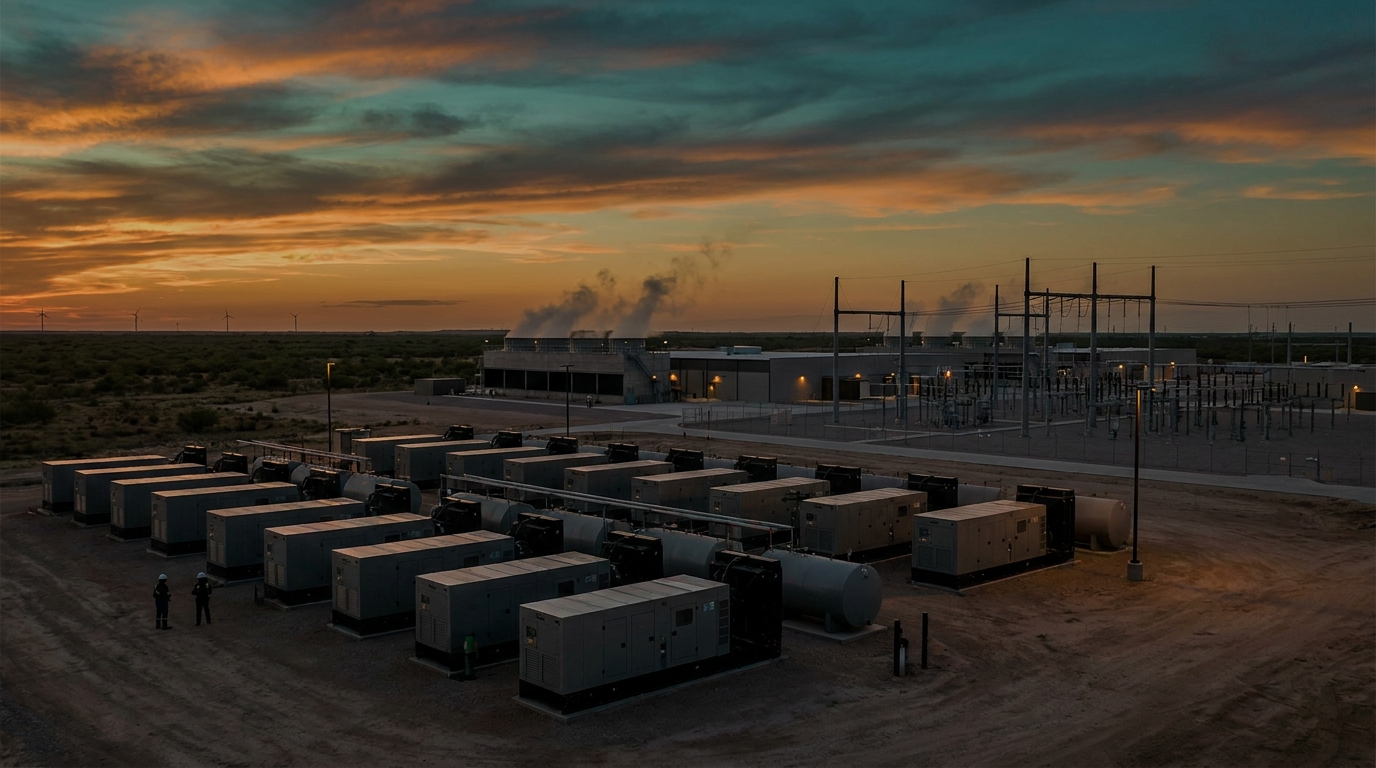
At least 38 artificial intelligence data centers in Texas have obtained, since 2024, air permits typically reserved for dry cleaners and auto shops, according to a Floodlight investigation published July 9 and picked up by The Texas Tribune. The mechanism allowed installation of more than 2,100 backup diesel generators without the public hearings or impact studies that a major permit would require.
The permits, known as "permits by rule" and "standard permits" under the Texas Commission on Environmental Quality (TCEQ), authorize emission sources that collectively release roughly 2,500 tons of nitrogen oxides per year, more than triple the output of the state's newest coal plant, according to Floodlight's analysis. More than half of the facilities declared emissions just below the thresholds that trigger stricter review: a Cyrus One facility in Whitney reported 249.1 annual tons, 0.9 tons short of the 250-ton limit. The TCEQ defended its conduct, noting it conducted more than 100,000 investigations in 2025 and that its enforcement figures reflect high levels of compliance.
The largest-scale case is Stargate, the 445-hectare campus in Abilene that is part of the $500 billion joint venture among OpenAI, SoftBank, and Oracle. It operates 10 gas turbines and 62 backup diesel generators, and has applied to add 41 more turbines and 18 additional generators. Its current permit authorizes more than 1.6 million tons of greenhouse gases and 1,000 tons of air pollutants per year. At the state level, nine gas plants planned for data centers carry authorized emissions totaling more than 130 million tons of CO₂ equivalent per year, which the U.S. Environmental Protection Agency (EPA) equates to 35 coal-fired power plants. Texas has 80 gigawatts (GW) of new gas capacity in the pipeline, with nearly half earmarked exclusively for data centers, according to Cleanview.
Bruce Buckheit, former EPA enforcement chief, characterized the permit-stacking practice as one that violates federal aggregation policies. With more than 1,400 enforcement cases backlogged at the TCEQ, the Texas model will be closely watched by other Gulf energy corridor states competing for AI infrastructure investment.
This article was drafted with artificial intelligence assistance from verified sources and reviewed by a human editor before publication.
Sources
Related stories
This article was drafted with AI assistance from verified sources and reviewed by a human editor before publication.