Sener Publishes Petroleum Production Target Through 2039 in the DOF
Sener publishes the master hydrocarbon plan 2025-2039: sustaining 1.8 million b/d, adding 7,292 million barrels to reserves, and cutting imports.
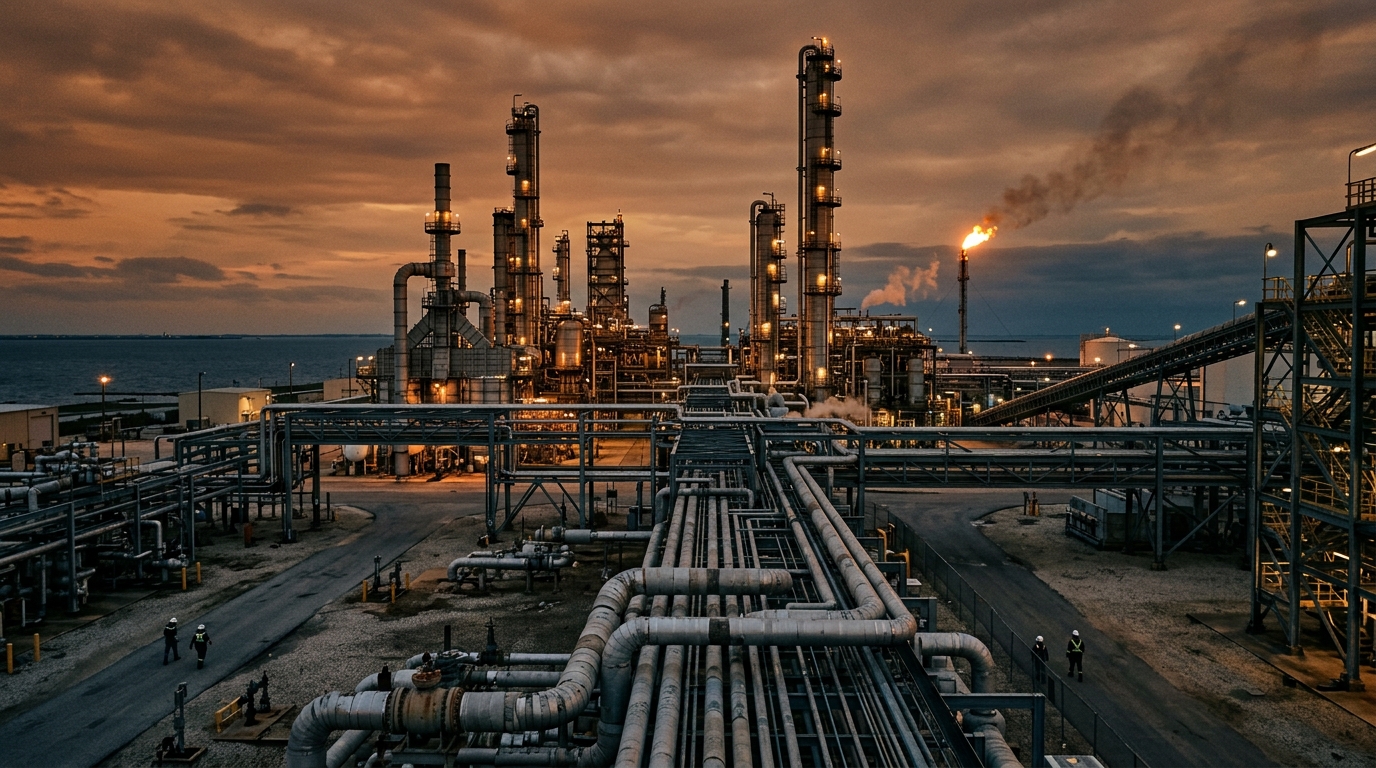
The Ministry of Energy (Sener) published on September 7, 2026, in the Diario Oficial de la Federación (DOF) the Hydrocarbon Sector Development Plan 2025-2039, which sets a target of maintaining national liquid hydrocarbon production at 1.8 million barrels per day through 2039 and natural gas at close to 5,000 million cubic feet per day (MMcfd).
The plan governs exploration, extraction, refining, transportation, and storage of hydrocarbons over a 15-year horizon and incorporates into its production targets both Pemex and private companies operating under legally permitted schemes, according to Energía a Debate. Hydrocarbons represent 84% of Mexico's energy supply, UnoTV reported. External dependence is especially acute in natural gas: in 2024, only 35.13% of the dry gas entering the National Integrated Gas Transportation and Storage System (SISTRANGAS) was of domestic origin, while 64.72% arrived as imported pipeline gas, according to the document. Sener links higher domestic production to reduced exposure to external supply disruptions and international price volatility.
On the refining side, the plan calls for raising gasoline output from 403,000 to 624,000 barrels per day and diesel from 230,000 to 441,000, while expanding National Refining System (SNR) processing capacity to 1.392 million barrels per day starting in 2028-2029, according to UnoTV. The plan also calls for acquiring seismic data covering more than 38,000 square kilometers between 2025 and 2032. According to Energía a Debate, Sener projects adding 7,292 million barrels of crude oil equivalent (mmboe) to reserves between 2026 and 2039, peaking at 822 million in 2029. The document reports that 3P reserves fell from 43,075 to 23,146 mmboe between 2010 and 2024, a decline of 46%.
The plan will undergo annual review and conditions some of its targets on the execution of refinery rehabilitation programs and the operation of the Olmeca refinery. Reserve additions will reach their highest point in 2029; that figure will provide the first reading on reserve trajectory relative to the documented decline between 2010 and 2024.
This article was written with artificial intelligence assistance based on verified sources and reviewed by a human editor before publication.
Sources
Related stories
This article was drafted with AI assistance from verified sources and reviewed by a human editor before publication.