Scientific Committee Rules Out Fracking in Tampico-Misantla, Evaluates Saltwater Alternative
A committee of 54 experts recommends banning fracking in the Tampico-Misantla basin and restricting the technique to saltwater use only; Mexico imports 75% of the natural gas it consumes.
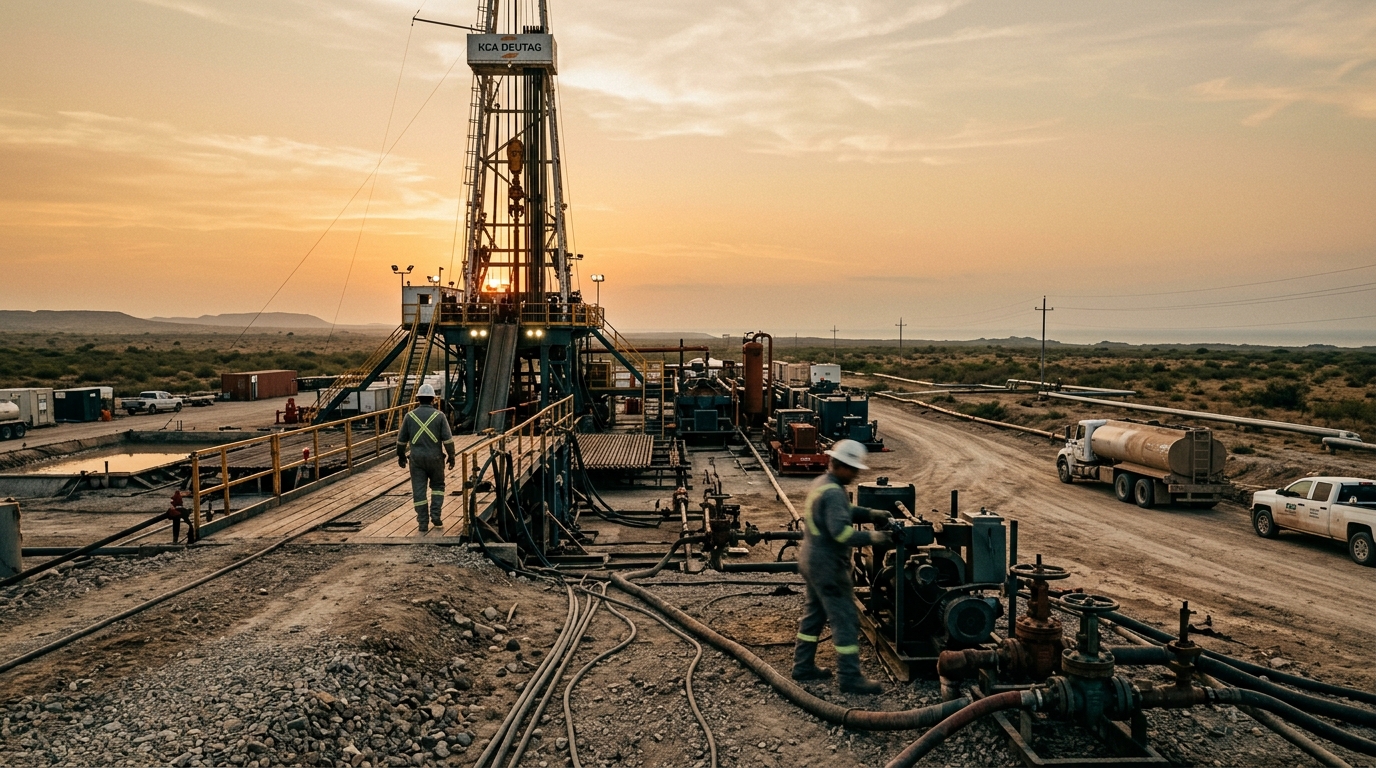
The Scientific Committee on Energy Sovereignty and Unconventional Natural Gas Deposits recommended on August 6 banning hydraulic fracturing (fracking) in the Tampico-Misantla basin, citing environmental and social infeasibility. Mexico imports 75% of the natural gas it consumes.
The report, produced by 54 scientists, technologists, and humanists convened by the federal government and presented at the August 6 morning press conference, links dependence on imported gas to the country's energy security, according to Aristegui Noticias. José Antonio Hernández Espriú, a researcher at the Universidad Nacional Autónoma de México (UNAM), stated that hydraulic fracturing must rely exclusively on saltwater, reuse at least 75% of the fluid, and operate under continuous monitoring. Unconventional gas is trapped in low-permeability formations and requires hydraulic fracturing, a process involving the injection of water, sand, and additives under pressure to open micro-fractures. The Tampico-Misantla basin, facing the Gulf of Mexico and spanning from Veracruz to Tamaulipas, was ruled out; the committee left open the evaluation of Sabinas-Burro-Picachos, in Coahuila and Nuevo León, and Burgos, in northeastern Tamaulipas.
In 2025, national consumption averaged 9,100 million cubic feet per day, with 58% directed to electricity generation; the committee projects that, without demand-containment measures, consumption will reach 10,800 million cubic feet per day by 2030. Some 93% of the gas Mexico purchases from the United States comes from unconventional deposits. Specialists proposed four strategic axes, including 22,000 MW of new clean capacity by 2030 and 500 million cubic feet per day in efficiency savings. President Claudia Sheinbaum announced that the Mexican Institute of Water Technology will drill exploratory wells to confirm the presence of saltwater in the subsoil and that, before authorizing any project, an informed public consultation will be conducted. Some 30 civil society organizations rejected the report, stating in a communiqué that the study "was not seeking to answer whether Mexico should ban fracking, but rather how to use it with less guilt."
The next milestone will be the drilling of exploratory wells to determine whether saltwater exists in the Sabinas-Burro-Picachos and Burgos basins, a prerequisite for evaluating any development. The government will publish the studies through the Secretariats of Energy and of Science, Humanities, Technology and Innovation, and will report progress every two to two and a half months.
This article was drafted with artificial intelligence assistance from verified sources and reviewed by a human editor before publication.
Sources
Related stories
This article was drafted with AI assistance from verified sources and reviewed by a human editor before publication.
← All news