Russian Crude Processing Falls to 3.95 mb/d in June, a Two-Decade Low
Ukrainian drone strikes on refineries have knocked out a third of Russia's refining capacity and are forcing the Kremlin to explore fuel imports.
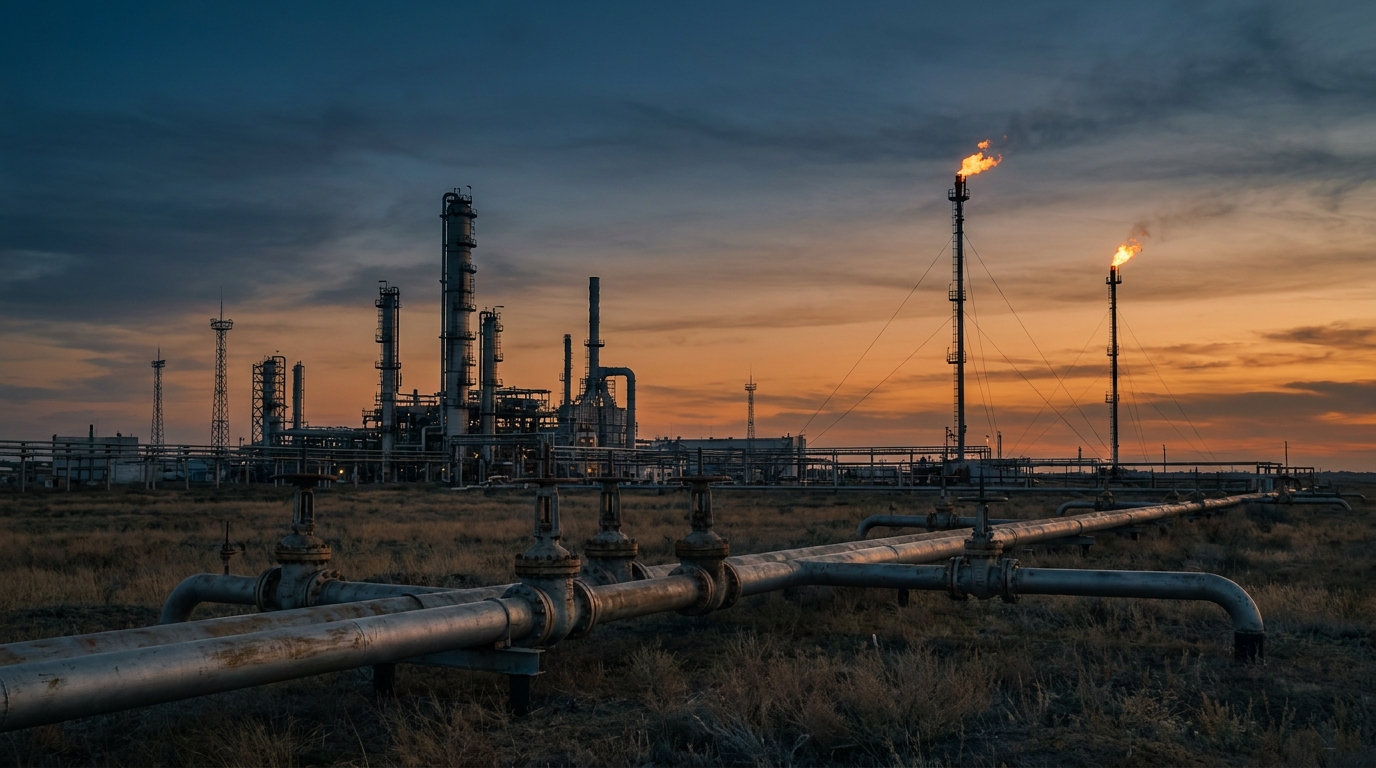
Russian crude processing fell to 3.95 million barrels per day (mb/d) in June 2026, the lowest level in more than two decades, according to the Associated Press (AP). Gasoline production dropped 17% year-on-year, to 850,000 barrels per day.
More than 50 Ukrainian drone strikes against Russian refineries, storage depots, and oil terminals since late March 2026, documented by AP, knocked out roughly a third of the country's refining capacity, according to estimates by Chris Weafer, director of Macro-Advisory Ltd. The campaign intensified in April and May, with 26 strikes on refineries, and crossed a new threshold in June by repeatedly targeting the Kapotnya refinery southeast of Moscow, according to an analysis by the Carnegie Endowment for International Peace. The disruption is already filtering into global distillate markets: the Russian government restricted exports of gasoline and aviation fuel in June and is now evaluating whether to extend the measure to diesel.
The scale of the deterioration is visible in the daily output figures. According to Reuters data cited by AP, Russian gasoline production fell from 120,000 metric tons per day in March to 110,000 in April, 100,000 in May, and just 90,000 in June, well below the summer demand level of approximately 110,000 metric tons per day. By late June, more than half of Russia's regions were reporting fuel sales restrictions, according to AP. The Kremlin confirmed it had reached out to other countries to explore gasoline imports, a step no major hydrocarbon exporter has taken in decades. Five key refineries remain offline: Moscow, Taneco, NORSI, Kuibyshev, and Volgograd.
For Latin America, a net importer of distillates, the contraction in Russian supply raises the benchmark price for refined products that Mexico and the region purchase from the U.S. Gulf Coast. The pace of repairs at damaged facilities will determine price trajectories for the second half of 2026.
This article was produced with artificial intelligence assistance from verified sources and reviewed by a human editor before publication.
Sources
Related stories
This article was drafted with AI assistance from verified sources and reviewed by a human editor before publication.
← All news