Rio Tinto Secures 2,500 Million Dollars to Move the Tomago Smelter to Renewables
Rio Tinto secures 2,500 million dollars for the 950 MW Tomago smelter to transition from coal to renewables with storage. A model for energy-intensive industry across the region.
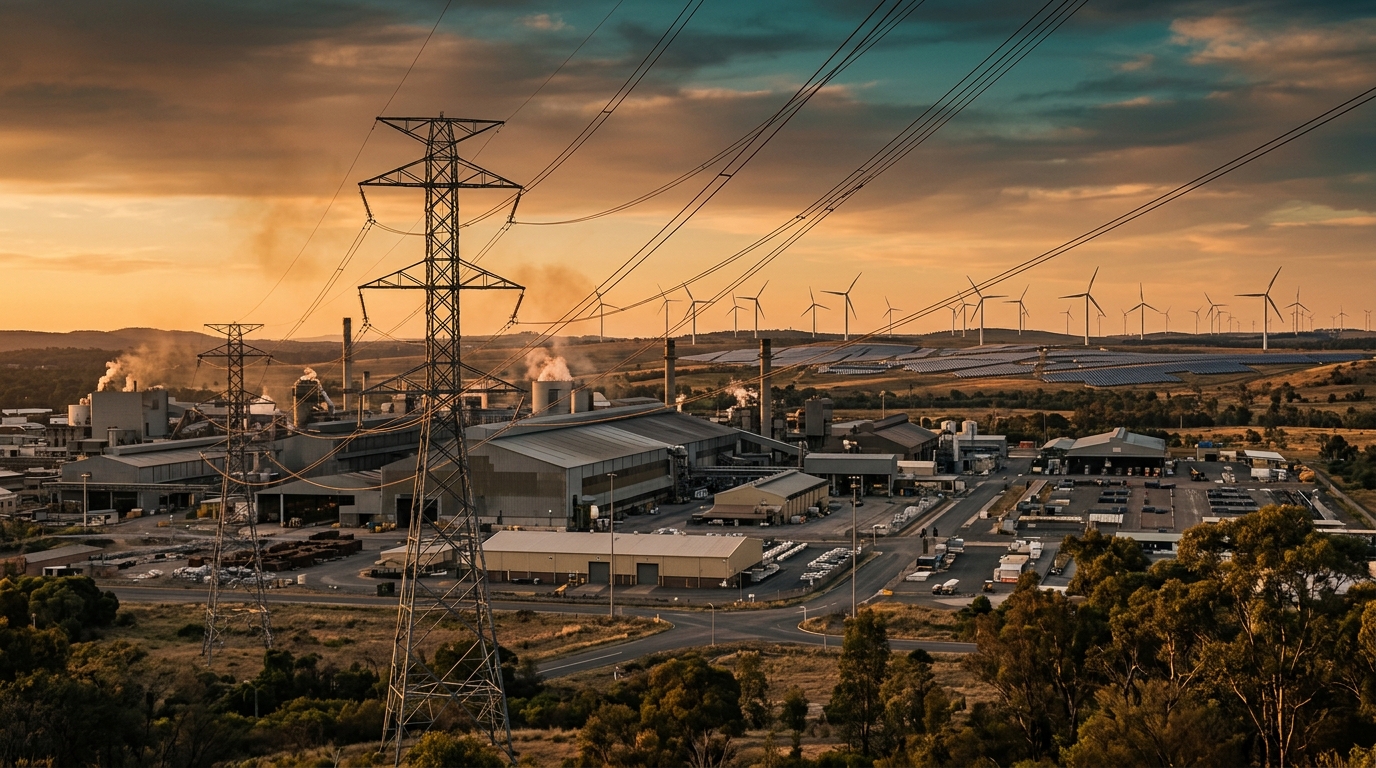
Rio Tinto signed on 13 August 2026 a 2,500 million dollar agreement with the governments of Australia and New South Wales to enable its Tomago aluminium smelter, the country's largest, to operate on 100% renewable energy from 2033. The agreement secures supply for a near-constant load of 950 MW, representing more than 10% of the state's total generation.
The deal is a 10-year electricity supply contract priced below market, taking effect when Tomago's current contract with coal generator AGL expires in December 2028. The smelter, located near Newcastle, is Australia's single largest electricity consumer, directly employs around 1,000 people and supports a further 5,000 indirect jobs. The package, split equally between the federal and state governments, reduces supply costs by around 35 dollars per MWh and underpins approximately 3,000 MW of new wind and solar capacity with storage. The contracts will be managed through Snowy Hydro, the state-owned enterprise that signs the energy using its portfolio of hydroelectric plants and batteries.
Rio Tinto, co-owner of the plant, has already applied this model in Queensland, committing 2,000 million dollars for its Boyne Island smelter; the federal government is adding a further 2,400 million dollars for the Whyalla steelworks. Tomago has committed to invest 1,100 million dollars over 12 years, including 100 million in decarbonisation and a demand-response programme that turns the plant into a battery for the state grid. The new capacity will reduce the smelter's annual emissions by 7.1 million tonnes, equivalent to 1.5% of Australia's annual carbon footprint.
For the region, the case offers a measurable model of industrial decarbonisation: a 950 MW load migrating from coal to contracted renewables with storage, directly relevant to energy-intensive industries in Mexico and Chile. The critical milestone to watch is the construction of 3,000 MW of new capacity before the AGL contract expires in December 2028.
This article was drafted with artificial intelligence assistance from verified sources and reviewed by a human editor before publication.
Sources
Related stories
This article was drafted with AI assistance from verified sources and reviewed by a human editor before publication.
← All news