Pemex Denies Fracking in San Luis Potosí; Explosives Permit Is Precautionary
Pemex clarified that the document that triggered protests in the Huasteca Potosina corresponds to a precautionary federal explosives permit procedure for 7 wells across 2 fields, not fracking.
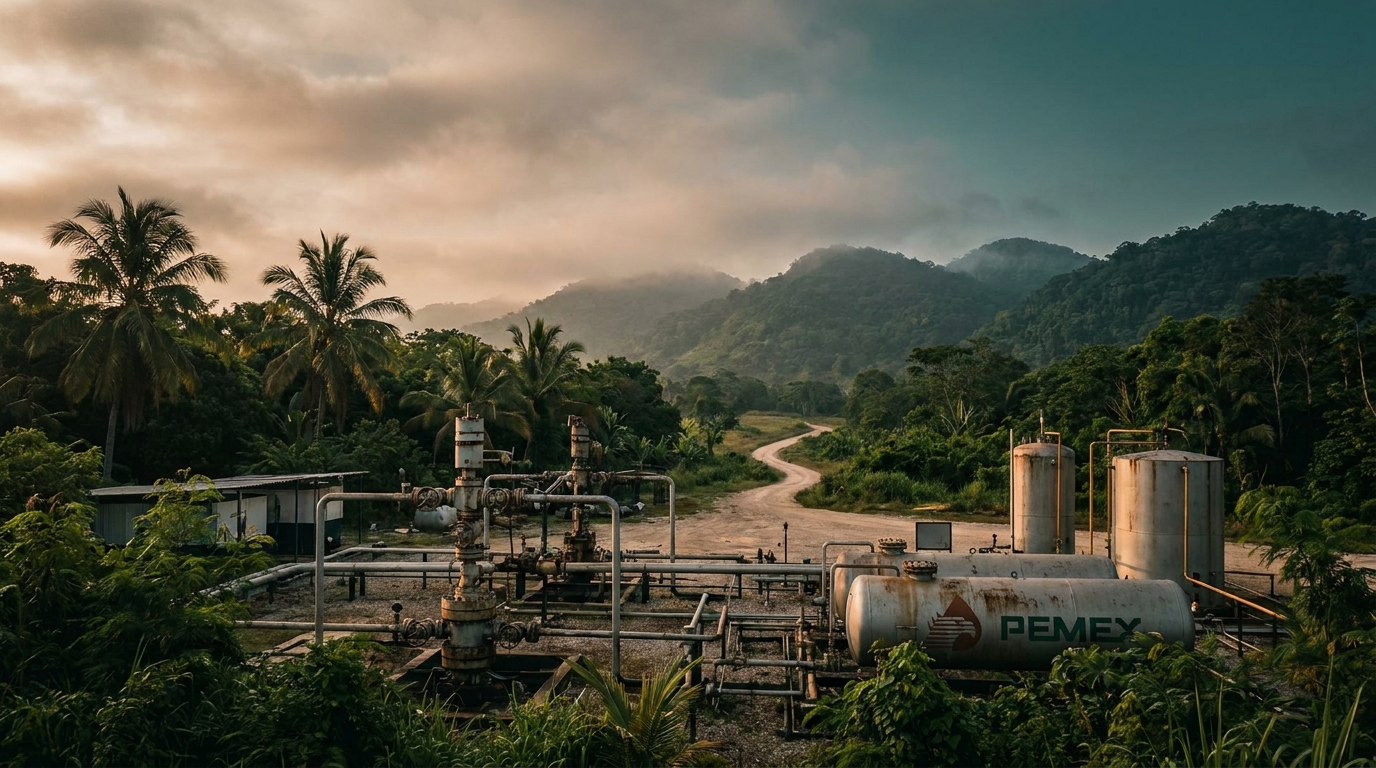
Pemex denied on July 11, 2026, that it is conducting hydraulic fracturing (fracking) in San Luis Potosí, and clarified that the document that sparked protests in the Huasteca Potosina corresponds to a precautionary update of a federal explosives permit, not the launch of new hydrocarbon exploration or extraction operations.
The confusion originated on June 30, 2026, when Pemex sent the municipality of San Antonio a document regarding the use of explosive materials, in accordance with Article 39 of the Federal Firearms and Explosives Law. The document became public and was interpreted by local media and organizations as a signal that fracking operations were about to begin in the region, triggering public demonstrations across several municipalities in the Huasteca. In its statement, Pemex affirmed that fracking "does not use explosive materials in any of its operational stages" and stressed that any association between the explosives permit and that technique lacks technical basis. Hydraulic fracturing uses high-pressure injection of water, sand, and chemical additives to release hydrocarbons trapped in low-permeability rock formations.
The procedure seeks to maintain the validity of a federal permit for explosive use across two fields totaling seven wells: San Pedro, with four wells in the municipalities of San Antonio and Tanlajás, and Limón, with three wells in Ébano. The company specified that the update is precautionary in nature, aimed at preserving response capacity for contingencies at existing wells, as well as for potential seismic acquisition studies, a geophysical prospecting method that uses sound waves to map the subsurface without requiring drilling. According to El Universal, Pemex was emphatic that this administrative procedure neither authorizes nor implies drilling, exploration, or hydrocarbon extraction activities, and that "no exploration or exploitation work is being conducted on unconventional complex-formation reservoirs in any municipality of the state."
The clarification comes amid heightened regional sensitivity over the potential impacts of fracking on the water resources of the Huasteca Potosina, a zone of high biodiversity and aquifer recharge. Pemex noted that any new activity in the area is subject to additional environmental and regulatory authorizations, as well as the corresponding notification to municipal authorities.
This article was drafted with the assistance of artificial intelligence from verified sources and reviewed by a human editor before publication.
Sources
Related stories
This article was drafted with AI assistance from verified sources and reviewed by a human editor before publication.