OLADE Identifies the Technical Challenges of Integrating More Solar and Wind into Latin America
OLADE Technical Note No. 20 details the challenges of integrating solar and wind into Latin America's power grids. It addresses frequency control and protection systems.
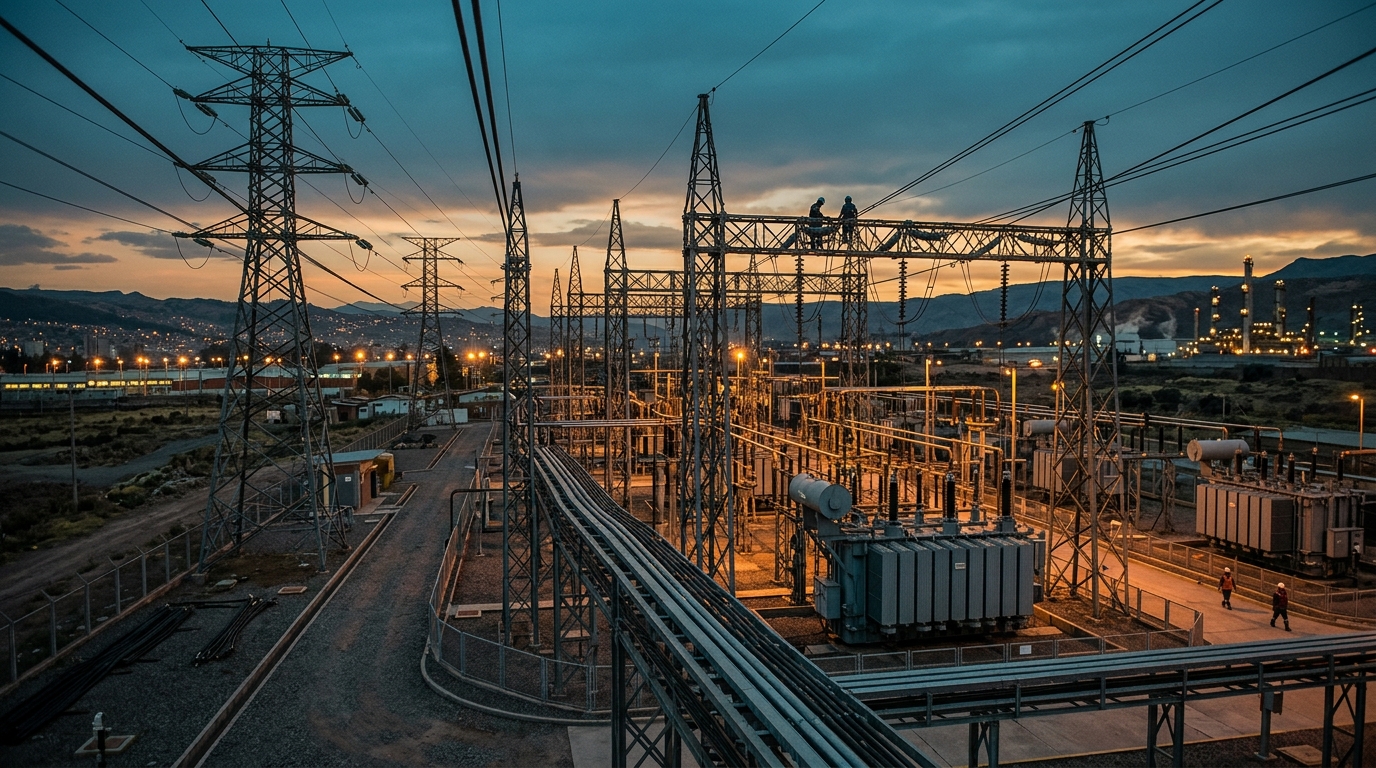
The Latin American and Caribbean Energy Organization (OLADE) published Technical Note No. 20, dedicated to the technical challenges of integrating more solar and wind generation into the power grids of Latin America and the Caribbean, as reported by pv magazine Latin America on August 14, 2026.
The document, prepared by researchers from the Electrical Engineering Program at the Universidad Tecnológica de Pereira in Colombia, together with OLADE, argues that the growth of non-conventional renewables is transforming grid planning, operation, and control. The central issue is the transition from systems dominated by synchronous machines to ones with a greater share of power inverters: photovoltaic panels and battery storage systems operate on direct current and require these devices to connect to alternating current grids. Unlike synchronous machines, inverters do not provide the same rotational inertia that helps stabilize frequency during sharp imbalances between generation and demand. For Mexico and the region, the document arrives at a moment of increasing renewable penetration in electrical systems.
The transformation also affects protection systems. With high participation of inverter-based resources, fault currents exhibit characteristics different from those in conventional grids, which is why OLADE points toward smarter, coordinated, and adaptive protection schemes. The note's index includes sections on frequency and voltage control, protection systems, electromagnetic transient (EMT) studies, and regulatory enablers for the integration of renewables into transmission systems. Inertia, the document notes, can be emulated through inverter control, drawing on energy from battery storage systems or available capacity in the converter. OLADE concludes that countries must develop their own capabilities in power electronics, coordinated control, wide-area protection, and advanced modeling.
OLADE maintains that adapting these technologies to the characteristics of Latin American systems will be decisive for grid security and reliability. The document stands as a reference for operators across the region, including Mexico's Centro Nacional de Control de Energía (CENACE), as the share of solar, wind, and storage in the grids continues to rise.
This article was drafted with artificial intelligence assistance from verified sources and reviewed by a human editor before publication.
Sources
Related stories
This article was drafted with AI assistance from verified sources and reviewed by a human editor before publication.
← All news