SENER Announces 32,475 MW of New Power Capacity Through 2030; 70% Renewable
The 739 billion peso investment plan includes 22,000 MW in solar, wind, and geothermal and raises the clean energy target to 38% of the national electricity mix.
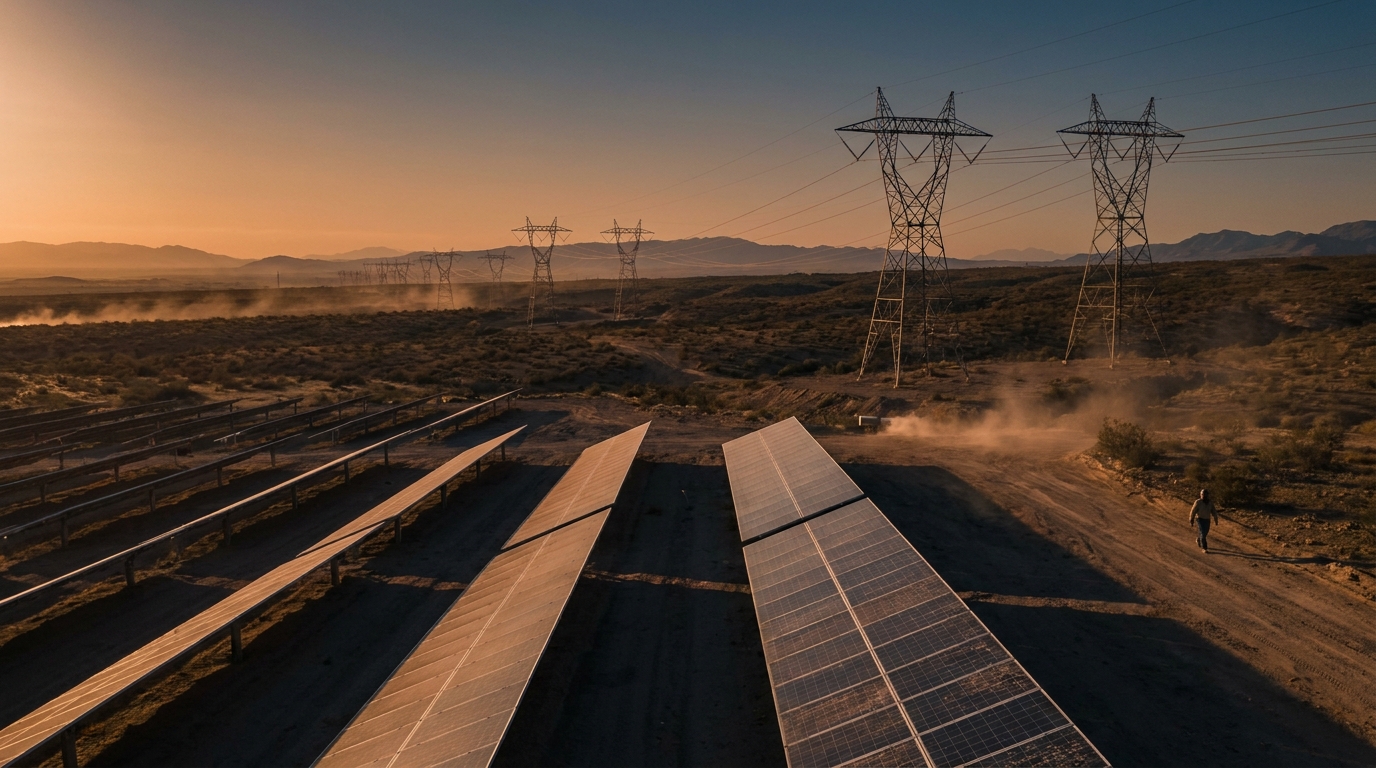
Mexico's Ministry of Energy (SENER) presented the National Electric System Strengthening and Expansion Plan 2025-2030 on June 24, outlining 32,475 megawatts (MW) of new generation capacity backed by a 739 billion peso investment. Seventy percent of that new capacity, 22,000 MW, will come from renewable sources, with solar photovoltaic and wind as the dominant technologies.
Energy Secretary Luz Elena González Escobar explained during the presidential morning briefing that clean energy's share of the national electricity mix will rise from the current 24% to 38% by 2030. The plan is organized around three instruments: a second private tender for renewable plants, a round of strategic projects with mixed schemes and storage, and a Single Window for Self-Consumption that consolidates nine procedures across four government agencies into one digital process. The expansion will avoid 69 million tonnes of CO₂ equivalent, according to El Economista. The announcement comes one week before the formal review of the energy chapter of the United States-Mexico-Canada Agreement (USMCA) begins on July 1.
The technology breakdown assigns 12,304 MW to photovoltaic, 6,860 MW to wind, 694 MW to geothermal, 536 MW to hydroelectric modernization, and 406 MW to emerging sources such as concentrated solar and green hydrogen, according to SENER's document. Firm backup will come from 9,979 MW of natural gas combined-cycle and 1,697 MW of cogeneration. Of the total investment, 42.6% will come from public-private partnerships, 36.6% from public resources, and 20.8% from private investment. The Federal Electricity Commission (CFE) will participate in 79% of the new installed capacity and will retain asset ownership without granting concessions. With 81 mixed CFE-private projects already under evaluation through the February tender, the private sector is awaiting the participation rules and connection caps that will define the real pace of deployment toward 2030.
The plan positions Mexico as Latin America's highest-volume renewable market and aligns its energy policy with the USMCA energy chapter requirements ahead of the July review. First assignments from the second private tender are expected in the third quarter of 2026.
This article was written with artificial intelligence assistance based on verified sources and reviewed by a human editor before publication.
Sources
Related stories
This article was drafted with AI assistance from verified sources and reviewed by a human editor before publication.
← All news