Mexico Marks Four Years Without Commercial Lithium and Explores Battery Second Life
State-owned Litio Mx has no commercial output while sodium scales in China; recycling used batteries is becoming the most immediate business opportunity.
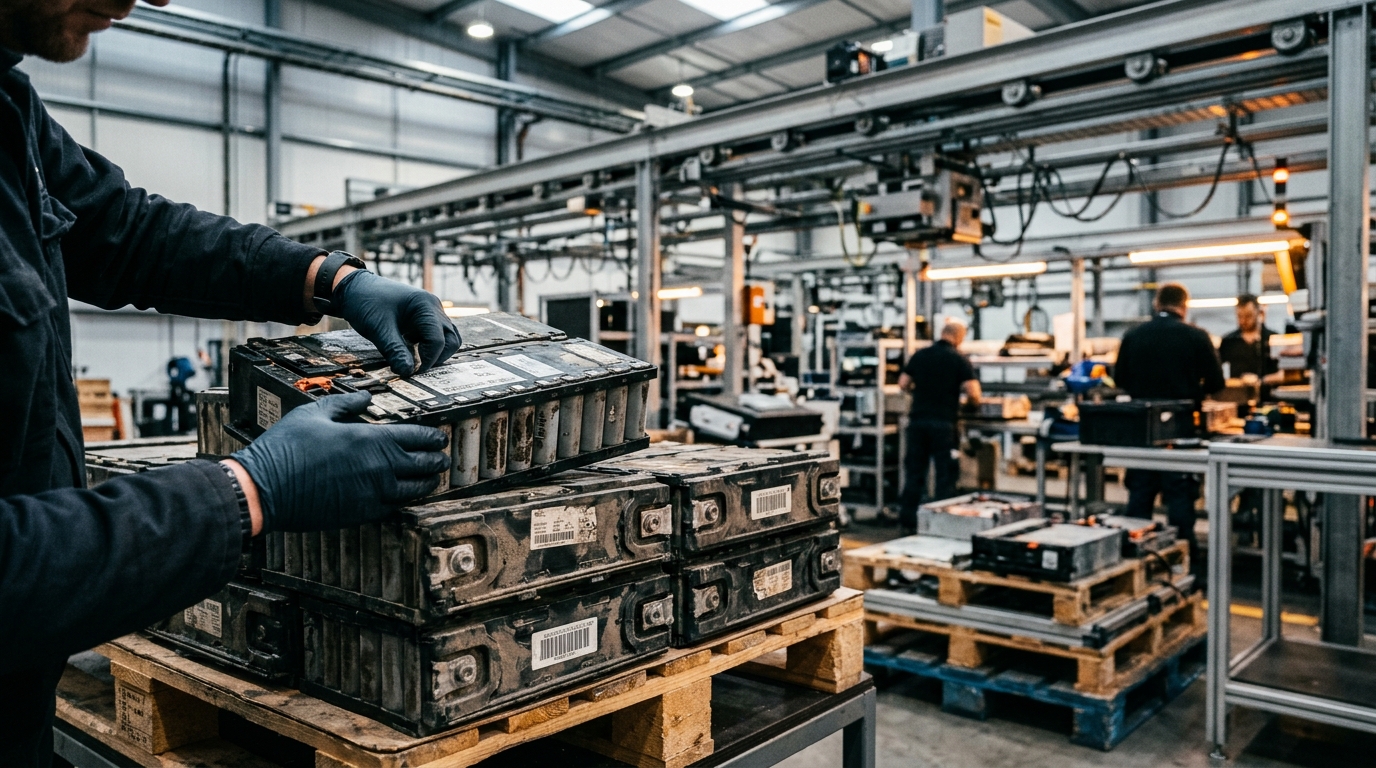
Four years after the creation of Litio para México (Litio Mx), the state-owned company has no commercial production to report, according to Expansión on August 17, 2026, while sodium batteries are reaching commercial scale in China. In this context, the second life of batteries from used electrified vehicles is emerging as the most immediate business opportunity.
Leading the sodium advance is CATL, which in April 2026 signed with HyperStrong what Reuters reported as the world's largest sodium battery storage agreement: 60 GWh to be delivered over three years. Sodium, more abundant and cheaper than lithium, is asserting itself in stationary storage for power grids, solar parks, and data centers, where cost matters more than energy density. For the region, that path lowers the cost of grid-scale renewables integration, a segment Mexico cannot rely on domestic lithium production to serve in the near term.
Between January and May 2026, electrified vehicles accounted for roughly 12% of the national automotive market: more than 77,700 units, 42% higher than a year earlier, according to data from the National Institute of Statistics and Geography (INEGI) cited by Expansión. A battery can represent up to 40% of a vehicle's value; the lithium-ion recycling market is projected to grow from $5,630 million to $18,740 million between 2026 and 2035, according to Business Research Insights. "It is an increasingly profitable and attractive business," said Eugenio Grandio, president of the Electro Movilidad Asociación (EMA), noting that a 300-kilogram battery retains valuable materials after 300,000 kilometers. UK-based Altilium processes end-of-life batteries at two plants and is building a third with capacity for 150,000 units annually; consultancy Minviro puts the climate impact reduction at 74% compared with conventional supply chains.
The first wave of batteries from electrified vehicles sold in Mexico will reach end of life in the coming years; the key question is whether the local industry captures that recycling chain before primary extraction gets off the ground. The global market, growing at a compound annual rate of 14.29%, sets the scale of reference.
This article was written with artificial intelligence assistance from verified sources and reviewed by a human editor before publication.
Sources
Related stories
This article was drafted with AI assistance from verified sources and reviewed by a human editor before publication.
← All news