Mexico's data centers will quintuple their electricity demand, reaching 1.5 GW by 2030
Moody's warns the power grid limits AI adoption as data center demand quintuples by 2030
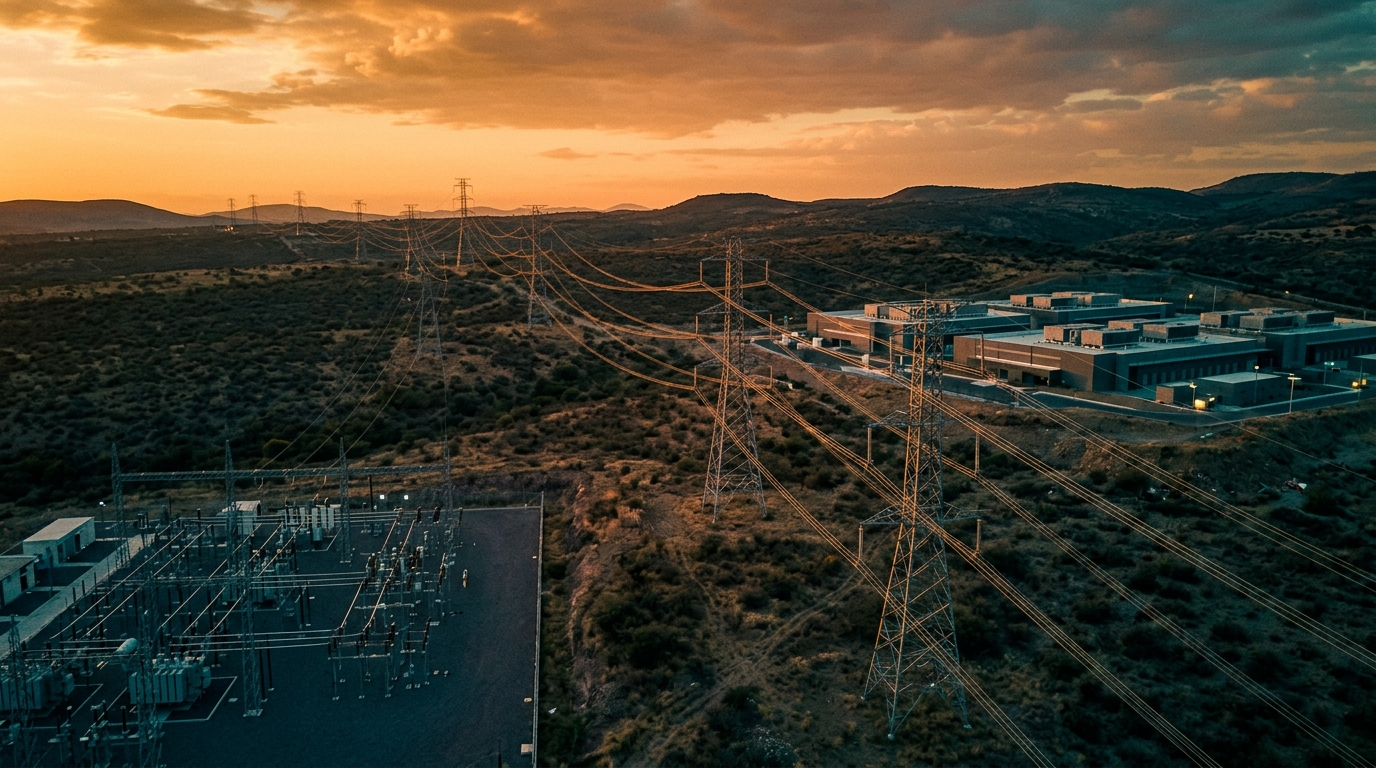
Data centers in Mexico consume about 300 megawatts (MW) and will require close to 1.5 gigawatts (GW) by 2030, nearly five times more, according to the projection by the Secretariat of Energy that Banamex cited on August 6. Moody's warned on August 5 that the structural shortfall in electricity supply limits the adoption of artificial intelligence (AI).
The diagnosis unites two readings of the same bottleneck. Moody's estimates that Mexico concentrates 27% of Latin America's installed data center capacity, behind Brazil (49%) and ahead of Chile (9%), and that the investment plan of the Federal Electricity Commission (CFE), worth 28,200 million dollars toward 2030, will expand generation and grid reliability. The Institute of the Americas argues that the constraint is not generation but the transmission, distribution and interconnection capacity needed to connect demand at the pace these facilities require. The gap between announcements and operation is wide: BloombergNEF counts 60 active sites with 244.9 MW against an announced portfolio above 1,500 MW.
The mechanisms for enabling new infrastructure take up to three years between interconnection studies, permits and construction. Concentration worsens the bottleneck: Querétaro brings together about 175 MW in 25 sites, most of the country's installed capacity, according to the Institute of the Americas. Financing is another link in the chain: specialists consulted by Expansión note that traditional schemes depend on narrow circles of investors and slow down projects, while Banamex estimates that closing the gap requires investments of 18,000 million dollars over five years. The pressure on water from cooling systems adds an environmental filter to projects, according to Moody's.
The point to watch is whether CFE's investment and the new reliability procurement scheme translate demand into connected capacity before 2030. The next signal will be the reserve margin reported by the National Center for Energy Control (CENACE) in the coming quarters.
This note was drafted with artificial intelligence assistance from verified sources and reviewed by a human editor before publication.
Sources
- La demanda futura de electricidad amenaza al nearshoring y a la inteligencia artificial en México
- México tiene potencial para liderar la IA, pero la energía y el talento lo frenan: Moody's
- Data Centers and Energy in Mexico: Reliability, Critical Infrastructure, and Competitiveness in the Digital Economy
- Financiamiento frena transición energética en México
Related stories
This article was drafted with AI assistance from verified sources and reviewed by a human editor before publication.
← All news