Mexico Proposes Bilateral Methodology for USMCA Review; First Formal Round on July 20
Mexico has proposed a bilateral methodology to define the scope of annual USMCA reviews. The first formal round begins July 20, with Mexican energy policy among the central topics on the table.
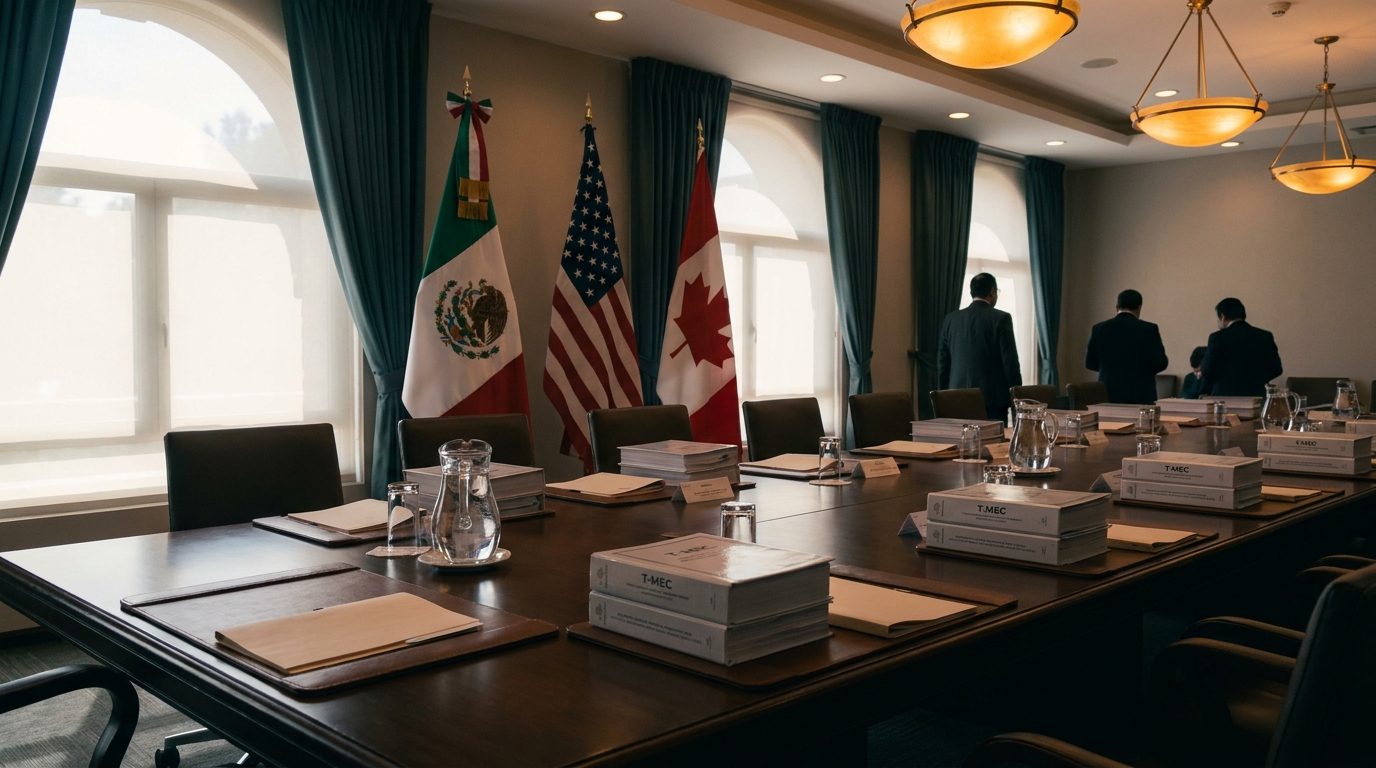
The Mexican government has proposed a bilateral methodology to frame the annual USMCA reviews, one week before the first formal review round begins on July 20 in Mexico City, when a U.S. delegation arrives to open talks.
Luis Rosendo Gutiérrez, Undersecretary for Foreign Trade at the Ministry of Economy, presented the proposal on July 8 at a forum organized by Tecnológico de Monterrey. The mechanism aims to define the scope of discussions and build agreements that reduce investment uncertainty across North America. The move follows Washington's rejection of a 16-year extension to the agreement, which instead activated an annual review scheme running through 2036. U.S. Trade Representative Jamieson Greer formally notified that decision during the virtual meeting of the Free Trade Commission on July 1, in which Secretary Marcelo Ebrard and Canadian Minister Dominic LeBlanc both participated.
The Ministry of Economy reported to the Mexican Congress on July 8 that the outstanding issues raised by the United States had been reduced from 54 to 14 in recent months, progress the ministry characterized as significant, according to Infobae. Mexico, for its part, maintains 13 of its own improvement proposals, including the elimination of Section 232 steel tariffs and a protocol against the application of unilateral measures.
Among the sectoral topics both sides will bring to the table, Mexico's energy policy occupies a central place. Specialized press has documented that Washington and Ottawa are demanding guarantees of non-discriminatory access to the national electricity market, where the 2025 constitutional reform requires the Federal Electricity Commission (CFE) to generate at least 54 percent of the electricity supply and grants it dispatch priority over private generators. Mexico's dependence on U.S. natural gas imports adds another layer of commercial exposure: more than 80 percent of national gas consumption arrives through Texas pipelines, according to the Ministry of Energy.
Mexico will also bring six strategic priorities to the negotiation, including the preservation of automotive competitiveness, the attraction of investment in semiconductors, pharmaceuticals and data centers, and measures to strengthen legal certainty for investors. Secretary Ebrard has insisted that Mexico will seek to preserve preferential access conditions to the U.S. market, where eight out of every ten dollars of Mexican exports enter duty-free.
The July 20 round will define the priority topics and the mechanism governing subsequent annual reviews. The USMCA remains in force until 2036. Mexico is currently the leading trading partner of the United States, holding a record 15.7 percent share of U.S. imports, according to Forbes México.
This article was drafted with artificial intelligence assistance from verified sources and reviewed by a human editor before publication.
Sources
Related stories
This article was drafted with AI assistance from verified sources and reviewed by a human editor before publication.
← All news