Jiangsu Becomes China's First Province to Surpass 100 GW of Solar
The Chinese province of Jiangsu has surpassed 100 GW of solar capacity, a national first; expanding module supply is pressing costs lower for Latin America.
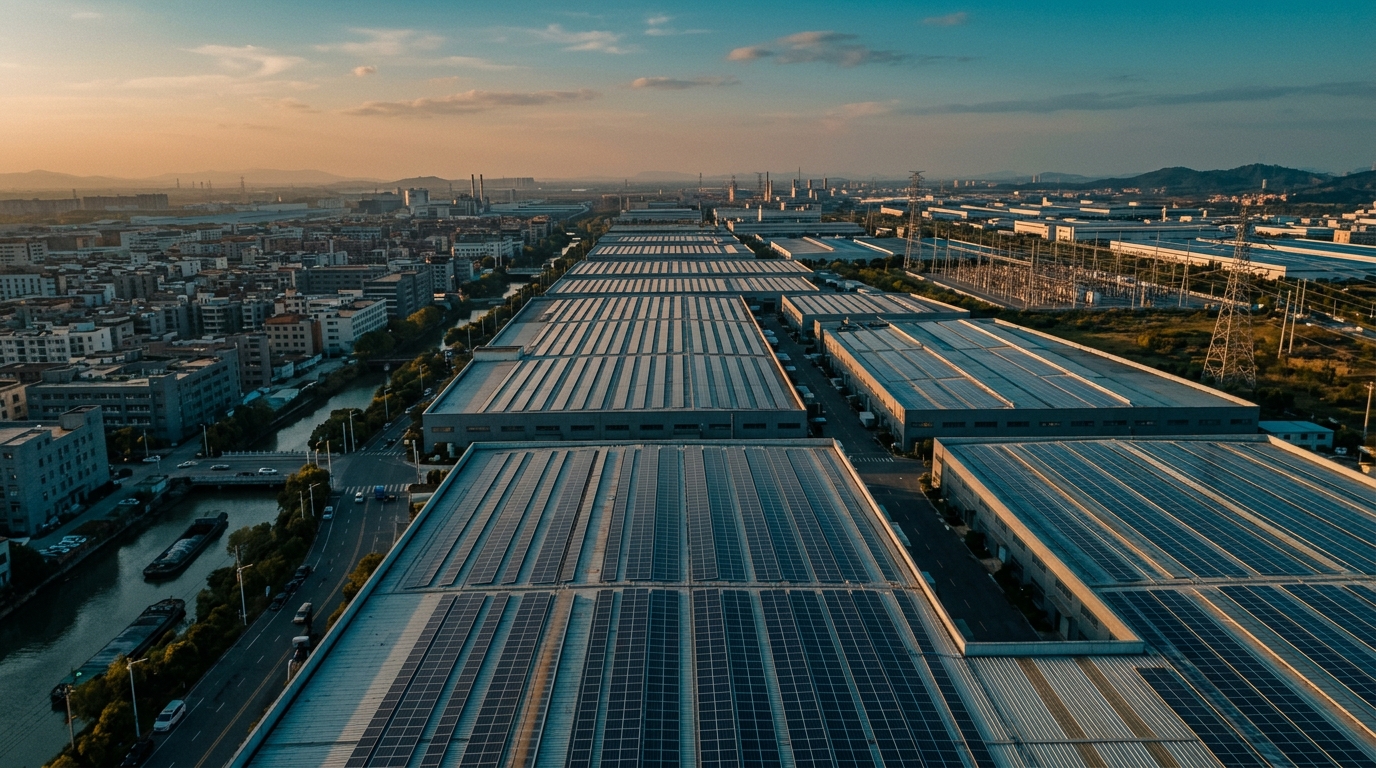
The Chinese province of Jiangsu became the first region in the country to surpass 100 GW of installed photovoltaic solar capacity, reaching 100.08 GW at the end of July 2026, according to data from State Grid Jiangsu Electric Power released by Xinhua on August 20. Solar energy now accounts for more than 38% of the province's total generation capacity, its single largest installed source.
Growth was driven by distributed generation: 69.29 GW on industrial rooftops, public buildings, and rural homes, close to 70% of the total, versus 30.79 GW from centralized projects, according to pv magazine. The model contrasts with Shandong's, which is also approaching 100 GW but relies on large-scale parks. In parallel, the global supply of modules continues to expand: Turkey has operational manufacturing capacity of 13.2 GW per year, more than the combined total of Italy, Germany, Spain, France, and the Netherlands, according to figures from Sinovoltaics cited by pv magazine Latam on August 21. For Mexico and Latin America, the increased supply of modules and components from Asia tends to moderate the costs at which the region builds toward its solar targets.
State Grid Jiangsu expanded its distribution network capacity and developed digital tools using artificial intelligence, satellite imagery, and forecasts to assess rooftops and hosting capacity; the province retains approximately 35.99 GW of additional distributed connection capacity. Jiangsu also accumulated roughly 2 GW of offshore solar by the end of 2025 and is advancing pilots that combine photovoltaics with other resources. The pv magazine report notes that higher solar penetration is increasing pressure on grid flexibility and demand during midday generation peaks, with storage and other balancing resources as the next frontier.
The 2026-2030 distributed solar plan sets targets of 120 GW by 2030 and 160 GW by 2035, focusing on industrial parks, rural communities, public buildings, and transport. The Jiangsu model, concentrated on existing built surfaces, is presented in the pv magazine report as a reference case for densely populated regions facing land constraints.
This article was written with artificial intelligence assistance from verified sources and reviewed by a human editor before publication.
Sources
- La capacidad instalada total de las instalaciones de generación de energía fotovoltaica en Jiangsu supera la marca de los 100 gigavatios
- China's Jiangsu province crosses 100 GW solar milestone as distributed PV drives growth
- Píldoras solares: Bangladesh quiere rickshaws eléctricos, Portugal apunta a 3 GW BESS para 2023 y Turquía puede fabricar 13,2 GW de módulos
Related stories
This article was drafted with AI assistance from verified sources and reviewed by a human editor before publication.
← All news