IRENA: Renewables Generate 31.7% of Global Electricity; Solar Grows 29.7%
Solar grows 29.7% year-on-year and leads global renewable expansion, according to IRENA. Renewables now account for 31.7% of global electricity. The regional breakdown and the gap to 2030.
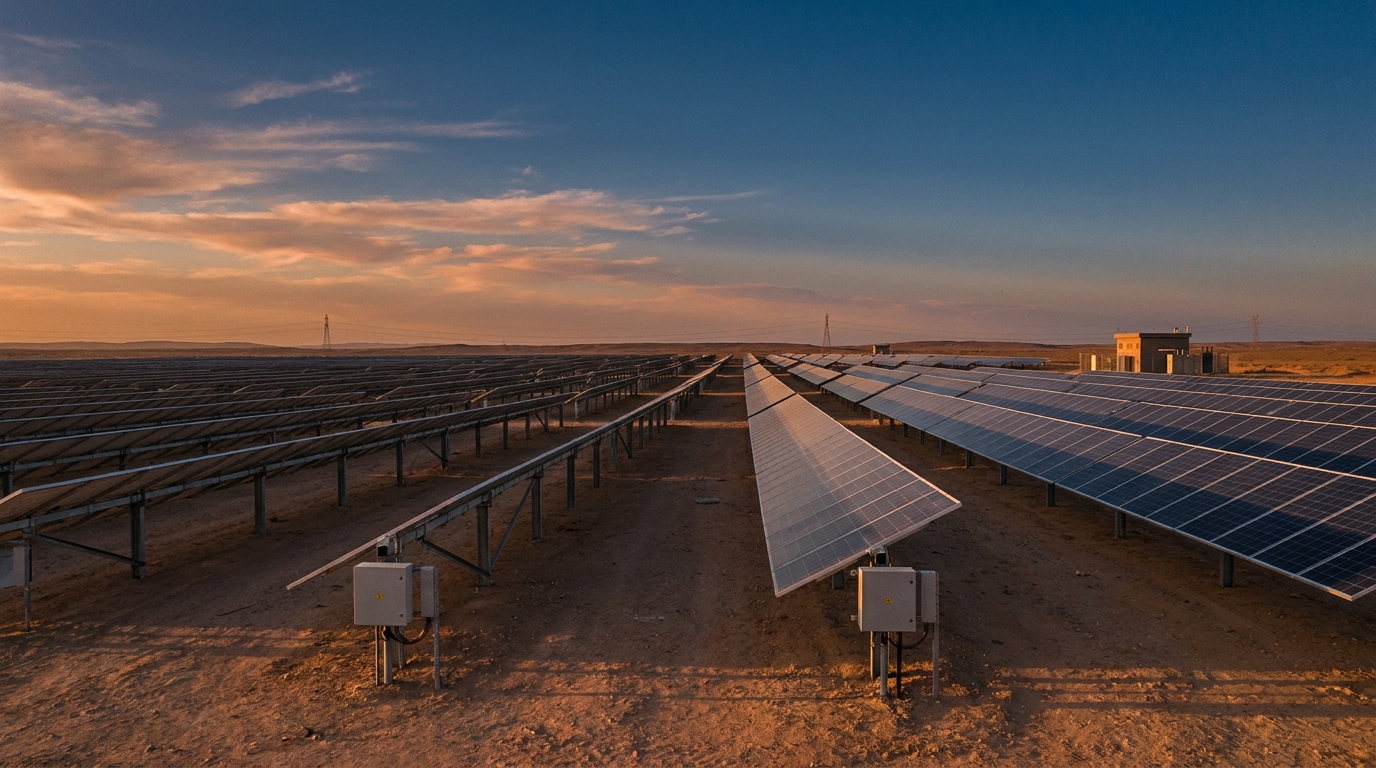
Renewable energy sources generated 31.7% of global electricity in 2024, a total of 9,836 terawatt-hours (TWh), according to the Renewable Energy Statistics 2026 published by the International Renewable Energy Agency (IRENA) on July 14. Renewable generation grew 9.8% over the year, its fastest recorded pace, while generation from non-renewable sources advanced just 1.4%.
The report identifies solar energy as the fastest-growing technology: photovoltaic generation rose 29.7% year-on-year, to 2,105.8 TWh, up from 1,624 TWh the previous year. Wind power contributed 2,499.3 TWh (up 8.5%) and hydropower 4,472.4 TWh (up 4.7%). On installed capacity, renewables reached 5.2 terawatts (TW) at the close of 2025, representing 49.5% of the global total, after adding 693 GW of new capacity over the year, according to the same data cited by the United Nations Framework Convention on Climate Change (UNFCCC).
Renewable deployment is advancing at different speeds across regions. Asia generated 4,589 TWh in 2024, a 14.3% increase over 2023, with China as the primary driver: the country has accumulated 1,202.2 GW of solar capacity, nearly six times more than the United States, which surpassed 200 GW. North America generated 1,535 TWh (up 5.8%) and Europe 1,758 TWh (up 7.2%). South America, with 1,047 TWh, grew just 2.9%, signaling that the region, including Mexico, needs to accelerate deployment to avoid widening the gap with the global growth average.
Despite record figures, IRENA warns that the world is not on track to reach the 11.17 TW of renewable capacity that countries agreed to install by 2030 at COP28. The COP31 presidency, held by Turkey, is pushing a target of 35% electrification of final energy demand by 2035. Meeting that target would require renewables to move from the current 31.7% to 78% of electricity generation within that timeframe, according to the agency.
IRENA Director-General Francesco La Camera emphasized that the expansion of renewable electricity must advance at an unprecedented pace over the next decade, approximately 2.5 times the current level of generation, for climate objectives to remain achievable.
This article was drafted with artificial intelligence assistance from verified sources and reviewed by a human editor before publication.
Related stories
This article was drafted with AI assistance from verified sources and reviewed by a human editor before publication.