Iran Controls Hormuz: 20% of Global Maritime Crude at Risk
The Washington-Tehran ceasefire collapses within 48 hours. The Hormuz disruption tightens gas and refined-product contracts linking Mexico to the U.S. market.
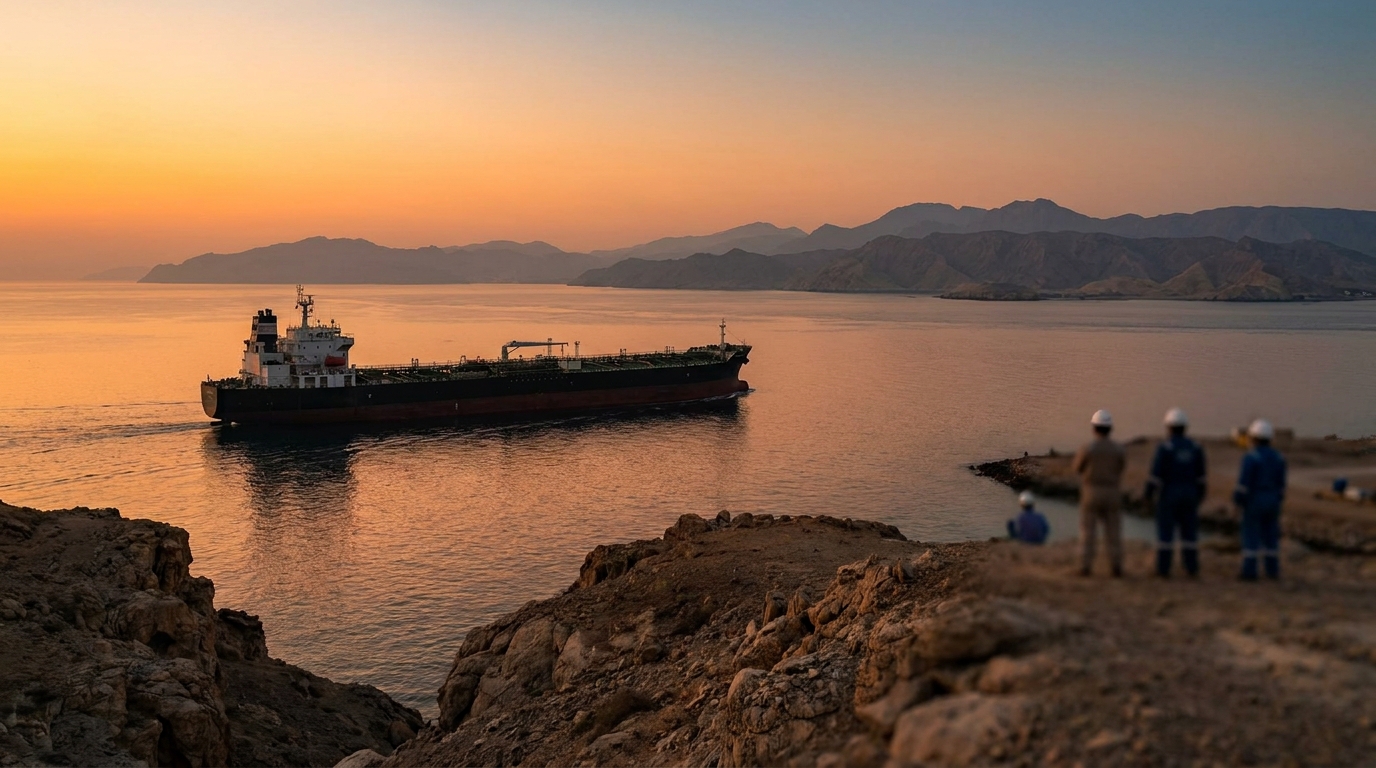
Iran claimed absolute control of the Strait of Hormuz and the Islamic Revolutionary Guard Corps attacked U.S. bases in Kuwait and Bahrain on June 28, following American airstrikes on Iranian coastal positions. The escalation threatens transit of 20 million barrels per day of crude through the strait, more than one-fifth of global maritime oil trade, according to the U.S. Energy Information Administration (EIA).
The memorandum of understanding signed on June 19 established a 60-day window to negotiate an end to hostilities and kept the strait open under Iranian management. The agreement collapsed in less than 48 hours: on June 26, an unidentified projectile struck a Singaporean vessel, the United Kingdom Maritime Trade Operations (UKMTO) reported. On June 27, U.S. Central Command (CENTCOM) bombed coastal radars and Iranian drone depots along the Hormuz coast. In response, the Revolutionary Guard launched missiles and drones against the Ali Al-Salem base in Kuwait and the Fifth Fleet in Bahrain, according to Associated Press. The International Maritime Organization (IMO) reports approximately 600 vessels with 11,000 crew members stranded in the Persian Gulf, according to Expansión.
The Hormuz blockade is straining the two supply chains that anchor the energy relationship between Mexico and the United States. Mexico imports more than 60 percent of its natural gas by pipeline from Texas, indexed to Henry Hub, and a growing share as liquefied natural gas (LNG) from U.S. Gulf terminals whose export authorizations are overseen by the Department of Energy (DOE) and the Federal Energy Regulatory Commission (FERC). The flows of gasoline, diesel, and other refined products that Mexico sources from U.S. Gulf Coast refineries operate on benchmark prices that, in a global market under Hormuz pressure, carry an additional risk premium. The energy chapter of the United States-Mexico-Canada Agreement (USMCA) does not include automatic coordination mechanisms for supply crises external to North America, a gap that has become immediately relevant.
As of press time, the DOE had not issued an emergency order concerning LNG export authorizations, and FERC has left Gulf terminal operations unchanged. The Latin American Energy Organization (OLADE) has also not activated regional consultation mechanisms. Henry Hub prices and LNG spot contract premiums will be the immediate indicator of the impact on the supply chain connecting the Gulf of Mexico to Latin America.
This article was drafted with artificial intelligence assistance from verified sources and reviewed by a human editor before publication.
Sources
Related stories
This article was drafted with AI assistance from verified sources and reviewed by a human editor before publication.
← All news