FSUE Completes 5,140 Solar Systems in Baja California, Expands to Hermosillo in July
FSUE completed 5,140 photovoltaic systems in Mexicali with a 190-million-peso investment; Phase 2 launches in Hermosillo in July 2026 with 5,000 additional systems.
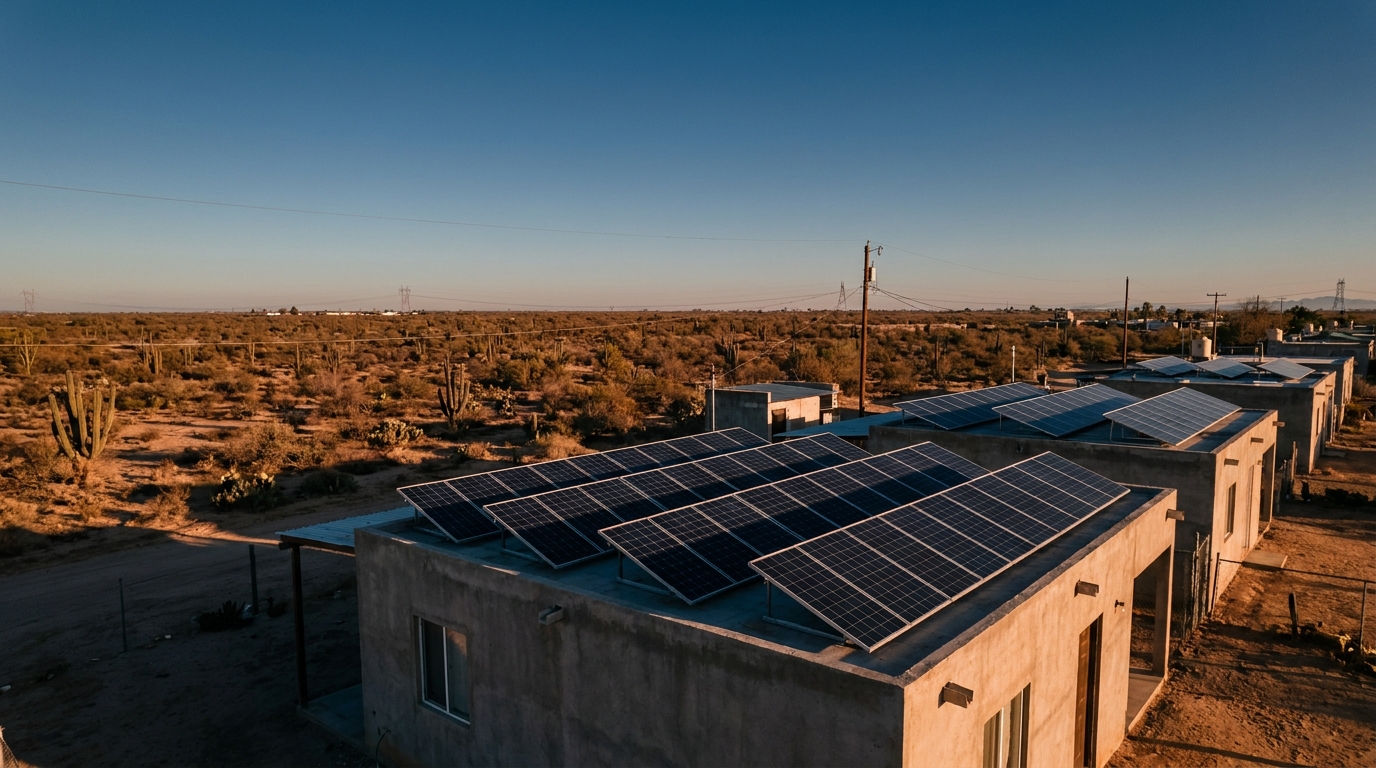
The Fondo de Servicio Universal Eléctrico (FSUE) closed Phase 1 of the Techos Solares para el Bienestar program in May 2026, having installed 5,140 residential photovoltaic systems in Mexicali and San Felipe, Baja California. The initiative represented an investment of 190 million pesos and is projected to generate 44,160 megawatt-hours (MWh) of electricity annually.
The program, administered by the Secretaría de Energía (SENER) through the FSUE, finances residential photovoltaic infrastructure in areas with energy poverty and extreme temperatures. Its rationale is not tariff-based but supply-side: each system enables a household to cover up to 85% of its summer electricity consumption, according to El Financiero data, without relying on seasonal subsidies. The program's official portal notes that the 5,140 Baja California systems will also prevent 19,486 tonnes of carbon dioxide equivalent (CO₂e) per year. Baja California operates under tariff zone 1F, the highest base-temperature zone in the National Electric System (SEN), where residential air-conditioning drives peak demand from June through September.
Phase 2 launches in Hermosillo, Sonora in July 2026 with approximately 5,000 additional systems, according to the program's portal. Together, both phases account for roughly 10,140 systems across Baja California and Sonora, the two states with the highest residential cooling-driven electricity demand in the country. Households enrolled in Phase 1 report average annual savings of 60% (85% in summer, 45% in winter), according to El Financiero data. Phase 1 in Baja California also serves as a benchmark for the National Electric System Development Program (PRODESEN) 2025-2039 on distributed solar penetration in the SEN.
The Phase 2 launch in Hermosillo in July 2026 will mark the first replication of the model outside Baja California. SENER's operational reports on the performance of the 5,140 installed systems will serve as the technical reference for PRODESEN 2025-2039 distributed solar targets.
This article was drafted with AI assistance from verified sources and reviewed by a human editor before publication.
Sources
Related stories
This article was drafted with AI assistance from verified sources and reviewed by a human editor before publication.
← All news