FERC Approves Topology Reconfiguration at SPP with Savings of Up to $44M
FERC authorizes SPP to use network topology optimization to relieve congestion, with annual savings of $18 to $44 million and a precedent for the region.
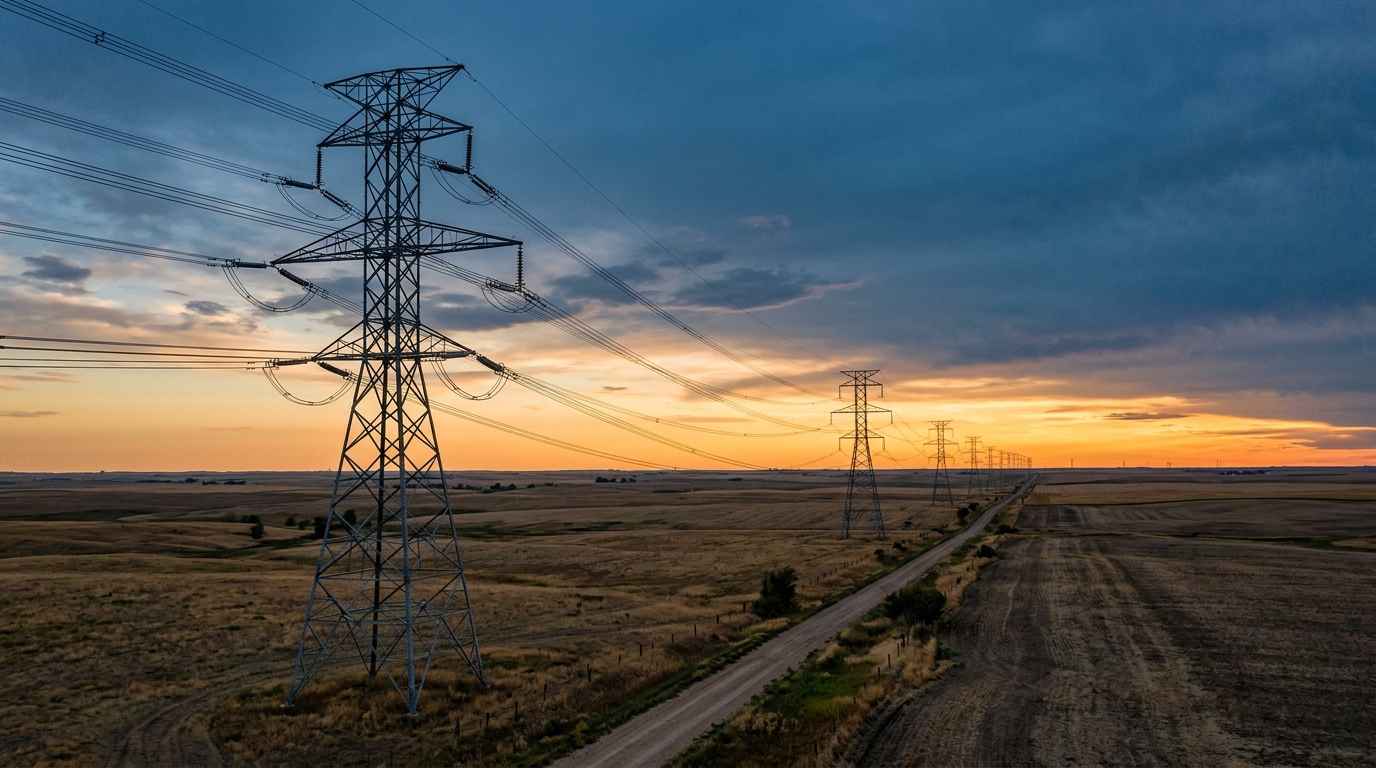
The U.S. Federal Energy Regulatory Commission (FERC) approved on August 19 the Southwest Power Pool's (SPP) proposal to use topology optimization, a switch reconfiguration technique that relieves network congestion without redispatching plants, with estimated savings of $18 to $44 million annually.
The operator, which manages the grid across all or parts of 17 states in the central United States, filed the proposal on May 21 under docket ER26-2592-000. Congestion cost SPP an average of $1.6 billion per year between 2023 and 2025, and the operator averaged 1,382 MW of curtailed wind and solar generation during 2025, according to Utility Dive. FERC's order follows the precedent set by the Midcontinent Independent System Operator (MISO), which adopted economic reconfiguration in 2024 and has accumulated $95 million in savings in 2026.
Under the mechanism, market participants or SPP itself can propose a temporary reconfiguration in response to a plant outage or network constraint, and the operator evaluates it against three criteria: system reliability, regional production cost benefit, and congestion rights market funding. A study by NewGrid, SPP, and The Brattle Group found that the measure resolves 75% of the operational limit violations analyzed. Commissioner Judy Chang described the tool as exemplifying advanced transmission technologies that enable greater load and generation integration, and she and Commissioner David Rosner urged other operators to adopt it. ERCOT is already preparing a similar mechanism for early 2027, SPP noted.
The tool is scheduled to take effect on October 1, 2026. For grid operators across Latin America, including CENACE in Mexico, XM in Colombia, and CAMMESA in Argentina, the case establishes a low-cost pathway to reduce renewable curtailment without new transmission infrastructure.
This article was drafted with artificial intelligence assistance from verified sources and reviewed by a human editor before publication.
Sources
Related stories
This article was drafted with AI assistance from verified sources and reviewed by a human editor before publication.
← All news