Europe Hits 44°C and Grids Fail; CENACE Projects 54,000 MW for Mexico
The most severe heat wave in European history is spiking electricity demand and triggering alerts in Mexico's power system, already heading into its most demanding summer on record.
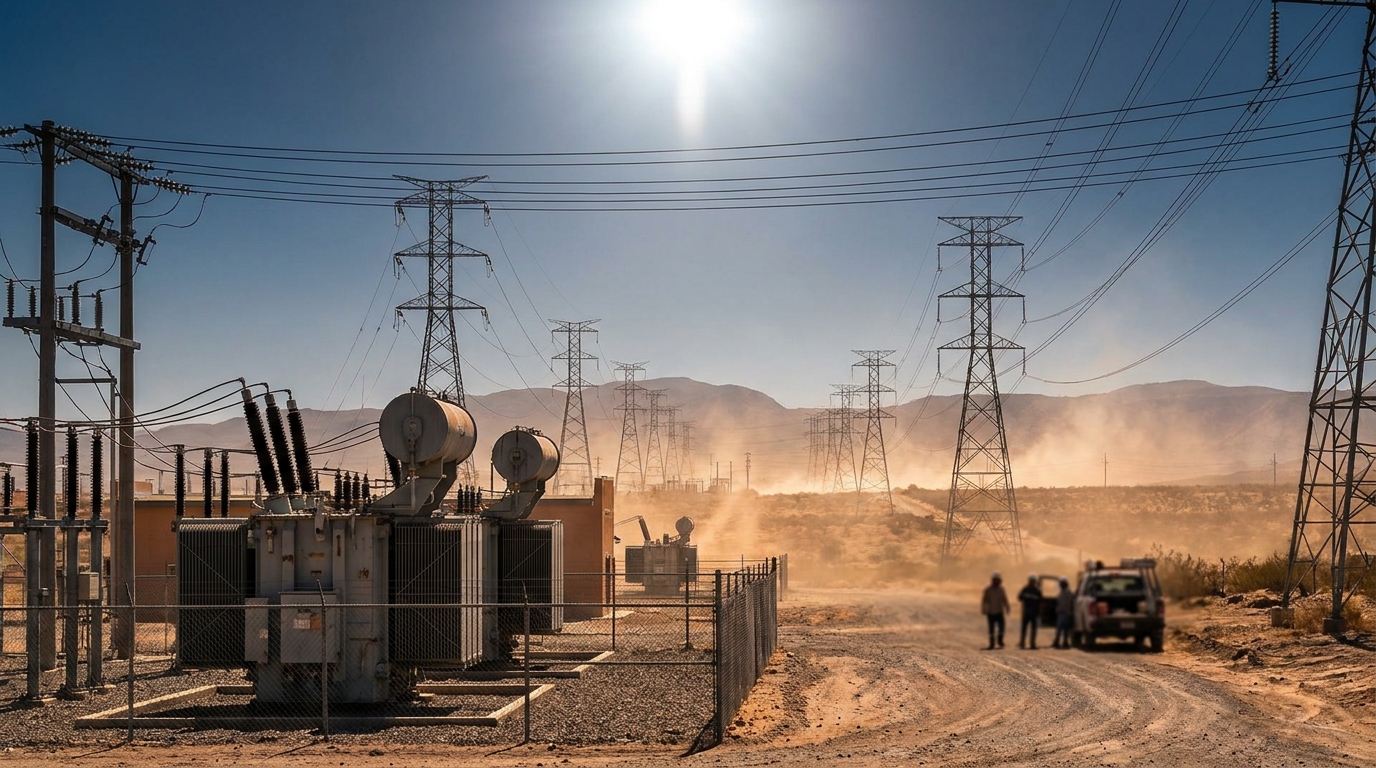
Europe has endured two heat waves in less than two months, with temperatures exceeding 44 degrees Celsius in regions where they historically never surpassed 35. The most recent episode, on June 26, saturated electrical grids and, according to El Financiero, forced France to throttle its 57 nuclear reactors because river water is too warm for cooling.
According to a World Weather Attribution analysis published by Carbon Brief on June 26, this is the most severe and widespread heat wave in European history. France recorded 44.3 degrees Celsius in Pissos on June 25, its hottest day on record. The United Kingdom broke its June temperature record twice in a single week; Switzerland and Spain also posted all-time highs. Emergency room visits in Paris surged 80 percent, and Germany, Austria, Switzerland, and Hungary activated their highest alert levels.
The same temperature threshold collapsing European infrastructure is now projected over northern Mexico for July. Distribution transformers, data center cooling systems, and urban distribution networks are the first components to buckle under sustained thermal stress. The National Energy Control Center (CENACE) estimates peak demand of 54,000 megawatts (MW) for the summer, above the record of 52,993 MW set on June 21, 2023. The operating reserve margin stands at 12 percent on high-heat days; Undersecretary of Electricity José Antonio Rojas warned that in a worst-case scenario it could fall to 7 percent, just above the critical threshold of 6 percent.
The Yucatan Peninsula is the most vulnerable point in the national grid. CENACE has already ordered the deployment of 150 MW of CFE portable generation capacity to the region, where the primary risk is not generation capacity but the reliability of natural gas supply in the southeast. In early May, a heat wave pushed demand above 48,000 MW and triggered an operational alert.
CENACE director Ricardo Mota Palomino described the outlook as a tight summer with no deficit. July's monthly demand report and the behavior of the reserve margin during peak hours, between 4:00 p.m. and 8:00 p.m., will be the first real test of that equation.
This article was written with AI assistance from verified sources and reviewed by a human editor before publication.
Sources
Related stories
This article was drafted with AI assistance from verified sources and reviewed by a human editor before publication.
← All news