ERCOT Activates 'Batch Zero' for 438,000 MW in Queue; 90% Are Data Centers
The new interconnection framework took effect on July 11 and aims to organize a queue of requests equivalent to one-third of the United States' generating capacity.
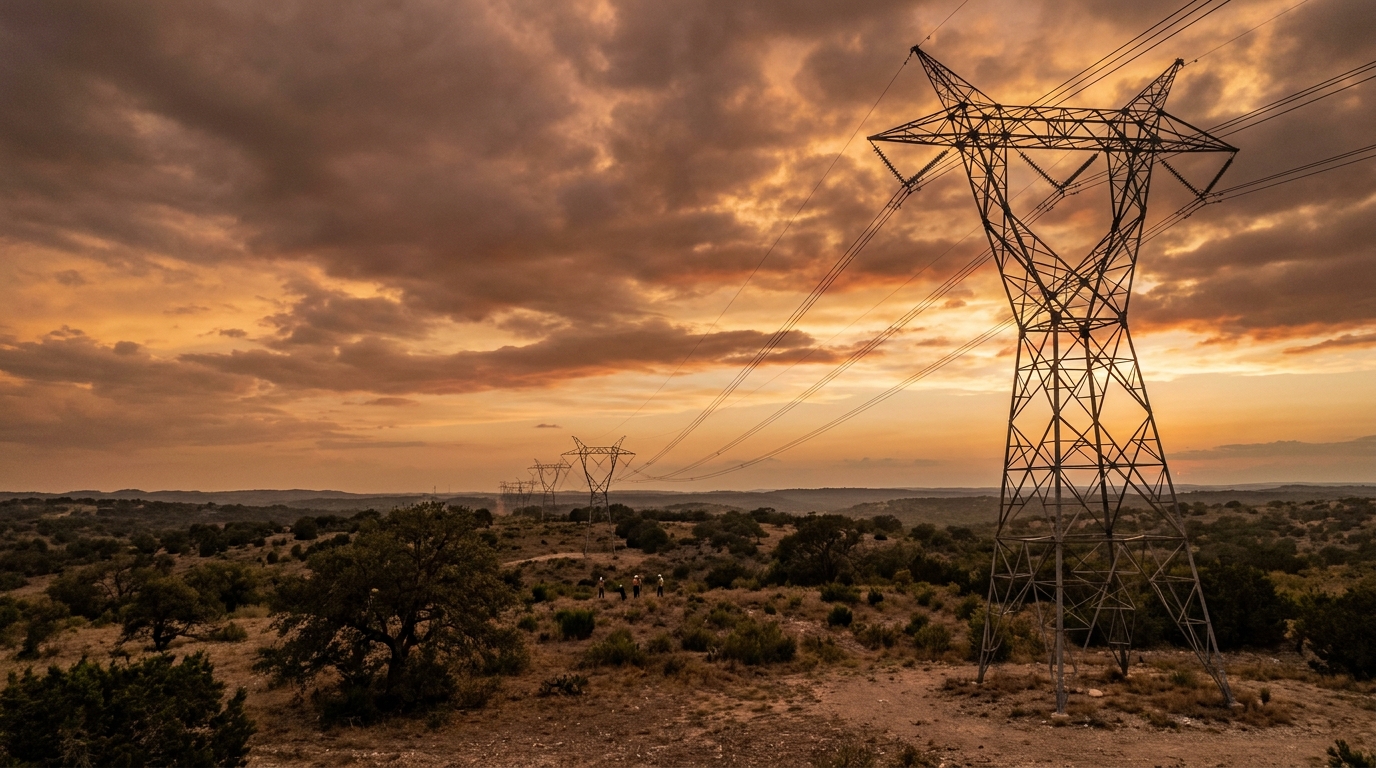
As of July 11, 2026, the Electric Reliability Council of Texas (ERCOT) activated the "Batch Zero" process for interconnecting loads of 75 megawatts (MW) or more. The new framework aims to organize a queue of more than 438,000 MW in requests, nearly 90% of which come from data centers.
The Public Utility Commission of Texas (PUCT) approved the framework on June 18, 2026, based on Senate Bill SB-6, passed by the state legislature in May 2025. The volume of requests, equivalent to one-third of the United States' generating capacity, reveals a demand pressure that bears directly on the energy bridge with Mexico: the transmission infrastructure Texas is deploying for its data centers is the same network that underpins cross-border electricity trade.
The previous process evaluated each project individually. According to Utility Dive, the scheme had become "lengthy and repetitive" in the face of the surge in applications. ERCOT is the first independent system operator (ISO) in the United States to adopt a batch process for this type of load.
Batch Zero groups projects into three categories based on their readiness (site control, financial assurance, and notarized certification): Base Load (modeled without MW allocation), Studied/Assigned Load (evaluated with capacity allocation), and Excluded. Studied projects may opt for the Controllable Load Resource (PCLR), which allows the operator to curtail supply during transmission constraints, or for a private-use network with on-site generation.
Developers must deposit $50,000 per MW as financial assurance for system upgrades and cover 100% of direct interconnection costs, a design that protects residential consumers from subsidizing data center infrastructure.
ERCOT will notify the classification of the first projects in August 2026; the interconnection study will be delivered in April 2027, with a final transmission plan in the fall. The speed at which Texas resolves this bottleneck will define the pace of infrastructure capital deployment on the American side of the energy bridge with Mexico.
This article was drafted with artificial intelligence assistance from verified sources and reviewed by a human editor prior to publication.
Sources
Related stories
This article was drafted with AI assistance from verified sources and reviewed by a human editor before publication.