Ebrard Calls USMCA Review a 'Major Challenge' and Defends Mexico's Advantage
Mexico's Economy Secretary says the country enters the review with the lowest effective tariff rate, 3.4%, among its trading partners.
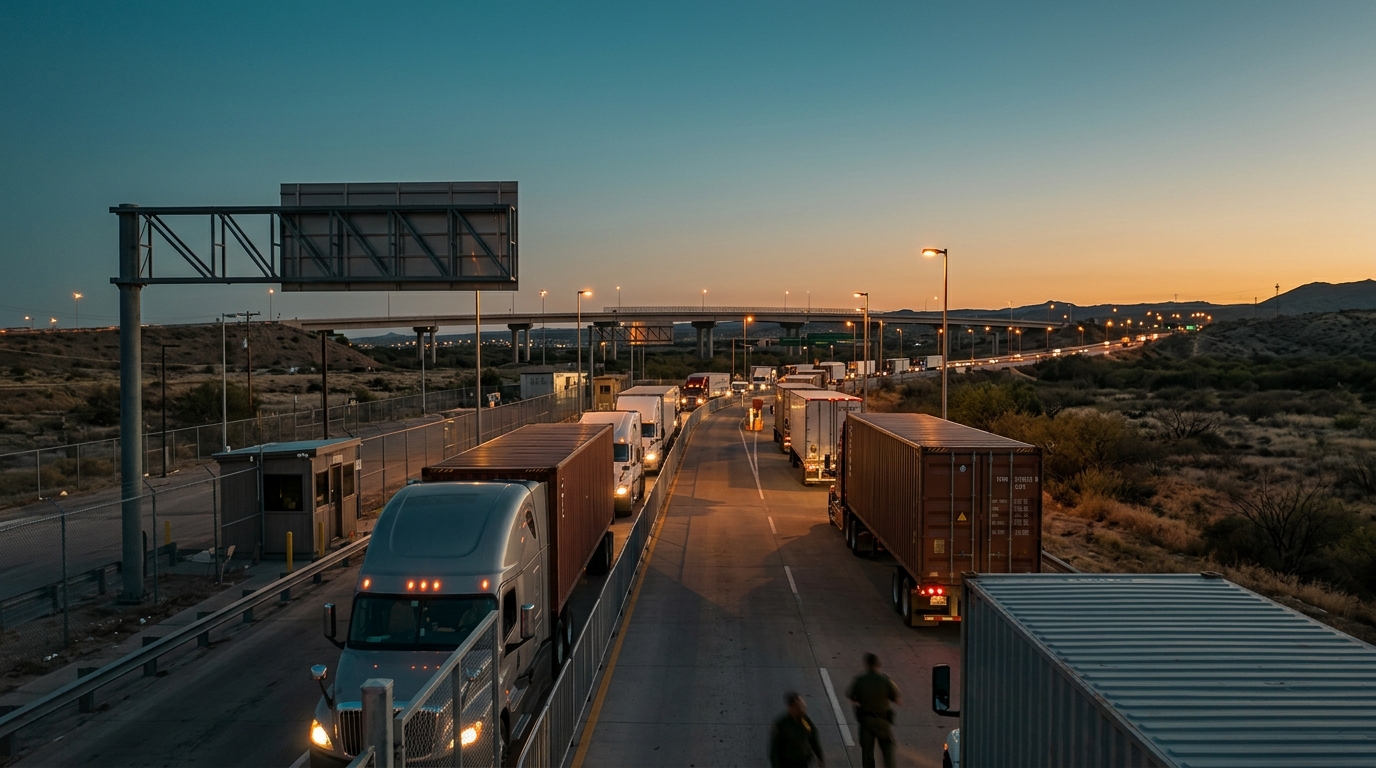
Economy Secretary Marcelo Ebrard, on Sunday, August 30, described the review of the United States-Mexico-Canada Agreement (USMCA) as a "major challenge" for Mexico facing the United States, according to El Universal. He simultaneously defended the country's trade position: an effective tariff rate of 3.4%, the lowest among its main trading partners.
Ebrard presented those figures during a Morena plenary meeting, where he noted that Mexico has sought to "maintain the most privileged position" in the U.S. market while exporting "ever more" in the face of what he described as the protectionist policy of the Donald Trump administration. The official stated, according to Aristegui Noticias, that more than 83% of Mexican exports are destined for the United States and that around 85% enters duty-free by complying with the agreement's rules. He characterized the process as the most difficult trade negotiation Mexico has ever faced. The treaty review also frames regional energy trade: natural gas, refined products, and grid equipment cross through this framework between the Gulf basin and Mexico.
Ebrard detailed that Mexico posts an average "effective tariff" of 3.4%, compared to 6.7% for the rest of the world and around 6.4% for Vietnam, one of its main competitors for the U.S. market. "We are the ones who export the most and the ones who pay the least," he summarized. Exports have grown 24.6% in the recent period, driven by electronics, computing equipment, and artificial intelligence-linked products. In May, Mexico set a monthly record for sales to the United States of 54,180 million dollars. Ebrard added that foreign direct investment "continues at very high averages," with the United States as the primary source at around 16,800 million dollars, followed by Spain and Canada. He also noted that he travels to Washington practically every week to maintain dialogue with U.S. authorities.
The next step is the bilateral round scheduled for September, in which Mexico will seek to reduce the duties still weighing on the automotive, steel, and aluminum sectors. The outcome will determine whether the country retains the preferential access that currently frames its energy trade with its main partner.
This report was drafted with artificial intelligence assistance from verified sources and reviewed by a human editor before publication.
Sources
Related stories
This article was drafted with AI assistance from verified sources and reviewed by a human editor before publication.