Ebrard Calls on the United States and Canada to Reach a USMCA Agreement
Ebrard urges Washington and Ottawa to close a deal; bilateral tension undermines the USMCA review, which governs the region's energy trade.
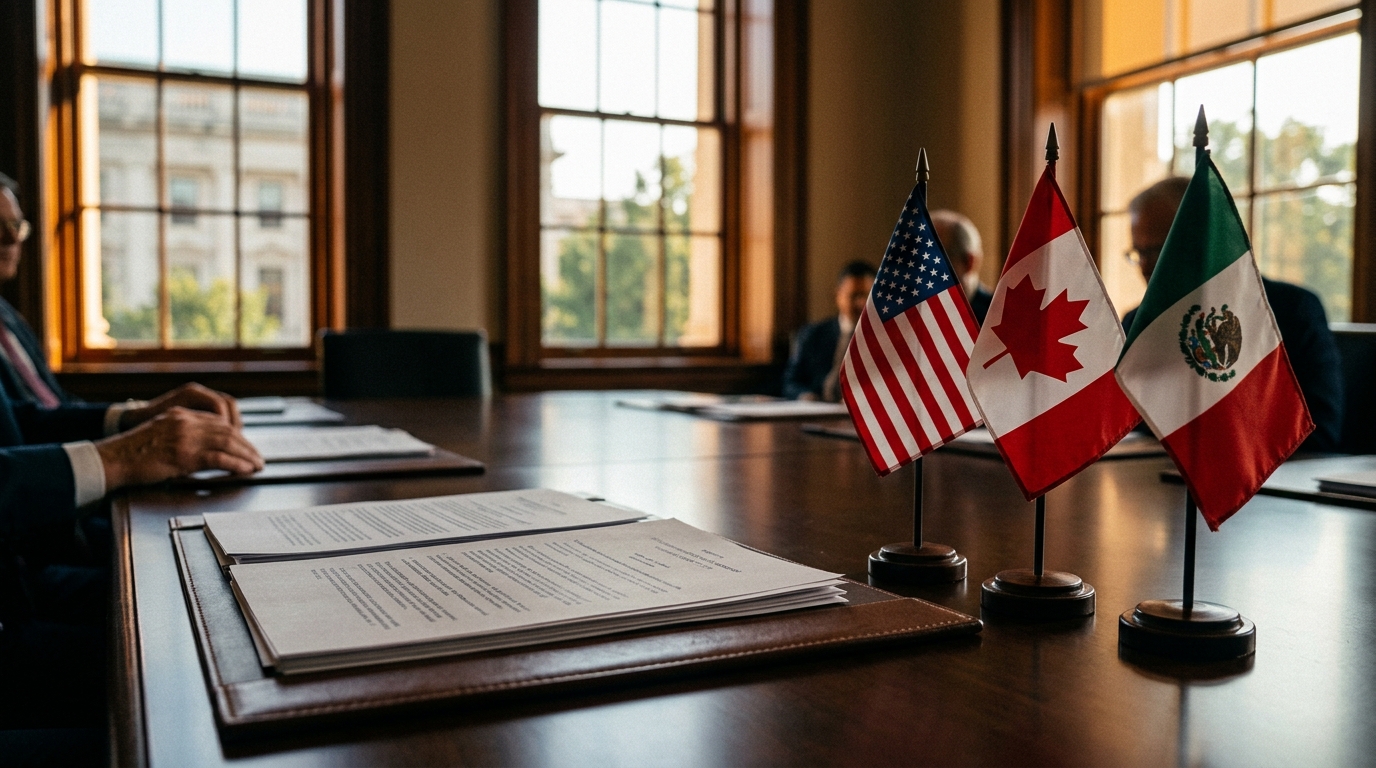
Mexico's Economy Secretary, Marcelo Ebrard, called on the United States and Canada on August 27 to reach an agreement, warning that tension between the two countries does not favor the review of the United States-Mexico-Canada Agreement (USMCA). Last week, Washington and Ottawa came close to finalizing an understanding that ultimately fell through, the official said.
The statement comes in the context of the treaty's annual review, whose validity is guaranteed until 2036 and which governs trade in electricity, natural gas, and energy equipment among the three countries. The agreement took effect on July 1, 2020, replacing the North American Free Trade Agreement (NAFTA), and its review was announced in early 2025, amid the global tariff escalation driven by Washington, according to Forbes México. Ebrard, who visits the U.S. capital nearly every week to manage the process, noted that Canada remains engaged in the negotiations, following a meeting between the Canadian Prime Minister and the U.S. President at the Asia-Pacific Economic Cooperation (APEC) Forum. Mexico's central objective, he said, is for the review to be completed in 2026 without reopening the entire treaty.
Ebrard stated that Mexico enters the negotiation with the majority of its exports tariff-free and with discounts in the automotive industry, giving it a competitive advantage over other rivals. The country is seeking to reduce the 25% tariff on automobiles to below 15%, the level applied by countries such as South Korea and Japan, according to statements reported by El Universal. The review agenda includes economic security, labor and environmental issues, as well as reductions in steel and aluminum tariffs. In parallel, the secretary announced the opening of an office in Phoenix, Arizona, to participate in the relocation of semiconductor production from Taiwan, a business that could reach billions of dollars. "Tension between them does not favor us," Ebrard said.
Ebrard is preparing the fourth round of review talks with the U.S. side. The trajectory of the Washington-Ottawa dialogue will set the tone for the trilateral negotiation and, with it, the rules governing natural gas and electricity trade across North America.
This article was written with the assistance of artificial intelligence based on verified sources and reviewed by a human editor before publication.
Sources
Related stories
This article was drafted with AI assistance from verified sources and reviewed by a human editor before publication.