DOE Closes $489 Million Loan for 220 MW of Batteries in Puerto Rico
The DOE closes a US$489.4 million loan for 220 MW of batteries in Puerto Rico, projecting US$312.5 million in savings on the island's electricity costs.
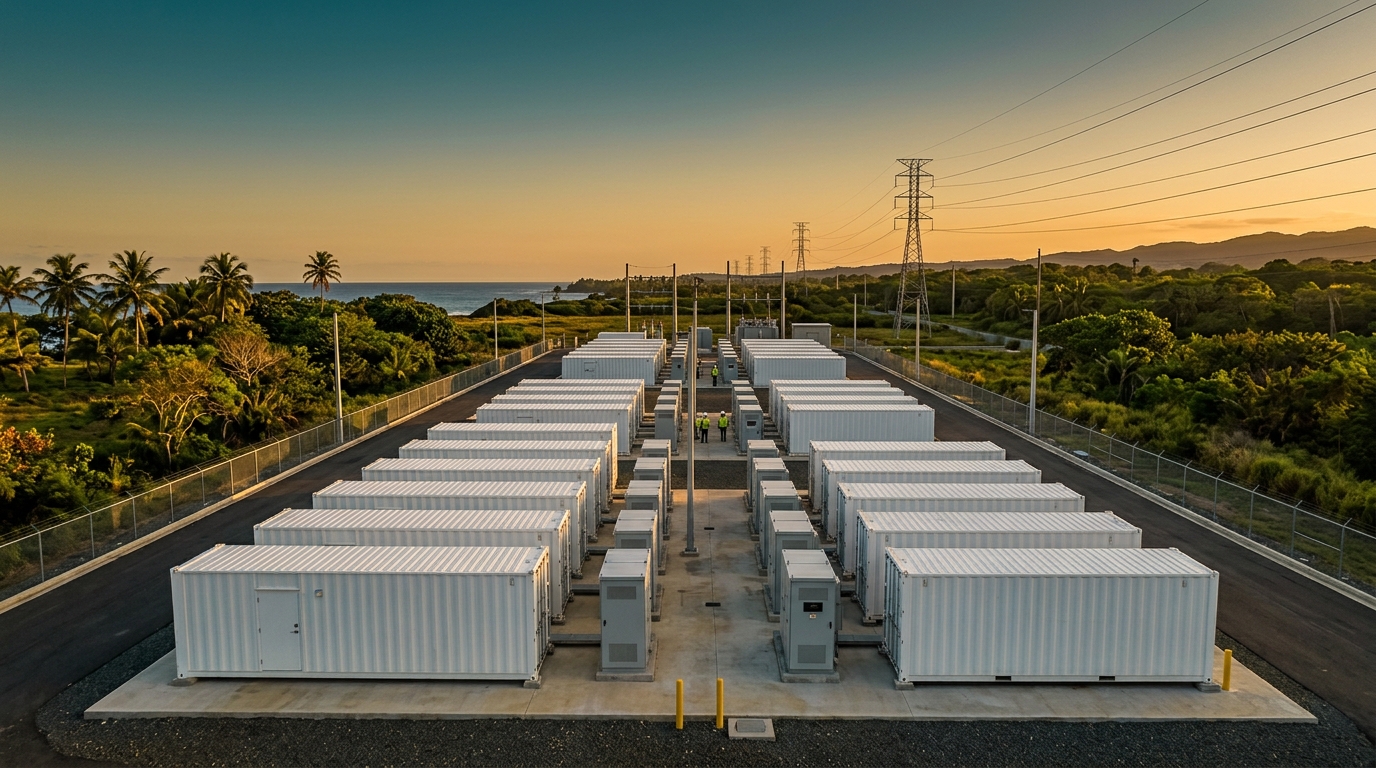
The U.S. Department of Energy (DOE) closed on August 5, 2026, a US$489.4 million loan to Amanecer Puerto Rico, a subsidiary of Pattern Energy, for 220 megawatts (MW) of batteries in Arecibo and Santa Isabel. The financing aims to reduce electricity costs on a grid plagued by chronic outages.
The closing makes Puerto Rico a reference case for U.S. federal financing of grid resilience in the Caribbean. Canary Media reported that the funds are earmarked for battery storage and a future natural gas generation pathway to bring down electricity costs in the territory. The island carries a long history of outages compounded by hurricanes, with infrastructure the DOE itself describes as prone to extended disruptions. For battery developers in Mexico, the federal debt structure combines public capital with American manufacturing and offers a point of comparison against the capacity auctions and power purchase agreements (PPAs) that define the Mexican market.
The financing supports 220 MW of battery energy storage systems (BESS) in Arecibo and Santa Isabel, using American-manufactured technology. The DOE estimates the backing will cover more than 100,000 customers during supply shortfalls and prevent approximately 13 million hours of interruption, with projected savings of US$312.5 million in electricity costs over 25 years. The loan also leaves open a pathway for future dispatchable natural gas generation, according to the DOE press release. The closing modifies the conditional commitment announced in January 2025, which included a 70-megawatt solar component, according to Energy-Storage.news.
The next point to watch is the construction timeline for the two sites in Arecibo and Santa Isabel, and whether the federal debt structure is replicated across other Caribbean islands. For large-scale BESS projects in Mexico, the DOE structure offers a financing model comparable to what is now observed in the island territory.
This article was drafted with artificial intelligence assistance from verified sources and reviewed by a human editor before publication.
Sources
Related stories
This article was drafted with AI assistance from verified sources and reviewed by a human editor before publication.
← All news