China Curtails 360 TWh of Wind and Solar Power in Six Months
China curtailed 360 TWh of wind and solar power in the first half of 2026, 49% more than a year earlier; the spike in curtailment marks the grid integration bottleneck confronting the region.
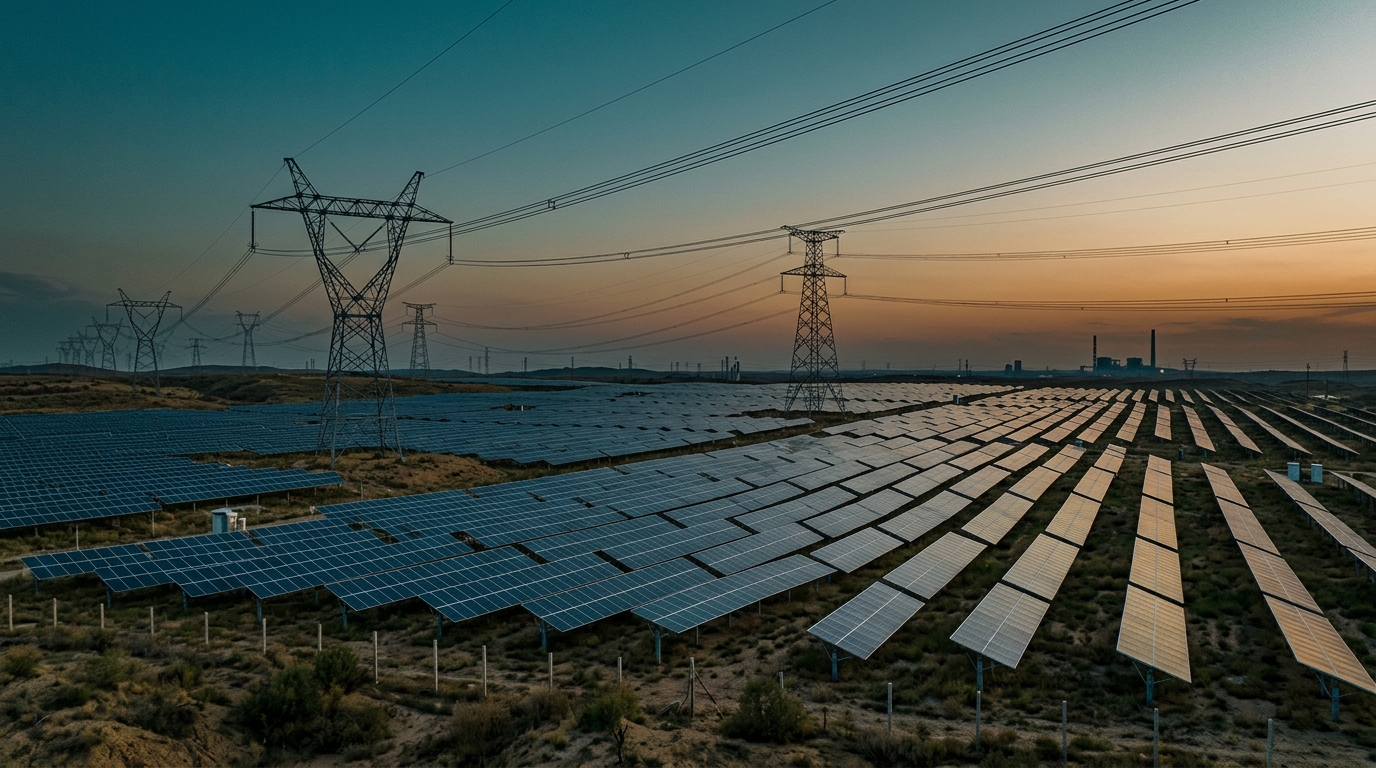
China curtailed 360 TWh of wind and solar power in the first half of 2026, 49% more than a year earlier, according to a report by Global Energy Monitor (GEM) and the Centre for Research on Energy and Clean Air (CREA). The figure is equivalent to Mexico's annual consumption, according to Asharq Al-Awsat.
The phenomenon is known as curtailment: the system reduces or halts generation from a solar or wind plant when the grid cannot absorb its output. In China, renewable generation grew faster than the infrastructure needed to integrate it, and the pattern is repeating in other markets: Australia curtailed 2.93 TWh (7% of its wind and solar generation) and Japan 2.35 TWh (4%), according to data from their respective grid operators cited by Asharq Al-Awsat. For the region, the case demonstrates that the bottleneck is not building more plants, but integrating their output into the grid, the same challenge confronting interconnection queues in Mexico and other Latin American markets.
Official figures are lower: China's National Energy Administration reported an 8.6% curtailment rate for solar and 9.1% for wind, while GEM and CREA, using data adjusted for weather conditions, estimate that 26.1% of combined output went unused. Coal adds pressure: 30 GW of new coal plants came online during the semester, 43% more than a year earlier, and supply contracts guarantee their dispatch above renewable generation. The outcome is already reshaping investment decisions: new solar installations fell 66% this year and capital is shifting toward solar-plus-storage projects, according to Yuan Ren, analyst at Wood Mackenzie.
For the region, storage is becoming the central piece: Chile added 4 GWh of batteries in 2025, more than double its capacity, mostly co-located with solar plants, which helped reduce curtailment, according to Ember analyst Kostantsa Rangelova. The indicator to watch is how quickly interconnection queues and battery capacity advance across Latin America.
This article was written with artificial intelligence assistance from verified sources and reviewed by a human editor before publication.
Sources
Related stories
This article was drafted with AI assistance from verified sources and reviewed by a human editor before publication.
← All news