ACESOL: Chile Reaches 502.9 MW of Solar Capacity Across 41,000 Netbilling Installations
The agricultural sector leads with 208 MW of the 502.9 MW accumulated under Chile's net-billing scheme, a model with instructive lessons for distributed generation in Mexico.
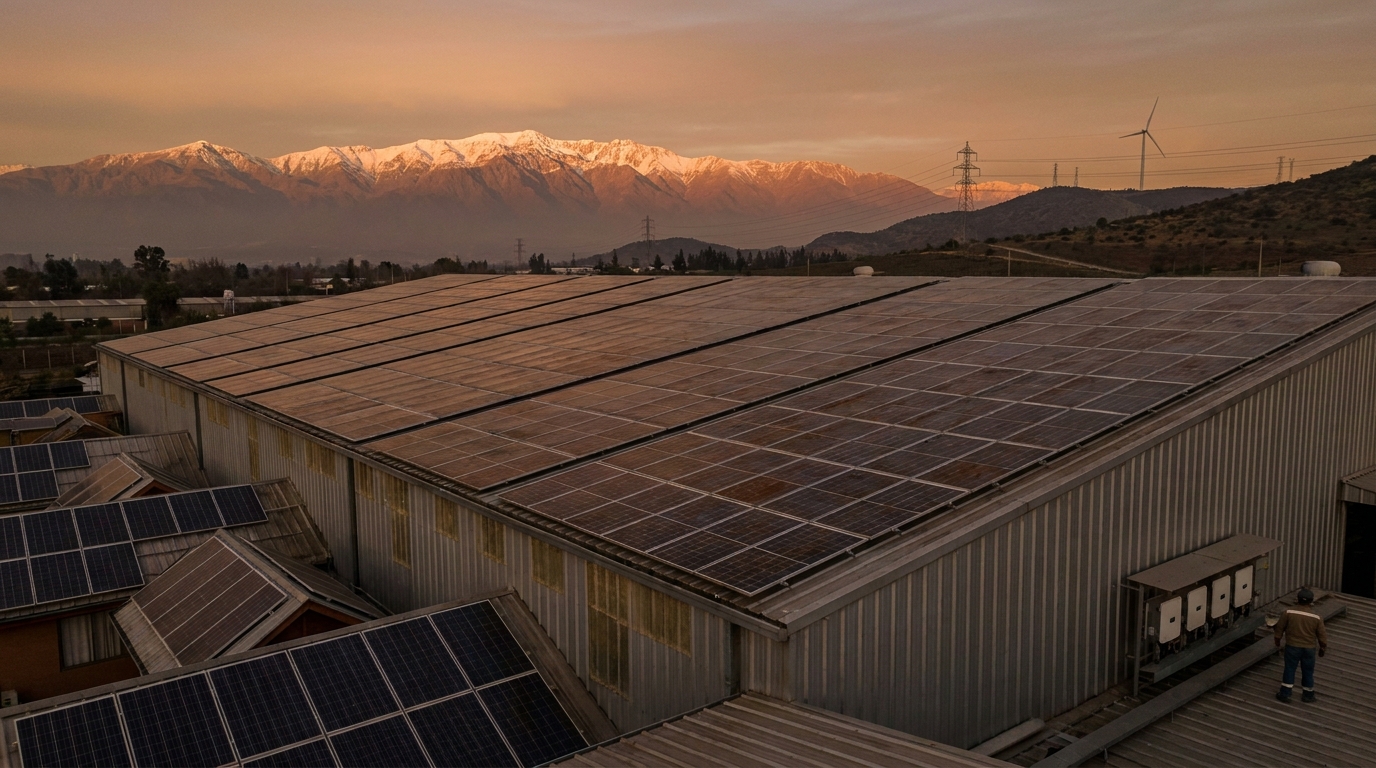
Chile accumulated 502.9 megawatts (MW) of solar capacity across 41,986 installations under its Netbilling distributed generation scheme through May 2026, according to the monthly report of the Chilean Solar Energy Association (ACESOL) based on figures from the Superintendency of Electricity and Fuels (SEC).
The 500 MW threshold, equivalent to a mid-sized power plant, was reached with additions of 56.1 MW in the first five months of 2026, distributed across 3,913 new installations, reported pv magazine. Photovoltaic technology accounts for 501.9 MW of the total, confirming the near-absolute dominance of solar in Chile's grid-connected self-consumption segment. The Netbilling scheme, established under Law 20.571, allows households, businesses, and farmers to inject surplus generation into the grid and receive payment for the energy dispatched, reducing pressure on centralized infrastructure without direct public investment. For Mexico, where distributed generation is growing but operates under a regulatory framework separate from the Wholesale Electricity Market (MEM), the Chilean case demonstrates that net-billing regulation can build critical mass in decentralized capacity.
The agricultural sector leads installed capacity with 208.3 MW, followed by residential at 124.5 MW, industrial at 74.5 MW, and commercial at 56.5 MW. The Metropolitan Region concentrates 146.3 MW across 14,723 installations, followed by Valparaíso (74.7 MW), Maule (60.4 MW), and O'Higgins (60 MW), according to the ACESOL report cited by pv magazine Latinoamérica. Cumulative generation from the distributed fleet totals 714,000 megawatt-hours (MWh), with an estimated 652,122 tonnes of CO2 avoided. Private financing dominates the segment with 421.1 MW, well ahead of other modalities. Battery storage (BESS) associated with Netbilling totals just 201 kilowatt-hours (kWh), leaving substantial room for distributed storage integration.
Monthly additions in 2026 range from 10.3 MW in May to 14.6 MW in January, a trajectory that consolidates Chile's position as the regional benchmark in distributed generation. The evolution of the storage component and the incorporation of additional regions into the Netbilling scheme are the key variables to track in upcoming quarterly SEC reports.
This article was drafted with artificial intelligence assistance from verified sources and reviewed by a human editor prior to publication.
Sources
Related stories
This article was drafted with AI assistance from verified sources and reviewed by a human editor before publication.
← All news