Chile Will Surpass 6 GW of Battery Storage in 2026 with Capacity Payments
Chile will add 6 GW of battery storage in 2026; the CNE projects 12,978 MWh of new capacity, and capacity payments set the regional benchmark.
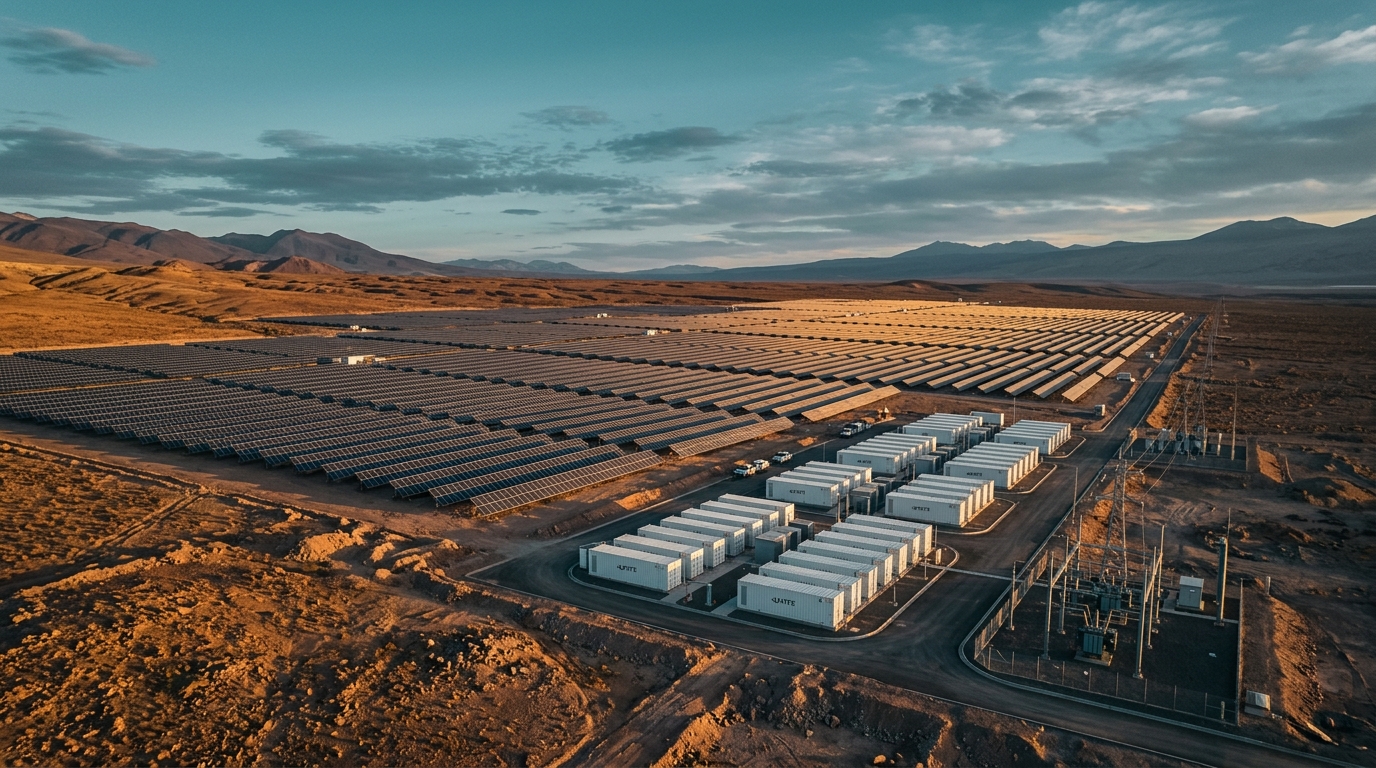
Chile will surpass 6 GW of installed battery (BESS) capacity by end of 2026, according to projections cited by pv magazine on August 29. The National Energy Commission (CNE) projects that between May and December 2026, 12,978 MWh of new storage will be interconnected to the National Electric System (SEN).
The surge responds to a regulatory mechanism: the energy storage and electromobility law approved in 2024 enabled capacity payments for hybrid solar-plus-battery projects, which are added to revenue from energy arbitrage. That framework made dozens of projects currently under construction bankable and triggered announcements of new plants, according to pv magazine. For the region, the Chilean case is now the benchmark for remunerating storage: the capacity-payment-plus-arbitrage scheme is the one regulators in Brazil and Mexico are studying for their own systems, at a time when the integration of variable renewables is placing pressure on Latin American grids.
The CNE figures, released in May, are precise: the 12,978 MWh of new capacity represents a 67% increase over the 8,786 MWh currently in operation. May, June, and October concentrate the largest project additions, with 2,584, 3,193, and 2,937 MWh, respectively; the remainder is distributed across August (1,617 MWh), September (1,400 MWh), December (653 MWh), July (488 MWh), and November (107 MWh). The growth reflects the advance of solar and wind generation, which produces surpluses that batteries help manage, reducing curtailment and providing operational flexibility to the system, according to the CNE. With this, the SEN will close 2026 with more than 20,000 MWh of installed storage and will surpass 25,000 MWh by end of 2027.
What follows is the execution of projects currently under construction: the CNE will update its interconnection projections, and the performance of the Chilean market will determine whether the model consolidates. The regulator's report at the close of 2026 will confirm whether the scheme sustains the second leg of the boom.
This article was drafted with artificial intelligence assistance from verified sources and reviewed by a human editor before publication.
Sources
Related stories
This article was drafted with AI assistance from verified sources and reviewed by a human editor before publication.