CENTCOM Escorted 660 Million Barrels Through Hormuz; Flow Exceeds 7 Million Daily
U.S. naval escorts have moved more than 660 million barrels through Hormuz since May, a flow of 7 million barrels per day that sustains the Brent risk premium.
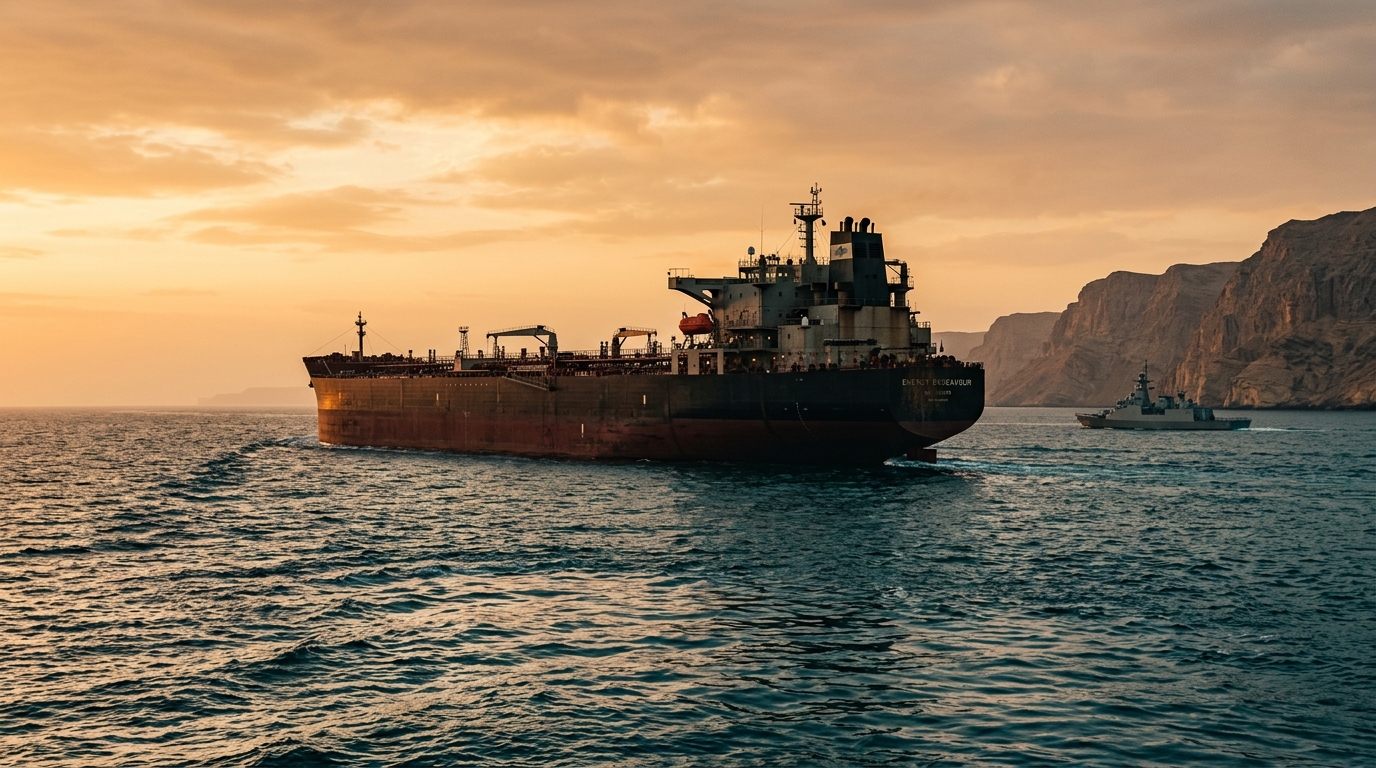
U.S. Central Command (CENTCOM) reported this week that it escorted 1,300 vessels carrying more than 660 million barrels of crude through the Strait of Hormuz since May, according to CNBC. The pace over the last three weeks equals more than 7 million barrels per day, one-third of the pre-conflict flow.
The Strait of Hormuz channels the transit of some 20 million barrels per day of crude and refined products under normal conditions. With the conflict between the United States and Iran, the flow dropped to around 1.6 million barrels per day in May and recovered to about 5 million in July, according to Windward estimates cited by Quartz. Security in the channel remains contested: the U.S. escort operates a southern route along the Omani coast, while Tehran demands that vessels use a northern route through its territorial waters. The bottleneck keeps a risk premium embedded in Brent, raising crude prices and, with it, the cost of the fuels Mexico imports from the U.S. Gulf Coast, its primary source of gasoline and diesel.
The recovery remains far from pre-conflict levels. The International Energy Agency (IEA) cut its global supply forecast for 2026 to 102 million barrels per day and projects a deficit of 1.8 million barrels per day in the third quarter, according to Quartz. Official and private figures diverge: U.S. officials estimate outflows of up to 10 million barrels per day, while Windward calculates an average of 5 million in July and anticipates August will be higher. The International Maritime Organization recorded at least 17 attacks on commercial vessels in the area between July and August, with four sailors killed. Freight rates reflect the risk: vessels completing the crossing bill around $500,000 per day and crews earn double or triple their usual salaries.
Michelle Wiese Bockmann, an analyst at Windward, said transit is scaling rapidly despite Iran's pressure on maritime security. The market will watch whether the flow sustains its recovery in the coming weeks and how it is reflected in the Brent price, in a quarter the IEA projects with a supply deficit.
This article was drafted with artificial intelligence assistance from verified sources and reviewed by a human editor before publication.
Sources
Related stories
This article was drafted with AI assistance from verified sources and reviewed by a human editor before publication.
← All news