CENACE Projects Record 54,000 MW Summer Demand with 7% Operating Reserve
The National Electric System will operate in its worst-case scenario with the tightest reserve margin since 2023, with Yucatán as a priority watch zone due to its dependence on gas supply.
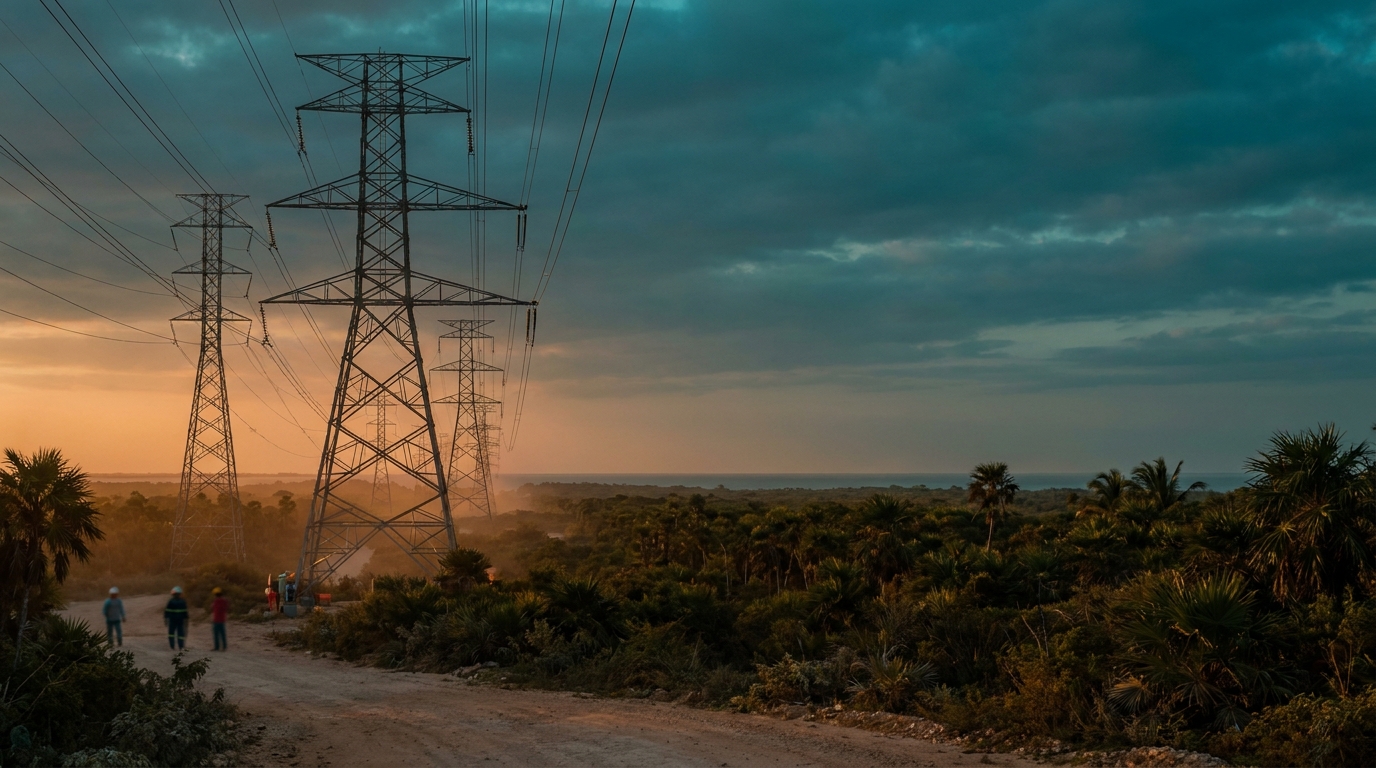
The Centro Nacional de Control de Energía (CENACE) projected in April 2026 that peak demand for Mexico's National Electric System (SEN) will reach 54,000 megawatts (MW) this summer, surpassing the historical record of 52,993 MW set on June 21, 2023. In the most demanding scenario, the operating reserve margin will fall to 7%, one percentage point above the critical threshold of 6%.
Three simultaneous factors are driving pressure on the SEN: increasingly intense heat waves, industrial demand growth linked to nearshoring, and atypical consumption patterns during the 2026 FIFA World Cup. Milenio documented that on June 11, the day of the opening ceremony, demand reached 47,877 MW at 17:00 hours, with a daily peak of 50,934 MW on June 18. The pattern shows demand drops during matches and sharp ramps at the final whistle, placing fast-response requirements on the dispatch system. Mexico imports natural gas from the Permian Basin via cross-border pipelines to fuel its combined-cycle plants, and any supply disruption has a direct impact on SEN reliability.
CENACE identified the Yucatán Peninsula as the system's most vulnerable zone, owing to its dependence on the Mayakán pipeline to supply combined-cycle plants in Mérida, Campeche, and Valladolid. To mitigate the risk, the agency deployed 150 MW of portable generation capacity across the region. New combined-cycle plants with aggregate capacity exceeding 1,500 MW in Mérida and Valladolid are at various stages of SEN integration, and the second phase of the Mérida-Valladolid pipeline is scheduled for June 2026. The Undersecretary of Electricity, José Antonio Rojas Nieto, stressed that distributed storage will be critical to grid stability during demand peaks. CENACE Director General Ricardo Mota Palomino described the summer as tight but free of any deficit.
The key indicator to watch is the operating reserve margin during July and August, the weeks of highest projected temperatures for the SEN. If the system falls below the critical 6% threshold, CENACE will activate its emergency dispatch protocols. The evolution of gas supply in Yucatán and progress on the Mérida-Valladolid pipeline will be the determining variables.
This article was drafted with artificial intelligence assistance from verified sources and reviewed by a human editor before publication.
Sources
Related stories
This article was drafted with AI assistance from verified sources and reviewed by a human editor before publication.
← All news