CENACE Reports 49,000 MW Electricity Demand and Projects New Summer Record
The National Electric System operated through May with single-digit reserve margins; the agency projects a peak of up to 54,000 MW during the hottest months of the year.
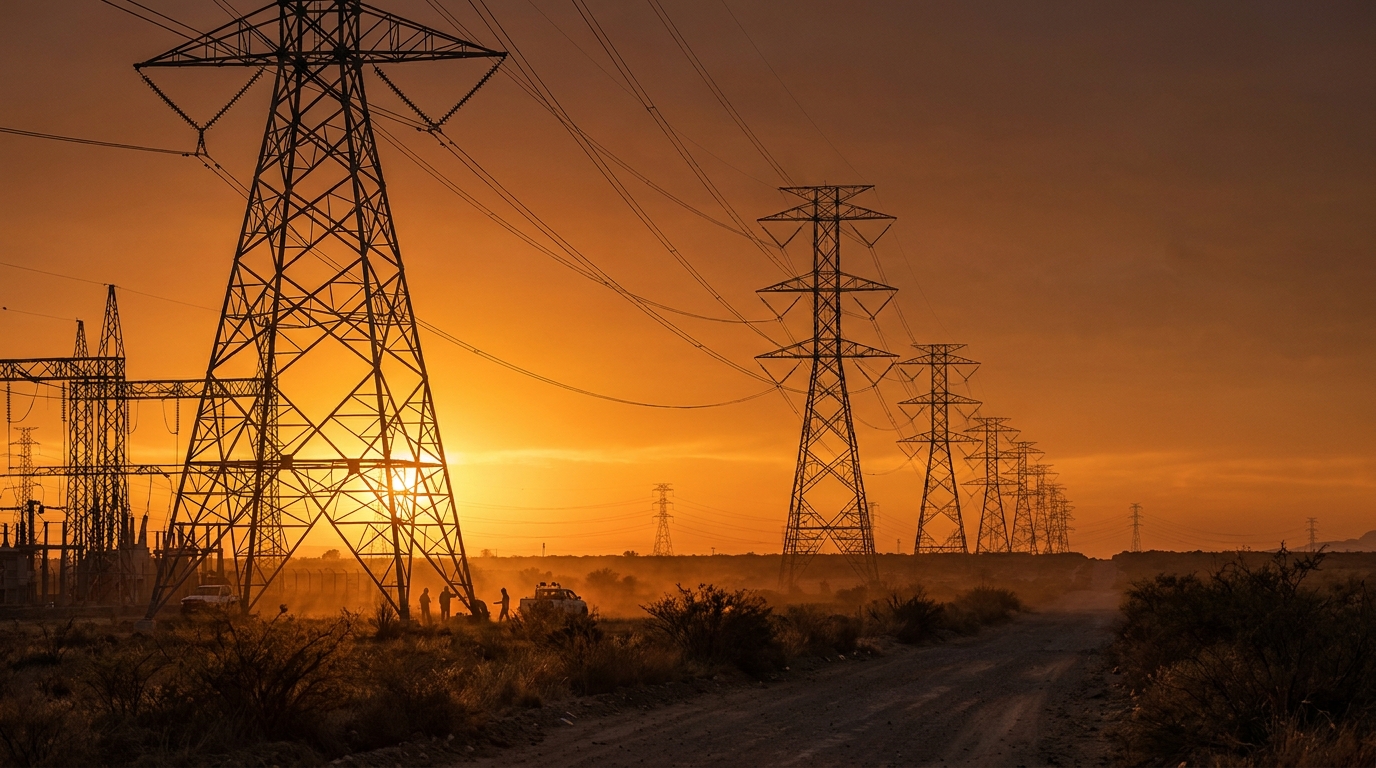
The Centro Nacional de Control de Energía (CENACE) reported that demand on the National Interconnected System reached 49,000 megawatts (MW) in May 2026, some 3,993 MW short of the all-time record of 52,993 MW set in June 2023, according to Expansión. The agency projects a peak of up to 54,000 MW this summer.
The demand surge is driven by three simultaneous factors: extreme temperatures that exceeded 52°C in northern Mexico in May, the launch of the 13 FIFA World Cup 2026 matches hosted in Mexico, and structural consumption growth from the expansion of data centers and manufacturing. According to CENACE's Market Information System, during the first week of May the agency issued an operational alert when net demand exceeded 48,000 MW and the reserve margin fell below 6%, the critical threshold defined by the grid code. National installed capacity stands at roughly 92,000 MW, though not all of it can be dispatched simultaneously due to transmission constraints, natural gas availability, and maintenance schedules.
CENACE Director General Ricardo Mota described the outlook as a tight summer, but one without an anticipated deficit. Deputy Secretary of Electricity José Antonio Rojas placed the operating reserve margin in the worst-case scenario at around 7%, just one percentage point above the alert threshold. The Yucatan Peninsula was identified as the most vulnerable zone in the system: CENACE ordered the deployment of 150 MW of portable generation from the Comisión Federal de Electricidad (CFE) to reinforce supply in the region. The primary risk in the southeast is not generation capacity, but the reliability of natural gas supply, the agency noted.
The federal government announced 38 renewable generation projects to expand system capacity over the medium term. CENACE is preparing a new probabilistic reserve methodology to manage operating margins during demand peaks. FIFA World Cup 2026 match days, which coincide with peak consumption hours, will serve as its first real test.
This article was produced with artificial intelligence assistance from verified sources and reviewed by a human editor before publication.
Sources
Related stories
This article was drafted with AI assistance from verified sources and reviewed by a human editor before publication.
← All news