California Puts Two Virtual Power Plant Bills to a Vote Before August 31
California is moving two virtual power plant and home battery bills to a floor vote before August 31; CAISO is weighing a proposal to open its wholesale market to these resources.
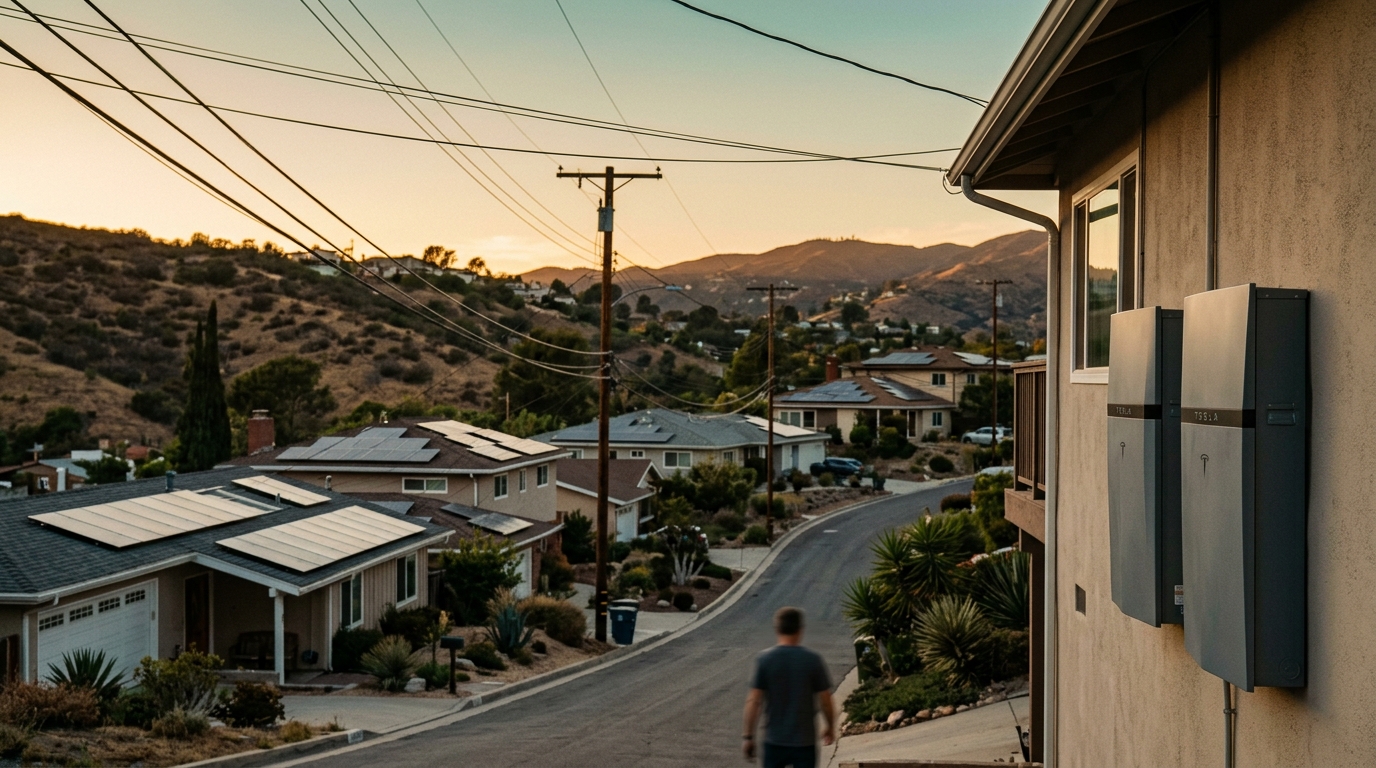
California legislators must vote before August 31 on bills SB 905 and SB 913, which set the rules for home batteries to export energy to the grid, according to Canary Media. California, home to some of the highest electricity rates in the United States, is advancing these initiatives to bring those costs down.
Both bills cleared the Assembly Appropriations Committee on August 13. SB 913 gives the California Public Utilities Commission (CPUC) until mid-2028 to establish regulations requiring virtual power plants (VPPs) to count toward resource adequacy, the service utilities secure through gas plants and batteries to meet peak demand, and mandates a methodology for valuing the energy that behind-the-meter batteries inject into the grid. SB 905 establishes a grid utilization metric that reveals which circuits and substations can absorb more load without costly upgrades, deferring millions in distribution investment. Governor Gavin Newsom vetoed three similar bills in 2025 over their cost to state agencies; if these bills pass, he will have until the end of September to sign or veto them.
In parallel, the California Independent System Operator (CAISO) is bringing a proposal before its board of governors on August 26 that would allow behind-the-meter batteries to participate in the state's wholesale market, according to Energy-Storage.news. Utility Dive reports that the design, part of CAISO's distributed resource integration initiative, allows aggregators to export up to net-zero load within their zone, a capacity Advanced Energy United estimates at more than 2 GW currently outside the market. California holds 21,112 MW of batteries, roughly one-third of its peak demand, and an analysis by The Brattle Group for GridLab calculates that VPPs can cover more than 15% of the state's peak demand and generate $550 million in annual savings for consumers by 2035.
CAISO's board takes up the wholesale market design on August 26. Following the Assembly vote, due by August 31, the decision passes to Newsom, with a deadline of end of September; the valuation methodology will serve as a benchmark for Latin America, where home battery participation is growing.
This article was written with artificial intelligence assistance, drawing on verified sources, and was reviewed by a human editor before publication.
Sources
Related stories
This article was drafted with AI assistance from verified sources and reviewed by a human editor before publication.