IRENA: Brazil's Solar Costs Fell 25% in 2025, to $37/MWh
The South American country has cemented its position as the world's third most competitive solar market, trailing only India and China, and is drawing growing flows of regional investment.
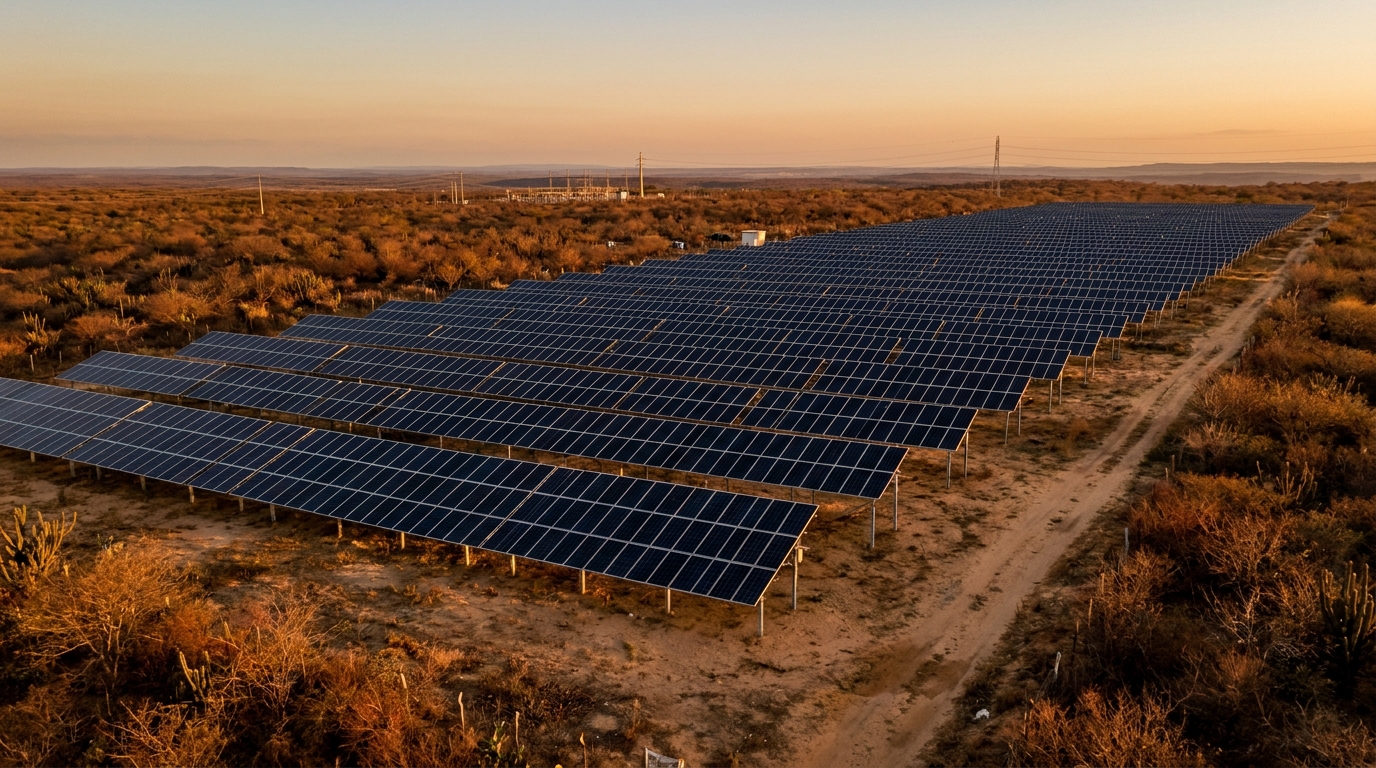
The levelized cost of electricity (LCOE) for solar photovoltaic power in Brazil fell 25% in 2025, reaching 37 dollars per megawatt-hour (USD/MWh), according to the Renewable Power Generation Costs in 2025 report published by the International Renewable Energy Agency (IRENA) on July 9. With this figure, Brazil has consolidated its place as the third most competitive solar market in the world.
Brazil is surpassed only by India (35 USD/MWh) and China (36 USD/MWh), while the global weighted average held steady at 44 USD/MWh, roughly unchanged from 2024, according to IRENA data reported by Business Standard. A 25% decline in a single year, well above the long-term global trend, places Brazil among the world's fastest cost-reduction markets. The figure reinforces Brazil's position as Latin America's primary magnet for renewable capital, as investment flows into the regional electricity sector continue to grow.
The report documents that 91% of new renewable capacity commissioned globally in 2025 generated electricity at a lower cost than the cheapest available fossil fuel alternative in each market. In aggregate, renewables avoided 480 billion dollars in fossil fuel costs during the year, of which 32 billion corresponded to Brazil, the third-largest national saving after China and the United States. Since 2010, the global cost of solar photovoltaic electricity has fallen 89%, while onshore wind declined 71% over the same period. Brazil stands out not only in solar: its onshore wind costs also remained near the world's lowest levels in 2025.
IRENA's latest cost cycle confirms that the renewable energy advantage over fossil fuels has become structural. For Latin America, the Brazilian case demonstrates that declining costs can accelerate private capital flows into the electricity sector without reliance on subsidies. The full report has been available on the IRENA website since July 9.
This article was drafted with artificial intelligence assistance from verified sources and reviewed by a human editor before publication.
Sources
Related stories
This article was drafted with AI assistance from verified sources and reviewed by a human editor before publication.