MME: 1,539 Wind and Solar Plants Express Interest in Curtailment Compensation
Brazil closed the first phase of its renewable curtailment compensation process: 1,539 plants, roughly 53 GW, representing 91% of ONS's reference capacity. CCEE review follows.
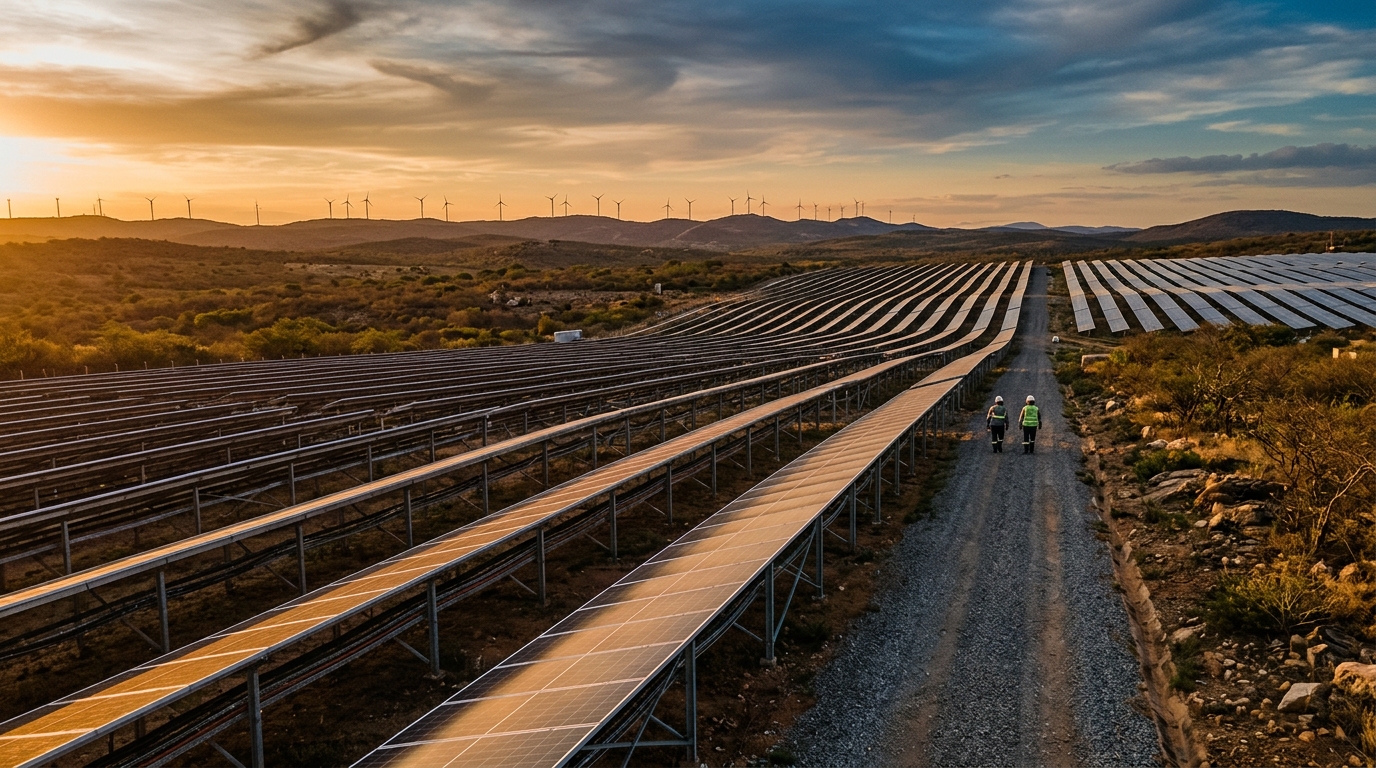
Brazil's Ministry of Mines and Energy (MME) announced on August 11 that 1,539 wind and solar photovoltaic plants had expressed interest in the dispatch curtailment compensation agreement. Together they account for approximately 53 GW of installed capacity, representing 91% of the reference capacity set by the National Electric System Operator (ONS) for the period covered, according to Valor Econômico.
The mechanism addresses part of the liability arising from dispatch curtailments that affected renewable generation between September 1, 2023 and November 25, 2025. It is governed by Law 15.269/2025, which added Article 1-B to Law 10.848/2004, and by MME Normative Ordinance No. 140/2026, published in July, according to the Ministry of Mines and Energy statement. The first phase, managed through the Celebra system, closed on August 11: expressing interest neither guarantees compensation nor binds the parties, it merely enables the next step. The scale matters for the region because curtailments of intermittent generation have become an investment and litigation risk across several Latin American markets.
The agreement covers only curtailments classified as external unavailability, such as transmission delays or capacity limits, or as electrical reliability requirements defined by ONS. Curtailments caused by energy oversupply are excluded, which represents the primary demand of Brazil's renewable sector. In the next phase, ONS and the Electric Energy Trading Chamber (CCEE) will verify which events meet the criteria and calculate the compensable volume plant by plant, according to Canal Solar. Those who sign the commitment agreement will accept those criteria and must withdraw any administrative, arbitral, and judicial proceedings tied to the covered events. Curtailments occurring after November 2025 will fall under the jurisdiction of the National Electric Energy Agency (ANEEL).
What follows is the review phase: ONS will classify the events and CCEE will calculate the volumes, a process spanning several months before generators decide whether to opt in. The signal to watch is whether oversupply curtailments, currently excluded, find their way into the sector's modernization agenda and into the rule that ANEEL will prepare for future curtailments.
This article was drafted with artificial intelligence assistance from verified sources and reviewed by a human editor before publication.
Sources
Related stories
This article was drafted with AI assistance from verified sources and reviewed by a human editor before publication.
← All news