Argentina Breaks Record with 903,000 Barrels Per Day, Driven by Vaca Muerta
With a 19.6% year-on-year increase and Vaca Muerta as the engine, Argentina is one step from claiming third place in Latin America's oil rankings.
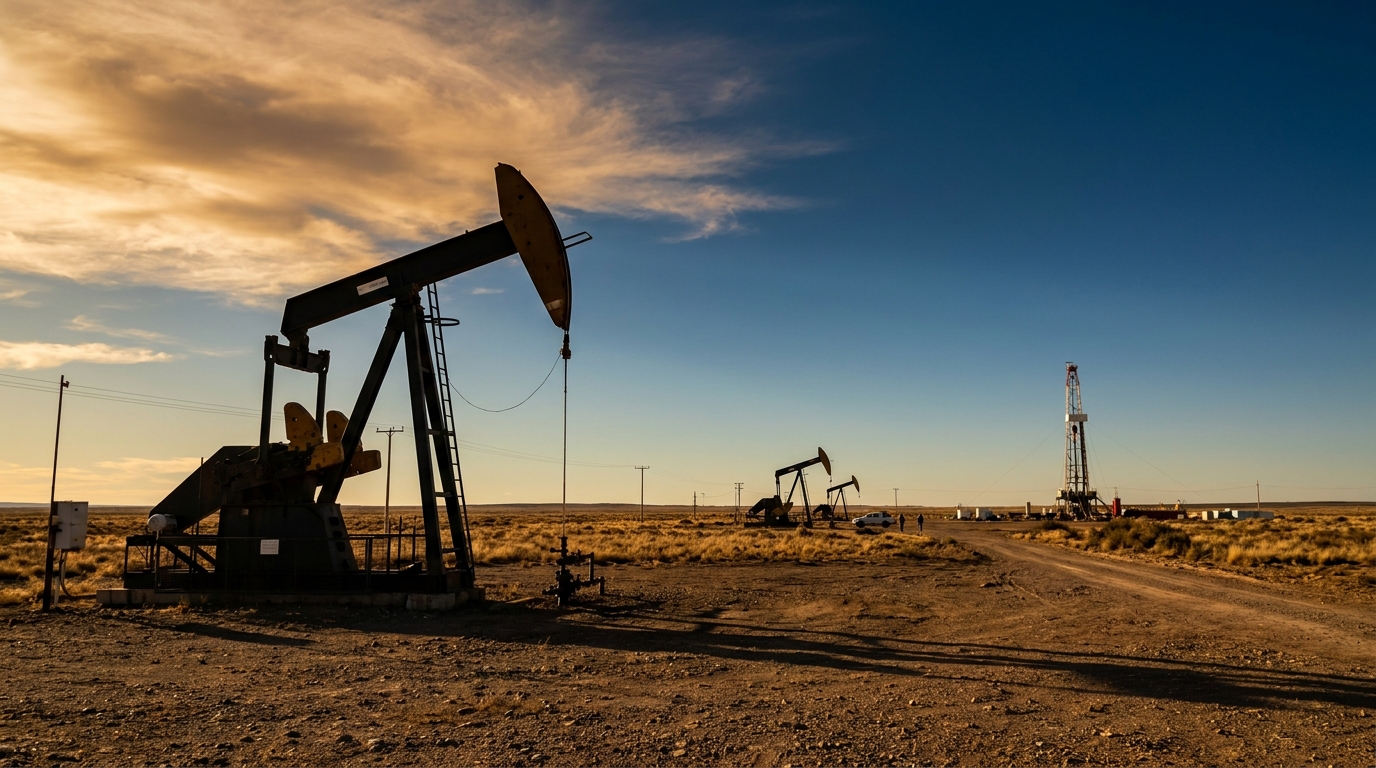
Argentina produced 903,700 barrels per day of oil in May 2026, the first time the country has crossed the 900,000-barrel threshold in its history, with year-on-year growth of 19.6 percent, according to data from the Secretaría de Energía reported by Infobae.
The production surge is driven by the Vaca Muerta unconventional formation, in the Neuquina basin, which contributed 69 percent of national crude output in May, according to official figures. The record exceeds the previous mark of 859,500 barrels per day, set in October 2025, by 44,200 barrels per day. Argentina averaged 790,000 barrels per day in 2025, up from 700,000 in 2024, a trajectory that cements its position as Latin America's fastest-growing oil producer. By contrast, Mexico produced around 1.65 million barrels per day of liquid hydrocarbons, on a downward trend: the International Energy Agency (IEA) projects a decline to 1.3 million by 2030 without new investment, while Venezuela remained below one million barrels per day at the start of the year, according to Bloomberg Línea.
Exports from Argentina's energy complex totaled $1.745 billion in May, a year-on-year increase of 167 percent, according to Ámbito. The key infrastructure project to sustain the expansion is the Vaca Muerta Sur pipeline (VMOS), whose first phase will add 180,000 barrels per day of evacuation capacity. YPF, the state-controlled oil company, estimates Vaca Muerta's breakeven at $45 per barrel and leads the LLL Oil project, a $25 billion, 15-year investment contemplating more than 1,100 wells and $6 billion in annual exports by 2032. Consulting firm Rystad Energy estimates that Argentina, Brazil, and Guyana will together add more than 700,000 additional barrels per day this year, compared to the 300,000 Venezuela could contribute, and projects that those three nations will surpass Venezuelan production at least through 2030.
The sector is targeting one million barrels per day by late 2026 or early 2027, according to projections from the hydrocarbon chamber. The critical variable is evacuation infrastructure: production growth depends on the VMOS pipeline and the valley pipeline duplication coming online on schedule to avoid a bottleneck that could slow Argentina's advance toward third place in Latin America's oil rankings, a position currently contested with Venezuela.
This article was drafted with artificial intelligence assistance from verified sources and reviewed by a human editor before publication.
Sources
- Por el boom de Vaca Muerta, la producción petrolera superó los 900,000 barriles diarios y marcó un nuevo récord en mayo
- Vaca Muerta: ¿puede Argentina disputar el podio petrolero regional con México o Venezuela?
- Nuevo récord en producción de petróleo: gracias a Vaca Muerta, la Argentina superó por primera vez los 900.000 barriles diarios
Related stories
This article was drafted with AI assistance from verified sources and reviewed by a human editor before publication.
← All news