Argentina Sets 916,200 b/d Crude Record as Vaca Muerta Crosses 70%
Argentina's oil production set a record of 916,200 b/d in July; Vaca Muerta contributes 70% and crude exports grew 59.2% through July.
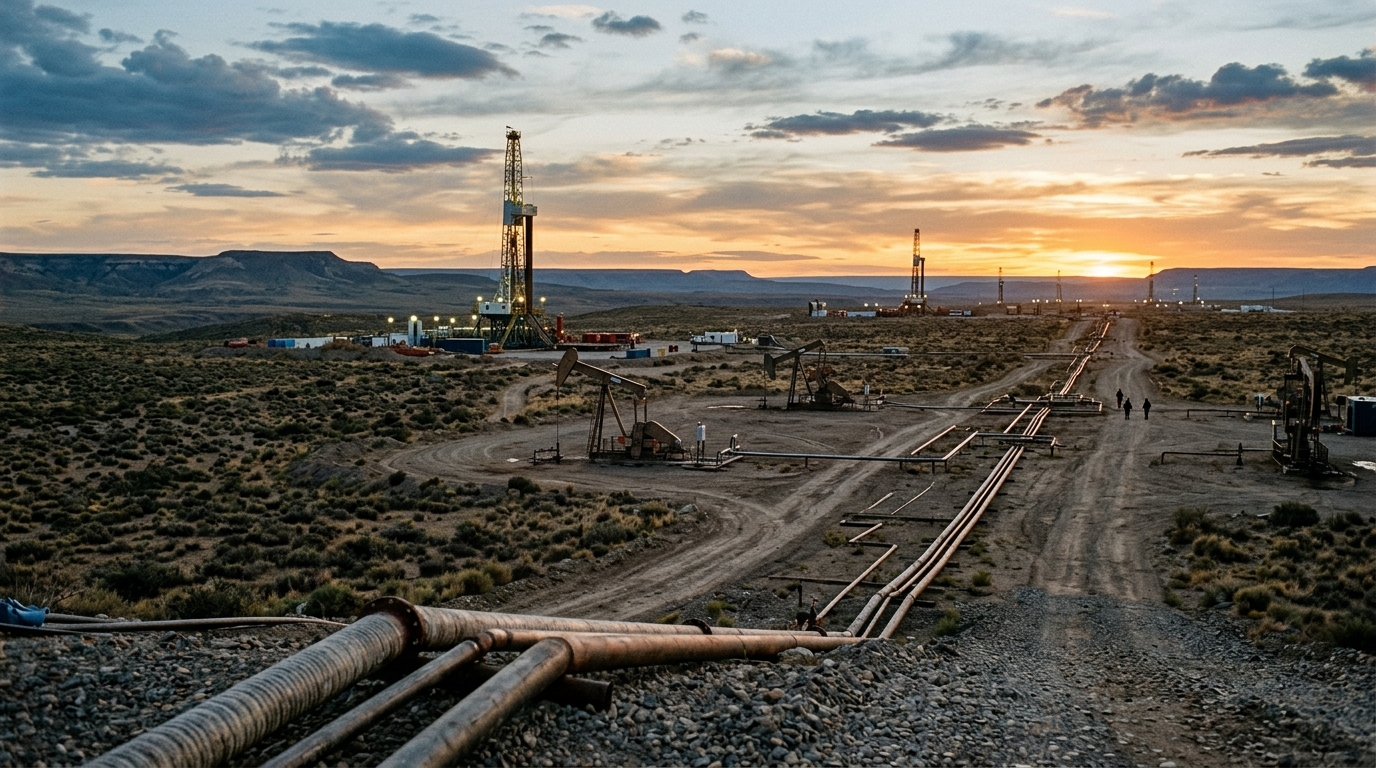
Argentina reached a record oil output of 916,200 barrels per day in July, 17.2% higher than the same month in 2025, according to data from the Secretaría de Energía published on August 27. The unconventional formation of Vaca Muerta contributed 643,100 b/d, just over 70% of the national total.
The advance confirms the rising weight of unconventionals in Argentina's energy landscape: Vaca Muerta production grew 26.4% year over year, against 17.2% for the sector as a whole, according to the same agency, which described the figure as a new all-time high. The growth, sustained by private operators, is consolidating Argentina as a regional crude exporter: between January and July, external sales of crude oils totaled 5,722 million dollars, 59.2% more than a year earlier, according to Bloomberg Línea with data from Indec. For the region, the story matters as a flow of capital and shale technology transferred from the United States, against a backdrop of supply tension in the Persian Gulf.
The export surge is the most distinctive new feature of the current cycle. In July alone, external crude sales generated 1,020 million dollars, 144.4% more than in the same month of 2025, and fuel and energy exports reached 1,506 million, up 97.8%, while fuel imports fell 7.3%, according to Indec data. At the same time, a study by the Instituto Argentino del Petróleo y del Gas (IAPG), commissioned by the Secretaría de Energía, raised Vaca Muerta's technically recoverable oil resources to 30,170 million barrels, 89% more than the 16,220 million calculated by the EIA in 2013. The revision reflects, according to the report, deeper geological knowledge and operational improvements that expanded the prospective area by 22%, the net pay thickness by 39%, and the recovery factor by 54%. In gas, the formation produced 96.5 million cubic meters per day, 5.9% more than a year ago, near 61% of the national total.
The key variable to watch is the evacuation and export infrastructure required to place growing volumes in international markets, the challenge Bloomberg Línea identifies as critical to sustaining the pace. The IAPG resource revision leaves room for further production scaling.
This article was written with artificial intelligence assistance from verified sources and reviewed by a human editor before publication.
Sources
Related stories
This article was drafted with AI assistance from verified sources and reviewed by a human editor before publication.